Classic Rosca de Reyes: yields one 10–12″ ring; prep about 30 minutes, total rising ~2–3 hours, bake 25–30 minutes.
For background on the ritual in San Miguel, see the local Rosca de Reyes tradition in San Miguel.
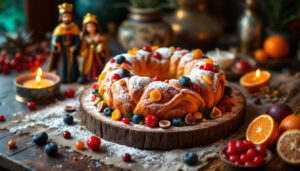
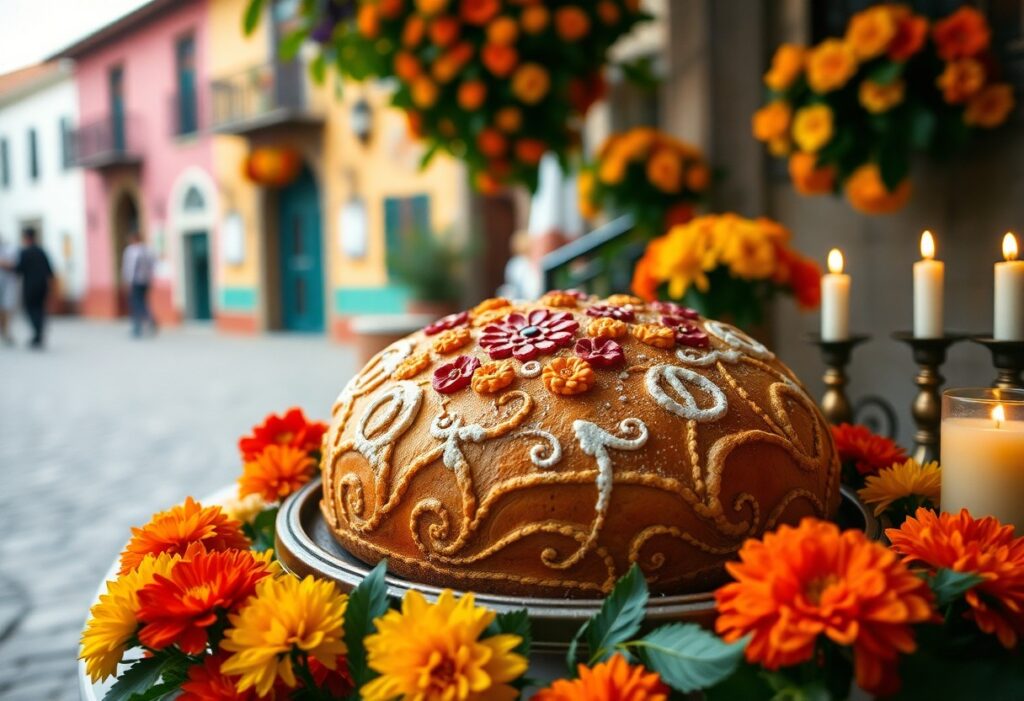
A lightly sweet, citrus‑scented enriched bread, decorated with candied fruits and a hidden baby figurine — celebrate Three Kings Day at home.
| Yield | 1 (10–12″ ring) |
| Prep | PT30M |
| Rise | ~2–3 hours (two rises) |
| Bake | PT25M |
| Difficulty | Intermediate (basic enriched‑dough skills) |
Related: see our collection of authentic Mexican recipes for more festive baking.
| Traditional
Candied fruits, orange flower water, hidden figurine.
|
Quick Swap
Use orange zest & extract if orange flower water unavailable; use store‑bought brioche dough for time savings.
|
| Tools: stand mixer or strong hands, baking sheet, parchment, small plastic figurine (wrapped). | When to serve: bake Jan 5 for freshest; if buying, visit bakeries early (see notes below). |
Ingredients
The recipe below preserves traditional flavors; quantities are given as guidance — adjust for family size and taste.
- Warm milk and active dry yeast
- All‑purpose flour, sugar, a pinch of salt
- Ground cinnamon and anise seed (or anise extract)
- Eggs and softened butter
- Vanilla, orange zest, and orange flower water (optional)
- Candied fruits for decorating; coarse sugar and egg wash for finish
- Small plastic baby figurine (wrap in foil before inserting)
Step‑by‑Step: Make The Rosca
- Bloom The Yeast sprinkle yeast into lukewarm milk and let it sit ~10 minutes until foamy.
- Combine Dry Ingredients sift flour with sugar, salt, cinnamon and crushed anise; set aside.
- Mix Wet Ingredients beat eggs with softened butter, vanilla, orange flower water (or a splash of orange extract) and orange zest.
- Form The Dough add yeast mixture to wet ingredients, then gradually mix in dry ingredients until a soft, slightly sticky dough forms — knead until smooth and elastic (about 8–10 minutes by hand or 5–7 in a mixer).
- First Rise place in an oiled bowl, cover with a damp cloth, and let rise in a warm, draft‑free spot until doubled (about 1–1.5 hours).
- Shape The Ring punch down, roll into a log and form a ring (or braid three logs for a braided rosca). Tuck the wrapped figurine into the underside so it is hidden.
- Decorate & Second Rise brush with egg wash, press candied fruit pieces into the top and sprinkle coarse sugar; let rise again until puffy (about 45–60 minutes).
- Bake preheat oven to 350°F (175°C); bake 25–30 minutes until golden and sound hollow when tapped. Cool on a rack before slicing.
Preparing The Dough With Care (Tips)
Use fresh yeast and milk at the right temperature (lukewarm, not hot). Cover the dough with a damp cloth during rises to retain moisture — local bakers recommend a warm, draft‑free spot and patience for best texture. If the dough seems sticky, add flour sparingly; if too stiff, knead in a teaspoon of milk at a time.
Timing, Buying, And When To Bake
If you plan to host on January 6 (Three Kings Day), bake the Rosca on January 5 for freshest texture and flavor. Many Mexican bakeries begin producing Roscas a week prior and are busiest on January 5 — if you prefer to buy one, visit early that day. For planning: make the dough the evening before and refrigerate after the first short rise for a slow overnight proof; shape and finish the next day.
Where This Recipe Sits In San Miguel’s Baking Culture
Rosca de Reyes is an essential January tradition in San Miguel; for background on local customs and celebrations around the bread, read our piece on the Rosca de Reyes tradition in San Miguel. If you enjoy regional festival breads, you may also like our capirotada guide.
Troubleshooting & Variations
- Dough Didn’t Rise check the yeast freshness and milk temperature; warm environment helps. If low-rise persists, let the dough rest longer at room temp or try a brief proof in a slightly warmed (turned‑off) oven.
- Top Browns Too Quickly tent with foil for the last 10 minutes of baking.
- Want A Different Texture try a portion of bread flour for a chewier crumb, or substitute part butter for vegetable shortening for a slightly different mouthfeel.
- Flavor Swaps if orange flower water is unavailable, use orange zest + 1 tsp orange extract; a touch of almond extract pairs well with candied fruits.
Frequently Asked Questions
What Is Rosca De Reyes Made Of? An enriched bread dough (milk, yeast, eggs, butter) flavored with citrus, cinnamon/anise, decorated with candied fruit and coarse sugar.
What Happens If You Get The Baby Figurine? Traditionally, the person who finds the figurine hosts the Candelaria celebration on February 2; it’s a playful obligation that continues the holiday social cycle.
Is Rosca A Strictly Catholic Thing? The Rosca is tied to Epiphany and local religious customs, but today it is widely enjoyed as a cultural and family tradition across diverse communities.
Quick Fix: My Dough Is Sticky — What Now? Flour lightly and knead a few minutes more; avoid adding large amounts of flour at once to prevent a dense loaf.
Try our traditional Mexican capirotada recipe for another richly flavored holiday loaf that shares techniques useful for Rosca shaping and glazing.
See also: authentic Mexican recipes and our pan de muerto post for shaping tips that translate well to enriched doughs.

Cameron Hale is an insightful author and enthusiast of San Miguel de Allende, where he explores the rich culture, history, and vibrant community of this enchanting Mexican city. With a keen eye for detail and a passion for storytelling, he captures the essence of life in San Miguel, sharing unique perspectives on its art, cuisine, and local traditions. Through his engaging writing, Cameron invites readers to discover the charm and allure of this remarkable destination.
Your exploration of the Rosca de Reyes tradition beautifully highlights the deep cultural ties that this festive bread has with family and community. I find it fascinating how food can serve as a vessel for connecting with our roots and sharing stories across generations. For me, the act of coming together around a shared meal, especially one as symbolic as Rosca de Reyes, truly enriches the holiday season.
Your exploration of Rosca de Reyes is a beautiful reminder of how food can encapsulate cultural traditions and family bonds. I appreciate how you highlight the significance of the round shape and the hidden baby doll, both elements that extend beyond mere culinary practices to embody deeper meanings—unity, hope, and the continuation of traditions across generations.