
San Miguel de Allende Weather & Climate: Seasons, Rain and Temperatures
San Miguel de Allende has a high-elevation, strongly seasonal climate: warm afternoons and cool nights for much of the year, a much drier period from roughly November through April, and a wetter summer centered on June through September. This page is the climate overview; use the linked guides when you need a month-by-month table or a travel-date decision.
- Drier months: generally November through April.
- Rainiest stretch: June through September, with July typically the wettest month.
- Warmest afternoons: usually April and May.
- Coolest nights: usually December and January.
- Daily planning: layers are useful year-round because evenings can feel much cooler than afternoons.
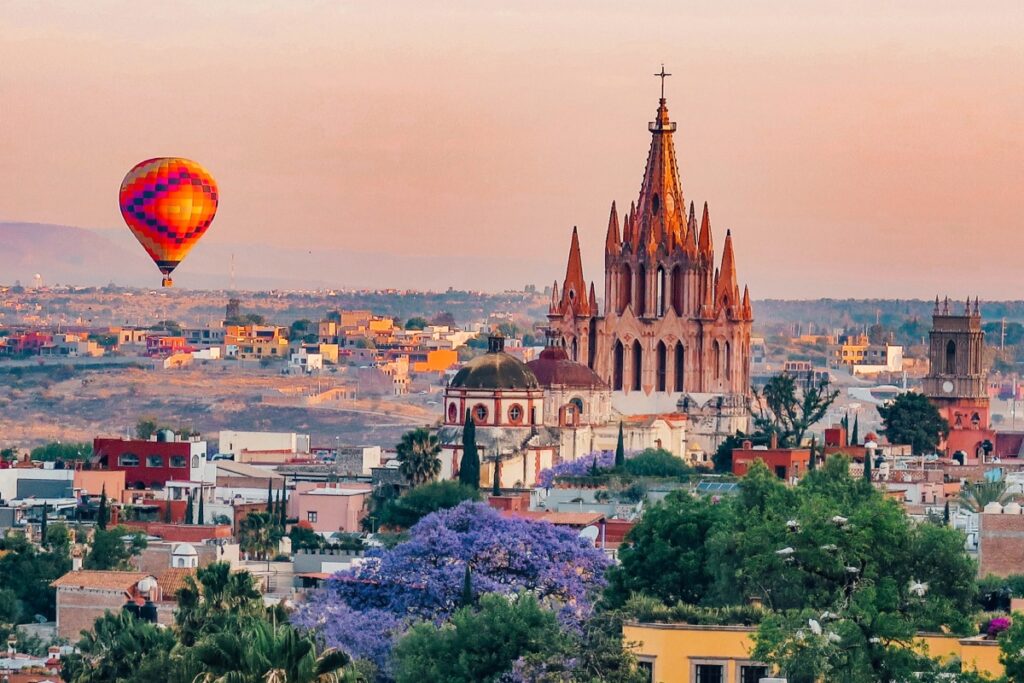
Weather vs. climate: which guide do you need?
This page explains the recurring climate pattern, not today’s forecast. If you are choosing dates for a trip, use our best time to visit San Miguel de Allende guide. If you want averages for every month, go directly to the San Miguel de Allende weather-by-month guide. Winter travelers can also use the dedicated winter weather and packing guide.
The drier season: roughly November through April
Late autumn through spring is the most consistently dry part of the year. Long-term climate averages show very little rain in December through March, with clear or partly clear conditions much more common than during the summer rainy season.
That does not mean every day is warm. San Miguel de Allende sits at high elevation, so a sunny afternoon can be followed by a distinctly cool evening. In practical terms, this is excellent walking weather if you carry an extra layer for after sunset.


The rainy season: what summer rain is actually like
Rain increases sharply in June and remains important through September. July is typically the wettest month. A rainy-season trip is therefore not the same as a washed-out trip: mornings can still be usable for sightseeing, while showers and thunderstorms are more likely later in the day.
The trade-off is straightforward. Summer brings greener landscapes and fewer relentlessly dry days, but outdoor plans need more flexibility. Build an indoor alternative into the afternoon, carry a compact rain layer, and avoid planning a tightly timed outdoor itinerary around a single weather forecast several days in advance.
How temperatures change through the year
San Miguel de Allende’s temperature pattern is milder than many travelers expect from central Mexico. Long-term averages put typical daytime highs around the low 70s °F in January and December, climbing into the low-to-mid 80s °F in April and May. Average nighttime lows are much cooler, falling into the low 40s °F in the coldest months.
The large day-to-night swing matters more for packing than a single monthly average. Even when an afternoon feels warm, a rooftop dinner or early-morning walk may call for a sweater or light jacket.
When you need month-by-month numbers
Use the monthly guide for actual planning numbers rather than duplicating twelve months of data here. The weather-by-month table compares average highs, lows and rainfall for January through December, then translates those averages into packing and sightseeing choices.

What to pack for San Miguel de Allende weather
- November-April: light daytime layers, warmer evening layer, sun protection and comfortable walking shoes.
- May: warm-weather clothing plus a light layer for night; the chance of rain begins increasing.
- June-September: breathable clothing, compact rain jacket or umbrella, quick-drying footwear and a light evening layer.
- October: transitional packing works best; rain falls away during the month but conditions can vary.
For a travel-focused checklist rather than climate data, see the site’s San Miguel de Allende packing guide.
How weather should change your itinerary
Weather in San Miguel de Allende usually changes timing more than it changes what you can do. During the drier months, you can build a full day around walking and outdoor sights. During the wettest months, put walking-heavy activities earlier and leave museums, galleries, cafés or flexible stops for later.
Once you have chosen your season, continue with the things to do guide, the local transportation guide and the hotel guide.
Weather and climate FAQ
What is the rainiest month in San Miguel de Allende?
July is typically the rainiest month in long-term climate averages, with June, August and September also much wetter than the dry-season months.
What is the hottest month?
May typically has the highest average daytime high, with April close behind.
Does San Miguel de Allende get cold at night?
Yes. Winter nights can be cool even after a sunny day, and the day-to-night temperature swing is one of the most important practical features of the local climate.
When is the best time to visit?
There is no single best month for every traveler. Weather, festivals, crowds and price priorities point to different windows, which is why that decision is handled separately in our best-time-to-visit guide.
Climate-data note: the temperature and rainfall ranges on this page are long-term planning averages, not forecasts. Daily conditions vary, so check a current local forecast shortly before weather-sensitive activities.