Make an easy, authentic Tres Leches cake at home—a light sponge soaked in evaporated milk, sweetened condensed milk and heavy cream for an irresistibly moist finish.
If you enjoy Latin desserts, try our popular easy churros recipe for a complementary treat.
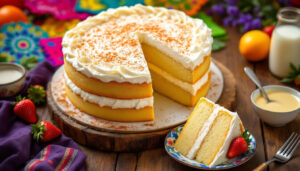
Result
A tender, lightly sweet sponge that drinks in a three-milk soak for a rich, silky crumb—serves 8–12.
Ingredients (from-scratch sponge)
- 1 cup all-purpose flour
- 1 1/2 tsp baking powder
- 1/4 tsp salt
- 5 large eggs, separated
- 1 cup sugar (divided)
- 1/3 cup whole milk
- 1 tsp vanilla extract
Three‑milk soak
- 1 (12 oz) can evaporated milk
- 1 (14 oz) can sweetened condensed milk
- 1/2–3/4 cup heavy cream (or half-and-half for lighter soak)
- Optional: 1–2 Tbsp dark rum or 1 tsp cinnamon
Soak Time At A Glance
| Cake size | Recommended soak | Texture goal |
|---|---|---|
| Two 9-inch layers | 3–4 hours or overnight for best flavor | Evenly moist, sliceable |
| 9×13 pan | 2–3 hours (check after 90 minutes) | Slightly drippy but holds form |
| Mini or single-serve cups | 30–90 minutes (soaks faster) | Intensely moist, single-serve |
Step‑by‑step (Foolproof Method)
| 1 | Preheat oven to 350°F (175°C). Grease two 9-inch cake pans (or line a 9×13 pan). |
| 2 | Whisk flour, baking powder, and salt together; set aside. |
| 3 | Beat egg whites to soft peaks with 1/2 cup sugar. In a separate bowl, beat yolks with remaining 1/2 cup sugar, milk and vanilla; fold into whites, then gently fold in dry ingredients. |
| 4 | Divide batter between pans and bake 25–30 minutes or until a toothpick comes out clean. Cool slightly. |
| 5 | Combine evaporated milk, condensed milk and heavy cream in a pitcher. Warm the sponge slightly, pierce all over with a skewer, then slowly pour the milk mixture so it soaks in. Chill at least 2 hours; overnight is best. |
| 6 | Top with lightly sweetened whipped cream and garnish (fresh fruit, toasted coconut or chocolate shavings) before serving. |
Key Tips To Avoid A Soggy Cake
- Pour the milk slowly and evenly while the cake is still warm—this improves absorption without collapsing the crumb.
- Poke many shallow holes (toothpick or skewer) rather than a few deep ones; that distributes the soak.
- If using a denser butter sponge, reduce soak time slightly; with a chiffon base, allow longer soak for full flavor.
- Chill after soaking so the cake firms up and slices cleanly.
Quick troubleshooting
- Too soggy? You poured too much liquid too fast—slice and refrigerate; next time reduce heavy cream or soak less.
- Too dry? Rewarm slightly and add more soak in small increments; let sit under cling film for 30–60 minutes.
- Dense cake? Ensure egg whites reach soft peaks and fold gently to keep air in the batter.
Variations And When To Use Them
Want to switch flavors? Use coconut milk in place of heavy cream for a tropical twist, or add 2–3 Tbsp unsweetened cocoa to the batter for Chocolate Tres Leches. For a lighter soak, substitute half-and-half for heavy cream. Explore other Mexican desserts and occasion pairings like Rosca de Reyes and capirotada for menu ideas.
Love Mexican sweets?
Explore more recipes and techniques—start with our easy authentic churros for a perfect dessert menu.
Frequently Asked (Short Answers)
How Long Should You Soak A Tres Leches Cake? Most home cakes need 2–4 hours; two-layer cakes are best after 3–8 hours or overnight for fully developed flavor.
What Cake Base Works Best? A light sponge or chiffon soaks evenly; butter sponges work too but may need a bit less soak time.
Can I Use A Box Cake Mix? Yes—use a white or yellow mix, then follow the soak and topping steps; bake to package directions and pierce the warm cake well before soaking.
Storage And Freezing? Keep refrigerated up to 4 days. Freeze slices wrapped in plastic and foil for up to 1 month; thaw in refrigerator before serving.
Diabetic Or Lower-Sugar Options? Use unsweetened evaporated milk with a reduced- or sugar-free condensed milk alternative and a light whipped topping, but expect a different texture and sweetness.
See also: dessert recipes and regional favorites in our Dessert Recipe category for more inspiration.

Sophie Valdez is a passionate author and cultural enthusiast based in San Miguel de Allende. With a keen eye for detail and a love for storytelling, she writes compelling pieces that explore the rich history, vibrant culture, and hidden gems of this enchanting city. Through her engaging narratives, Sophie invites readers to discover the unique charm of San Miguel de Allende, making her work a go-to resource for both visitors and locals alike.
Oh, Tres Leches Cake! Now that you’ve hit the sweet spot of my heart (and stomach), I have to say, it’s an absolute wonder how this cake has managed to sneak its way into so many celebrations across cultures. I mean, who wouldn’t be tempted by a cake that’s practically swimming in milk? It’s like the dessert equivalent of a luxurious bubble bath!
The Tres Leches Cake truly does seem to capture the heart of Mexican culture in each moist, indulgent bite. As I read your beautifully crafted words, I am reminded of how food serves as a bridge across cultures, telling stories that often span generations. For many, baking this cake is not just about the ingredients but about the memories it invokes—perhaps of family gatherings, festive celebrations, or simply quiet moments shared with loved ones.
You’ve touched on something so profound about the Tres Leches Cake and its role in our lives. It’s fascinating how a simple dessert can evoke a tapestry of memories and emotions. In many ways, food transcends mere sustenance; it becomes a narrative thread weaving through family traditions and cultural heritage.
You’ve captured the essence of what makes Tres Leches Cake so special. It’s fascinating how a simple dessert can stir such deep personal connections and shared experiences. You’re spot on about food being a storyteller; it often carries us back to moments that have shaped us, like the laughter of family at a birthday or the aroma of something baking that instantly brings comfort.
Your exploration of the Tres Leches Cake beautifully highlights not just the recipe but also its rich cultural significance. I couldn’t agree more with your sentiment about how the cake represents a celebration of Latin American heritage. It’s fascinating how desserts like this carry stories and traditions, inviting us to connect with cultures that might be different from our own yet feel so universally appealing through food.
Your observations really resonate with me. The way desserts like Tres Leches Cake carry stories and traditions is something that often gets overlooked. It’s interesting to note how this cake isn’t just a sweet treat but a vessel of family gatherings, celebrations, and community. In many Latin American cultures, making and sharing this cake can symbolize love and togetherness, often passed down through generations.
I really appreciate your thoughts on Tres Leches Cake. It’s interesting how something so simple can weave together history and personal experiences. Each bite carries a bit of memory and tradition, often tied to family gatherings or celebrations. What I find captivating is how desserts like this serve as a bridge—inviting everyone to experience the warmth of a culture, no matter their background.
You’ve captured the essence of Tres Leches Cake beautifully. It’s true that what starts as a simple dessert can hold so much significance. The way these recipes are passed down through generations often comes with stories that shape our identities and relationships.
Speaking of sweet traditions, I recently stumbled upon a delightful recipe for making authentic churros at home, which perfectly captures that same warmth and connection to culture you mentioned.
‘Authentic Mexican Churros Recipe — How To Make Crispy Churros At Home’
https://fallinginlovewithsanmiguel.com/easy-authentic-mexican-churros-recipe/.
Your exploration of Tres Leches Cake beautifully highlights not only its culinary appeal but also its cultural significance. I have always been drawn to how food can act as a medium for storytelling, and Tres Leches is a prime example of this. Each bite indeed offers a taste of tradition and warmth, inviting us to connect with the rich heritage of Latin American families.
Your exploration of Tres Leches Cake beautifully captures its essence as both a dessert and a cultural symbol. I recall the first time I tasted a homemade Tres Leches; I was struck not only by its delightful sweetness but also by the community atmosphere that surrounded the meal. In my experience, desserts like this have a unique ability to bring people together, whether it’s at family gatherings or festive celebrations.
Your insights into Tres Leches Cake truly capture its essence, both as a dessert and a cultural symbol. I remember the first time I tasted it at a family gathering—there was an unmistakable warmth in every bite that reminded me of the shared stories and laughter around the table. It’s fascinating how a simple cake can encapsulate so much tradition and memory, isn’t it?
You nailed it with the warmth in every bite—Tres Leches Cake really does have a way of wrapping you up in good vibes, doesn’t it? It’s like a hug from your abuela, but in cake form. And it’s funny how something so simple can carry so much baggage—family gatherings, celebrations, maybe even that one awkward encounter with a distant cousin who insists that pineapple belongs on everything.