
Make an authentic Mexican capirotada this Lent: a layered bread pudding of toasted bolillos, spiced piloncillo syrup, raisins, nuts and melting cheese that is comforting, symbolic and easy to scale.
For more traditional recipes and seasonal Mexican sweets, see our collection of authentic Mexican recipes for home cooking.
| Prep | 25 min | Serves | 6–8 |
| Cook | 40 min | Difficulty | Easy–Medium |
- Traditional Lent version: uses piloncillo + salty melting cheese.
- Everyday shortcut: dark brown sugar instead of piloncillo; Monterey Jack for melting.
- Vegetarian & nut-free: omit peanuts; use extra raisins and almonds if desired.
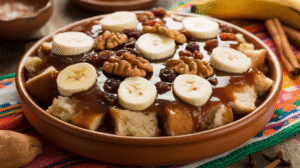
Ingredients
(serves 6–8) — use bolillos or stale French bread; see substitutions in the notes below.
- 6 bolillos (or 1.5 lb stale crusty bread), torn into 1/2″ pieces
- 4 tbsp unsalted butter, melted
- 1 cup piloncillo (or 1 cup packed dark brown sugar)
- 2 cups water
- 2 cinnamon sticks and 3 whole cloves (or 1 tsp ground cinnamon + pinch cloves)
- 1 strip orange peel (optional, brightens the syrup)
- 1 cup raisins
- 1/2 cup roasted peanuts + 1/4 cup chopped almonds (or mixed nuts)
- 10–12 oz cheese total — see cheese table below (Manchego, Ranchero, Monterey Jack)
- Pinch salt
Method — Step-By-Step
- Prep The Bread Toss torn bread with melted butter and spread on a tray. Toast in a 350°F (175°C) oven 8–10 minutes until golden and crisp but not charred.
- Make The Syrup In a saucepan combine water, piloncillo (or brown sugar), cinnamon sticks, cloves and the orange peel. Bring to a simmer, stirring until sugar dissolves. Simmer 8–10 minutes; strain and keep warm.
- Assemble Layers In a 9×13″ baking dish place a third of the toasted bread. Sprinkle raisins, nuts and a light grate of cheese. Drizzle some warm syrup so the bread is moistened but not swimming. Repeat twice more, finishing with a generous layer of cheese.
- Bake Bake at 350°F (175°C) for 30–35 minutes until the top is bubbly and cheese has browned in spots. Let rest 10 minutes before serving.
- To Serve Spoon warm; optional: a scoop of vanilla ice cream or a dollop of lightly whipped cream brightens the contrast.
Quick Decision Table — Cheeses And Uses
| Cheese | Texture & best use |
|---|---|
| Manchego (or Ranchero) | Salty, melts nicely—classic for a savory contrast. |
| Monterey Jack | Mild, excellent melting—great everyday substitute. |
| Cotija / Queso fresco | Crumbly; better sprinkled on top than for melting. |
Notes, Substitutions And Quick Tips
- Piloncillo If you can’t find cones of piloncillo, use packed dark brown sugar and a tablespoon of molasses for depth.
- Avoid Soggy Bread Toast the bread until crisp and drizzle syrup warm—use less syrup on the final layer if you prefer a firmer bite.
- Make Ahead Assemble the night before and refrigerate; bring to room temperature and bake 30–35 minutes before serving.
- Gluten-Free Option Use toasted firm gluten-free bread; note texture will differ slightly.
For a savory companion or an all‑Mexican menu, try pairing capirotada with a warm bowl of authentic tortilla soup, or finish the meal with something sweet like our easy churros.
Frequently Asked Questions
Which Cheese Is Best For Capirotada?
Manchego or a firm Mexican ranchero cheese gives the classic salty contrast and melts well. Monterey Jack is an accessible, melty substitute; use cotija or queso fresco only as a finishing crumbly topping.
How Much Piloncillo Should I Use?
This recipe uses about 1 packed cup (roughly 200–220 g) of piloncillo or dark brown sugar for a balanced sweetness for 6–8 servings—adjust slightly to taste.
How Do I Avoid Soggy Capirotada?
Toast the bread until crisp and pour warm syrup in stages; stop once each layer is lightly moistened, not saturated. Reserve some syrup to add after baking if needed.
How Should I Store And Reheat Leftovers?
Cover and refrigerate up to 3–4 days; reheat individual portions in a 350°F oven 10–12 minutes or microwave until warm. Add a few minutes under the broiler to re-crisp the top if desired.
Can I Use Tortillas Instead Of Bread?
Yes—some regional versions use fried corn tortillas for a different texture. If using tortillas, fry or toast them first and reduce syrup slightly so they don’t become overly soft.
See also: Rosca de Reyes and other seasonal Mexican sweets in our recipe collection.

Eliot Mercer is an insightful author and local enthusiast, specializing in the vibrant culture and scenic beauty of San Miguel de Allende. With a passion for storytelling, he explores the rich history, diverse arts, and unique lifestyle of this enchanting Mexican town, providing readers with a captivating lens through which to view the community. Through his engaging writing, Eliot invites others to discover the charm and allure of San Miguel de Allende, sharing his personal experiences and deep appreciation for the area’s traditions and modern dynamics.
I love how you’ve peeled back the layers of Capirotada and its significance during Lent. It’s fascinating to see how food can carry so much history and tradition, and Capirotada is such a beautiful example of that. The blend of flavors—sweet, savory, and a bit nostalgic—really reflects the heart of Mexican cuisine, doesn’t it? It’s not just about the ingredients; it’s about the stories that come along with them, especially the memories people have attached to them.
I absolutely love the way you’ve highlighted the cultural significance of Capirotada in your blog post! It’s fascinating how food can serve as a vessel for our heritage, bridging generations and reminding us of the traditions that shape our identities. I remember the first time I tried Capirotada during a family gathering, and it felt like tasting a piece of my own history. The combination of sweet and savory flavors, paired with the comforting texture, truly captures the essence of home.
It’s really interesting to hear how Capirotada sparked those memories for you. Food has an incredible way of weaving our personal stories with broader cultural narratives. Every layer of that dish tells a different tale—whether it’s the spices, the fruits, or the bread—each element is a nod to the past.
I absolutely love how you highlighted the cultural significance of Capirotada! It’s fascinating to see how a dish can carry so much history and tradition, especially during Lent when families come together to honor their heritage. The blend of sweet and savory is a perfect metaphor for how culinary practices often evolve through cultural exchange.
Your exploration of Capirotada and its cultural significance really resonates with me, particularly as someone who cherishes the fusion of flavors and traditions that define authentic cuisines. The idea of a bread pudding being more than just a dessert is fascinating; it serves as a narrative device that reflects the tapestry of histories and communities that shape Mexican culture, especially during Lent.
I really appreciate your thoughts on Capirotada and its deeper meanings. It’s interesting how something as simple as a bread pudding can encapsulate such a rich blend of history and culture. When you think about it, each layer of the dish tells a story, whether it’s the bread representing the sustenance of the underprivileged or the syrup reflecting the influence of colonial times—each ingredient adds its own voice to the narrative.
I’m glad you connected with the cultural depth of Capirotada! If you’re interested in delving deeper into its history and perhaps trying your hand at making this delicious dish, check out this link for some great recipes and stories behind it.
https://fallinginlovewithsanmiguel.com/tours-and-excursions
I appreciate your thoughtful response and your enthusiasm for the intricate relationship between food and culture. Capirotada is such a captivating example of this connection, and I’m glad it resonates with you. The way food can serve as a narrative device, encapsulating stories and traditions, is something we often take for granted. Capirotada, especially during Lent, is a testament to how culinary practices can reflect deeper social and historical contexts.
I’m glad to hear that the exploration of Capirotada resonates with you! If you’re interested in diving deeper into the rich stories behind this beloved dish and discovering some delightful recipes, check out this link for more inspiration.
https://fallinginlovewithsanmiguel.com/book-flight
It’s fascinating how Capirotada serves not only as a delicious dish but also as a beautiful representation of cultural resilience and adaptation. The blend of stale bread with sweet and savory elements reflects the resourcefulness inherent in many traditional recipes. In fact, it reminds me of similar dishes from other cultures that repurpose leftovers creatively—like Italian panzanella or French pain perdu.
You’ve touched on something really special with your comparison of Capirotada to other dishes like panzanella and pain perdu. The idea of transforming what might otherwise be discarded into a delightful meal speaks volumes about cultural practices and the love for food that connects us across borders.
“I’m glad you see that connection! If you’re interested in exploring more about the rich history and variations of Capirotada, check out this link for recipes and stories that celebrate its cultural significance.”
https://fallinginlovewithsanmiguel.com/transport
I appreciate the exploration of Capirotada’s cultural significance and its historical roots. It fascinates me how food can serve as a tangible connection to our heritage, particularly during Lent, a time of reflection and tradition for many. The blend of ingredients in Capirotada is intriguing; the combination of sweet and savory elements not only creates a unique flavor profile but also reflects the diverse influences that shaped Mexican cuisine.
You’ve hit the nail on the head! Capirotada is like a culinary time capsule, where every ingredient tells a story. I mean, who knew that stale bread could be so elegant? The mix of flavors—like sweet syrup meeting savory cheese—kind of feels like a family reunion, where the quirky relatives come together to make things interesting.
Your exploration of Capirotada beautifully encapsulates not just a recipe but a rich tapestry of cultural heritage and tradition. It’s fascinating how food can transcend mere sustenance and become a vessel of history, memory, and identity.
Oh, Capirotada! Now there’s a dessert that could spark a heated debate among dessert lovers! I adore how this scrumptious bread pudding intertwines a tapestry of flavors and cultural stories. You mention bread, spices, and cheese in one breath — that’s a winning combination that invites curiosity and possibly a bit of culinary mischief. Who would’ve thought a dish that starts with “stale bread” could turn into something so enchanting?
It’s fascinating how Capirotada connects us to various cultural narratives, isn’t it? Your observation about the interplay of flavors really resonates. It’s one of those dishes where every ingredient tells part of a larger story. When you think about it, stale bread is such a clever starting point. It’s a reminder of resourcefulness, turning what might be considered waste into something delightful.
I completely agree; the story behind Capirotada truly embodies so much beyond just a dessert. The way it makes use of stale bread speaks volumes about ingenuity in cooking and the importance of minimizing waste. It’s a clear reflection of a cultural necessity that has turned into a cherished tradition.
You’ve touched on something really important. Capirotada serves as a delicious testament to how food can carry deep stories and cultural significance. It doesn’t just satisfy hunger; it connects us to our history and family traditions in really special ways. The use of stale bread is such a clever and resourceful choice, representing a practice born out of necessity but evolving into something quite beautiful over time.
“Absolutely! If you’re intrigued by the rich traditions of Capirotada and want to explore more delightful recipes that honor sustainability, check out this link!”
https://fallinginlovewithsanmiguel.com/tours-and-excursions
Capirotada certainly stirs up passions in the dessert world, doesn’t it? The blend of bread, spices, and even cheese creates a unique taste experience that many aren’t prepared for, yet it’s precisely that unexpected combination that makes it so fascinating. The dish has deep roots, reflecting a mix of Spanish, Native American, and Mexican influences. This cultural tapestry adds layers of meaning to the recipe, making each bite not just a taste sensation but a journey through history.