Make authentic pan de muerto at home: a soft, orange‑scented sweet bread traditionally flavored with anise, shaped with the signature ‘‘bones,’’ and baked for ofrendas or family tables.
Explore more Mexican holiday breads and recipes for related methods and inspiration.
- Prep 30–45 minutes active
- Rises 2 rises — ~1 hour + 1 hour
- Bake 35–45 minutes at 350°F (175°C)
- Yield 1 large loaf or several small loaves
- Skill Intermediate — yeast dough & shaping
Quick Facts & Timing
| Total Time | About 3 hours (including rises) |
| Prep | 30–45 minutes active |
| Bake Temp | 350°F / 175°C |
| Rising Times | First rise until doubled (~1 hour), second rise ~1 hour |
| Tip | Use bread flour for a slightly chewier crumb; substitute all‑purpose if preferred—anise is traditional but optional. |
Ingredients
The original pan de muerto relies on enriched dough and a few aromatic additions. Quantities below follow the technique in this post; adjust for multiple loaves.
- Flour (bread or all‑purpose)
- Sugar
- Salt
- Active dry yeast
- Milk, water, and butter (warmed together)
- Eggs (added one at a time)
- Anise seed (traditional) and orange zest
- For glaze: sugar + fresh orange juice and zest
(Example note from the method: combine 1 1/2 cups flour with sugar, salt, yeast, anise seed, and orange zest when mixing.)
Step‑by‑step Method
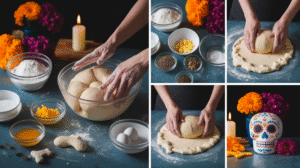
- Mix Dry Ingredients. In a large bowl combine flour (start with at least 1 1/2 cups as a baseline), sugar, salt, yeast, anise seeds and orange zest.
- Heat Liquids. Warm milk, water and butter together until the butter melts and the mixture is lukewarm; add to the dry mix.
- Incorporate Eggs. Add eggs one at a time, mixing thoroughly after each until the dough comes together.
- Knead. Knead the dough about 10 minutes until smooth and elastic. Place in a greased bowl and cover.
- First Rise. Let rise in a warm, draft‑free spot until doubled (about 1 hour).
- Shape Loaves. Punch down dough; reserve a portion for the decorative ‘bones.’ Form a round loaf (or smaller individual loaves) and add rolled strips of dough as crossbones/decoration on top.
- Second Rise. Allow formed loaves to rise again for about 1 hour.
- Bake. Bake at 350°F (175°C) for approximately 35–45 minutes (a large loaf often takes ~40 minutes) until golden and cooked through.
- Glaze And Sugar. Brush warm bread with an orange sugar glaze (sugar + fresh orange juice/zest) and coat with colored or plain sugar while still tacky.
Techniques & Small Adjustments
- Gluten Development Knead 8–12 minutes by hand or 6–8 minutes in a stand mixer for a smoother crumb.
- Warm Rise Spot Use an oven with the light on or a warmed (not hot) microwave to keep the dough draft‑free.
- Anise Options Toast whole anise lightly and grind, or omit if you prefer only orange scent—both are authentic regional variations.
- Butter & Egg Enrichment These give a tender crumb; room temperature ingredients help yeast activity.
Why Pan De Muerto Matters
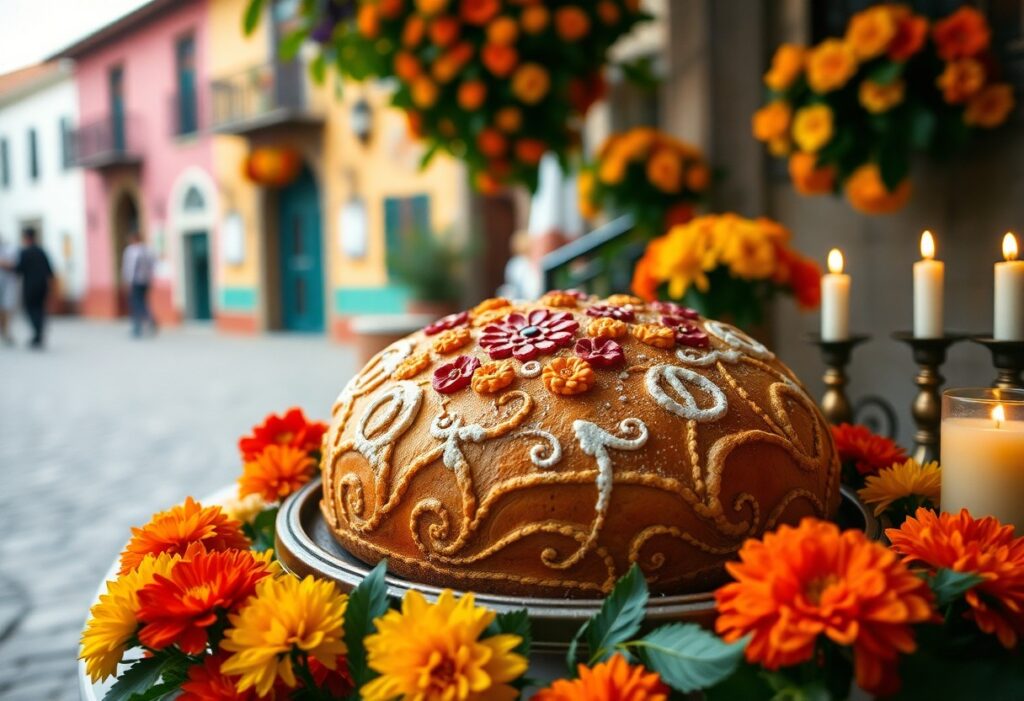
Pan de muerto is both a food and a symbol: the round loaf signifies the cycle of life, and the decorative ‘bones’ represent the deceased. Families bake and place it on ofrendas to welcome loved ones back during Day of the Dead celebrations. For a deeper cultural overview, see Pan de Muerto — A Symbol of Tradition.
Serving & Placing On An Ofrenda
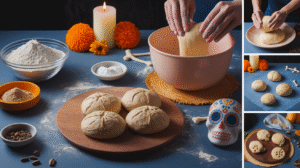
Place the finished loaf prominently on the altar, on a clean white cloth, and surround it with marigolds, candles and photographs. Families often share slices with pan dulce, hot chocolate or atole during gatherings.
If you enjoyed this, find related holiday breads and techniques in our recipe collection for more step‑by‑step guides and festive ideas.
Frequently Asked Questions
How Is Pan De Muerto Made?
It’s an enriched yeast dough: combine dry ingredients with warm milk/water and melted butter, add eggs, knead until smooth, let rise, shape the loaf and decorative dough strips, proof again, then bake and finish with an orange sugar glaze and sugar coating.
Can You Make Pan De Muerto In A Bread Machine?
You can use a bread machine for the dough cycle (mix, knead, first rise), then remove to shape by hand and complete the second rise and bake in a conventional oven—shaping and glazing are best done by hand for the traditional look.
Is Pan De Muerto Meant To Be Eaten?
Yes. While offered to spirits on ofrendas, pan de muerto is also shared and eaten by the living; the offering aspect honors ancestors while the sharing builds family memory and community.
Baker’s Checklist Before You Start
- Use room‑temperature eggs and butter for best yeast activity.
- Reserve a portion of dough for decorations before shaping loaves.
- Have orange zest and fresh juice ready for the glaze.
- Plan for two rises—don’t rush the proofing or the crumb will be dense.
See also: Pan de Muerto — A Symbol of Tradition and the Rosca de Reyes recipe for other Mexican holiday breads.

Eliot Mercer is an insightful author and local enthusiast, specializing in the vibrant culture and scenic beauty of San Miguel de Allende. With a passion for storytelling, he explores the rich history, diverse arts, and unique lifestyle of this enchanting Mexican town, providing readers with a captivating lens through which to view the community. Through his engaging writing, Eliot invites others to discover the charm and allure of San Miguel de Allende, sharing his personal experiences and deep appreciation for the area’s traditions and modern dynamics.
I love how you emphasize the cultural significance of pan de muerto in your post. Every time I make it with my family, it feels like a sacred ritual, bridging our past and present. The sweet scent of the bread baking instantly brings back memories of my grandparents, who shared their stories with us as we rolled the dough.
It’s fascinating to see how food can serve as a bridge between the past and present in cultural celebrations. Pan de muerto is such a beautiful representation of that connection. When I think about the rituals surrounding Día de los Muertos, I’m reminded of how powerful it is to gather with family, share stories, and prepare these special foods together. It becomes less about the act of eating and more about honoring our loved ones and keeping their memories alive.
It’s interesting how food becomes more than just sustenance during cultural celebrations like Día de los Muertos. Pan de muerto isn’t just a sweet bread; it’s an emblem of connection. Each time we prepare and share these foods, we weave in our loved ones’ stories—every bite evokes memories and deepens our ties to them. This gathering creates a space where the past feels present, allowing us to reflect on those who shaped our lives while fostering a sense of community.
“Absolutely! If you’re interested in exploring more about the rich traditions of Día de los Muertos and how to honor your loved ones through food, check out this insightful guide.”
https://fallinginlovewithsanmiguel.com/transport
The celebration of Día de los Muertos through the preparation and sharing of pan de muerto offers a fascinating glimpse into how food serves not only as sustenance but also as a vessel for cultural memory and communal identity. As you beautifully articulated, this sweet bread holds profound significance beyond its rich flavors—it’s a means of honoring our ancestors and reconnecting with those we have lost.
Your exploration of pan de muerto beautifully captures the essence of this cherished tradition and its deeper cultural significance during the Day of the Dead celebrations. I find it incredibly moving how food can serve as a bridge between the living and the dead, facilitating a connection that is often felt but rarely articulated.
I love how you highlighted the role of pan de muerto in connecting families and honoring loved ones during Día de los Muertos. It’s such a unique way to celebrate life and remember those we’ve lost. I remember making it with my abuela when I was younger; she taught me how to shape the dough into those beautiful forms that represent the cycles of life.
It’s wonderful to hear about your memories with your abuela and the way she taught you to make pan de muerto. Those moments in the kitchen are so special, aren’t they? The experience of shaping the dough—not just physically, but in how it connects us to our roots and our loved ones—really adds depth to the celebration. Each form crafted has its own story, reflecting not just the cultural significance, but also those personal memories we hold dear.
¡Qué hermosos recuerdos! Si te gustaría revivir esa tradición y aprender más sobre la elaboración de pan de muerto, te invito a descubrir algunas recetas y consejos en nuestro sitio.
https://fallinginlovewithsanmiguel.com/book-hotel
Efectivamente, esos momentos en la cocina son como un hilo que nos conecta con nuestra herencia y los seres queridos que ya no están. La magia de hacer pan de muerto va más allá de la receta; es una forma de celebrar la vida y recordar a quienes hemos perdido. Cada paso, desde amasar la masa hasta darle forma, se siente como una conversación con nuestra abuela, como si ella estuviera ahí, guiándonos una vez más.
I love how pan de muerto not only serves as a delicious treat but also as a bridge connecting us to our loved ones who have passed. The rituals surrounding the Day of the Dead are so rich with meaning, and I find it fascinating how food can play such a pivotal role in honoring memories.
What a beautifully introspective piece on pan de muerto and its vital role in the Day of the Dead celebrations! I love how you highlighted the connection that this special bread creates between living families and those who have passed on. Growing up in a Mexican household, I have cherished memories of my family gathering to bake pan de muerto together. The aroma of the baking bread mingling with the spices always seemed to invoke a sense of warmth and nostalgia.
It’s interesting how food can evoke such deep connections to memory and culture, isn’t it? Your memories of baking pan de muerto resonate with many who have similar experiences in Mexican households. The act of gathering together to create something sacred not only honors those we’ve lost but also reinforces family bonds in a beautiful way.
I came across this guide on the Day of the Dead celebrations in San Miguel de Allende, and it beautifully complements the heartfelt traditions you cherish, providing great insights into what to expect.
‘San Miguel De Allende Day Of The Dead — What To Expect (Practical Guide)’
https://fallinginlovewithsanmiguel.com/san-miguel-de-allendes-day-of-the-dead-guide/.