
San Miguel de Allende can be an excellent retirement base for people who value culture, walkability, a ready-made social network and a smaller-city rhythm—but it is not the right fit for every retiree. The biggest decisions are housing cost, mobility on hills and cobblestones, access to the healthcare you personally need, Mexican residency, and whether you still enjoy the city after living a normal week rather than a vacation week.
Is San Miguel De Allende A Good Place To Retire?
| Often a strong fit | Test carefully first |
|---|---|
| You want culture, classes, restaurants, volunteering and an active social calendar. | You need frequent high-acuity specialist care close to home. |
| You like walking and can choose a neighborhood that fits your mobility. | Steep streets, uneven cobblestones or limited sidewalks would materially restrict daily life. |
| You are comfortable learning Spanish and navigating life in Mexico. | You expect a fully English-speaking environment with big-city infrastructure. |
| Your budget allows flexibility on neighborhood, furnishing and private healthcare. | Your plan depends on old “cheap Mexico” assumptions for prime Centro housing. |

Why Retirees Choose San Miguel De Allende
1. Culture Is Built Into Daily Life
Art, workshops, music, festivals, food and public-space life give retirees many ways to stay active without needing a large city. That matters most if you will actually use the cultural layer rather than simply admire it from a distance.
2. It Is Relatively Easy To Build A Social Routine
The established international community, language classes, clubs and volunteering can make the transition less isolating. Long-term satisfaction usually improves when that network expands beyond an expat-only bubble.
3. The Climate Supports An Outdoor Lifestyle
The highland setting supports much of the walking, café and patio lifestyle retirees associate with San Miguel. Weather still varies by season, and the city’s elevation can matter for some people, so experience it yourself before treating climate as a deciding factor.
4. Different Neighborhoods Create Different Versions Of Retirement
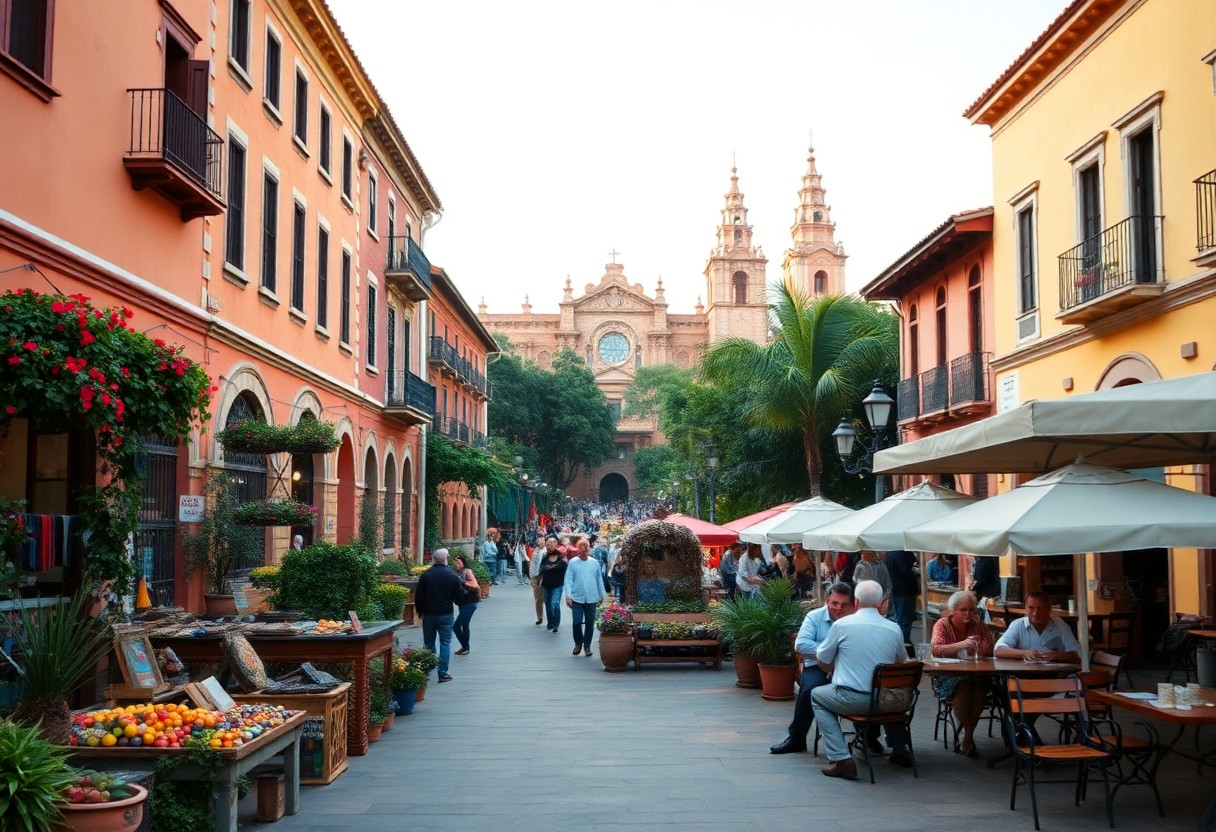
Centro maximizes culture and walkability but can mean more noise, tourism and price pressure. San Antonio, Guadalupe and farther-out areas can trade immediate Centro access for quiet, space, parking or easier daily logistics.
5. Private Healthcare Can Cover Many Routine Needs Locally
Routine private care can be arranged in San Miguel, while people with complex conditions should map specialist and hospital access in larger regional cities before moving. Your own diagnoses, medications and insurance matter more than generic claims that healthcare is “good” or “cheap.”
Retirement Budget: Start With Housing, Not A Generic Average
Do not build a retirement plan around an old single-number budget. Housing, exchange rates, furnishing level, private healthcare, imported goods and travel can move your monthly total substantially.
The site’s dedicated 2026 San Miguel cost-of-living guide centralizes the current planning ranges. Use that page for the numbers rather than duplicating a second set here and letting two pages drift apart.
Housing: Rent Before You Buy
A retirement scouting trip should test the property and the neighborhood at the times you will actually live there. Check hills, street noise, water, internet, taxi access, groceries, pharmacy access and the route to your preferred healthcare—not just the appearance of the house.
Use the long-term rental guide before signing a lease, and the neighborhood decision guide to compare practical trade-offs. If you eventually consider buying, move to the site’s real-estate coverage only after you have tested ordinary daily life.

Mexican Residency For Retirees
Retirement itself is not a separate tourist status. People planning to live in Mexico long term should use the Mexican immigration route that matches their circumstances.
- Temporary Resident Visa: Mexico’s SRE describes it as the route for stays longer than 180 days and up to four years; qualifying bases can include economic solvency and other circumstances.
- Permanent Resident Visa: intended for indefinite residence; the official SRE information identifies retirees/pensioners among the principal groups for whom this route may apply.
- Financial criteria: do not copy an old USD threshold from a blog. Consular economic-solvency calculations and documentary requirements can change, so verify the Mexican consulate where you will actually apply.
Official starting points: Temporary Resident Visa (SRE) and Permanent Resident Visa (SRE). For the broader move sequence, see the 2026 relocation guide.
Healthcare: Map Your Needs Before The Move
Retirement healthcare planning should start with your actual medical profile. List your medications, specialists, recurring tests, mobility needs and what would count as an emergency for you. Then identify which needs can be handled locally and where you would go for care that is not available in San Miguel.
When comparing insurance, check exclusions, age limits, pre-existing-condition rules, waiting periods, reimbursement procedures, evacuation/transfer coverage and whether the hospitals or specialists you expect to use are actually in network.
For general local precautions and neighborhood planning, use the current San Miguel safety guide. For household and drinking-water decisions, see the tap-water safety guide.
Mobility, Hills And Elevation Matter More In Retirement
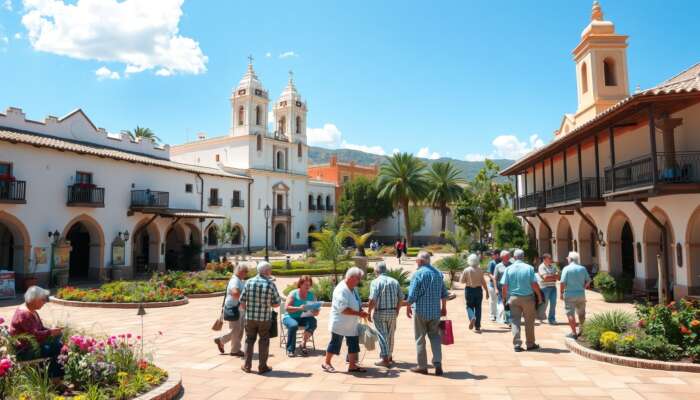
A city can be walkable and still be difficult for a specific person. Cobblestones, steep blocks, narrow sidewalks and elevation can change the right neighborhood even when you are otherwise active. Test the exact route between your home and the places you expect to use every week.
The dedicated San Miguel elevation guide explains the altitude context; use your clinician for personalized medical advice if altitude or exertion may affect an existing condition.
INAPAM: Keep The Benefits Question Separate
INAPAM is a separate 60+ benefits-card topic, not a substitute for residency planning. Current official INAPAM guidance says applicants must be at least 60 and provides the required identity, CURP, birth-certificate, address and photograph documentation; requirements can vary by state and foreign applicants should verify the current documentation accepted for their status.
Use the site’s dedicated INAPAM card guide for the step-by-step task and verify against the official INAPAM requirements before applying.
Taxes, Banking And Estate Planning Need Individual Advice
Moving countries can affect tax residence, reporting, pensions, investment accounts, estate documents and property ownership. Those questions depend on citizenship, income sources and assets. Use a qualified cross-border tax or legal professional rather than relying on a generic retirement article for individualized conclusions.
A Practical Retirement Test Before You Commit
- Spend at least several weeks living a normal routine rather than building the trip around sightseeing.
- Test two neighborhoods and walk the routes you would use for groceries, cafés, pharmacy and healthcare.
- Build your budget from the current cost-of-living and rental pages.
- Verify the residence route and current consular requirements that apply to you.
- Map routine, urgent and specialist healthcare plus insurance before moving.
- Rent before buying so that hills, noise, utilities and transport are known rather than guessed.
- Test your Spanish and social routine: classes, volunteering, clubs or activities you would actually continue after the honeymoon period.
- Use the separate best time to move guide when timing the relocation.
Frequently Asked Questions
How much money do I need to retire in San Miguel de Allende?
There is no useful universal number without defining household size, housing and healthcare. Use the dedicated 2026 cost-of-living page for current single, couple and family planning ranges, then add the retirement-specific healthcare and travel costs that apply to you.
Is San Miguel de Allende a good place to retire?
It can be a strong fit for retirees who value culture, community, restaurants and a walkable central lifestyle. It is less automatic for people with significant mobility limitations, highly specialized medical needs or a budget that depends on prime central housing remaining inexpensive.
Can retirees get permanent residency in Mexico?
Mexico has a Permanent Resident Visa intended for indefinite residence, and the official SRE information identifies retirees or pensioners among its principal applicant groups. Your actual eligibility and documentary/financial requirements must be verified with the consulate handling your application.
Do I need to buy property to retire in San Miguel?
No. Renting first is often the more informative retirement decision because it lets you test neighborhood fit and day-to-day logistics before making a harder-to-reverse commitment.
Where do retirees live in San Miguel de Allende?
Centro, San Antonio, Guadalupe and other residential or farther-out neighborhoods can all work. The right answer depends more on mobility, noise tolerance, parking, budget and access to daily services than on a single “best” colonia.
What are the main retirement downsides?
Common trade-offs include Centro housing costs, tourist-season activity, cobblestones and hills, airport distance, bureaucracy, and the need to plan regional specialist care for some conditions.

Cameron Hale is an insightful author and enthusiast of San Miguel de Allende, where he explores the rich culture, history, and vibrant community of this enchanting Mexican city. With a keen eye for detail and a passion for storytelling, he captures the essence of life in San Miguel, sharing unique perspectives on its art, cuisine, and local traditions. Through his engaging writing, Cameron invites readers to discover the charm and allure of this remarkable destination.
Your emphasis on the necessity of a solid financial plan for retirement resonates deeply. I recently went through this process myself, and it was enlightening to face the reality of my current assets versus what I’d need for a comfortable retirement. One crucial aspect I’ve found is considering not just the numbers but also my lifestyle choices—what activities and experiences I want to prioritize in my later years.
Your insights into the necessity of financial planning for retirement resonate deeply with me. It is a truth that many overlook until they find themselves at a crossroads. The aspect of assessing not just savings, but the entirety of one’s financial landscape—assets, liabilities, and projected income—is often a daunting task. However, as you pointed out, it is this very groundwork that can lead to a fulfilling retirement journey.
Your emphasis on the importance of financial planning is spot-on. In my experience, one of the most crucial aspects of retirement planning is not just accumulating wealth but also understanding how to manage it wisely. For many, the transition from earning a paycheck to drawing from savings can be daunting. It requires a shift in mindset, from growth-oriented strategies to preservation and generation of income.
This discussion on the importance of financial planning for retirement resonates deeply with me. I’ve seen firsthand how a well-thought-out financial strategy can make all the difference in the quality of life during retirement. For instance, when my parents retired, they spent a great deal of time mapping out their budget to ensure they could travel and explore new hobbies—like painting and gardening—without the stress of financial uncertainty.
You raise some critical points about financial planning for retirement, especially in a place like San Miguel de Allende, where lifestyle and cost of living can be remarkably different from many places. However, I think it’s also important to consider the non-financial aspects of retirement—like the social environment, cultural experiences, and access to healthcare. For instance, while you can crunch the numbers and ensure you have enough savings, the success of a retirement experience often hinges on community engagement and personal fulfillment.
Your insights on financial planning for retirement resonate deeply, especially when considering the specific context of transitioning to a new life in San Miguel de Allende. One key aspect that often gets overlooked is the importance of not just quantifying assets but also evaluating lifestyle priorities in retirement.
You raise some really important points about financial planning for retirement. I’ve been diving into this process myself, and it’s fascinating how much it impacts not just our financial security but also our overall peace of mind. For instance, I recently read about someone who moved to San Miguel de Allende without a solid plan. While the lifestyle is undeniably attractive—lush culture, incredible food, and a warm community—financial missteps can really overshadow the experience.
You’ve raised an important point about the necessity of financial planning for retirement, particularly in a place like San Miguel de Allende, which has become a popular destination for many looking to retire abroad. It’s intriguing how financial considerations intertwine with lifestyle choices in such vibrant locales.
You’ve hit on such an important point about financial planning for retirement! It reminds me of how different cultures view aging and retirement. In places like San Miguel de Allende, there’s a fascinating blend of community and lifestyle that can really enhance the quality of life during retirement.
I’ve found that financial planning for retirement, especially when considering a move to a new place like San Miguel de Allende, can’t be overstated. It’s easy to focus solely on the enjoyable aspects of a new life in a vibrant city filled with culture and community—who wouldn’t be excited by the prospect of enjoying art, food, and warm weather? However, as you rightly pointed out, grounding that excitement with thorough financial planning is crucial.
Your insights on the importance of financial planning for retirement resonate strongly with me. I’ve often contemplated the delicate balance between enjoying life now and planning for the future. I recently came across a study that highlighted how many retirees underestimate their expenses, especially when it comes to healthcare and lifestyle shifts. It’s a stark reminder that financial awareness is just as crucial as pursuing one’s passions in retirement.
Your breakdown of the costs associated with retiring in San Miguel de Allende is incredibly enlightening, especially as many expats seek an affordable yet vibrant lifestyle. However, while the financial aspects are crucial, I wonder how factors such as local culture and healthcare services play into the decision-making process for expats.
San Miguel de Allende really does seem like an appealing spot for retirement, especially with those budget ranges! I’ve been looking into various expat destinations, and the combination of affordability and vibrant culture here is hard to beat. The cost breakdown you provided is especially helpful for those of us trying to gauge living expenses.