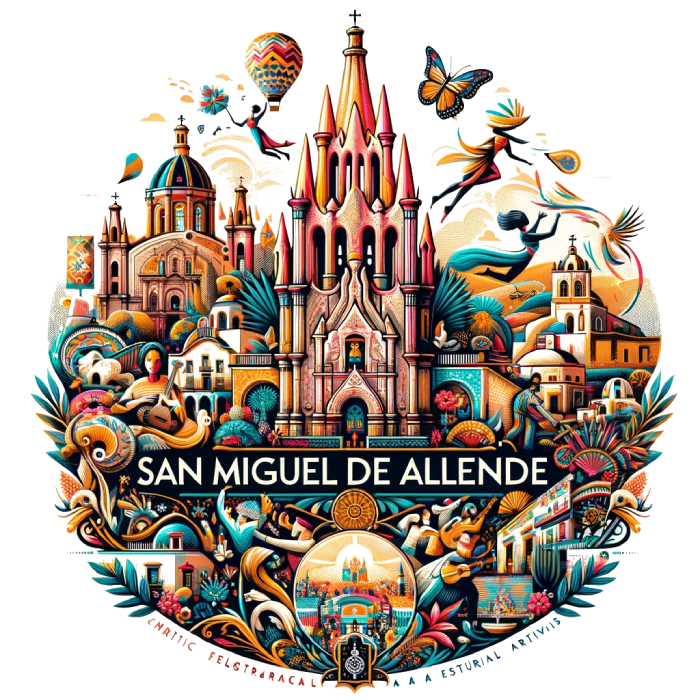
San Miguel de Allende’s look is unmistakable: colorful colonial facades, Baroque ornament, thick adobe walls and lively plazas—this guide explains the key styles, materials and motifs and shows where to see the best examples.
- Bright, Painted Facades—pastel and saturated pigments on stucco over masonry.
- Baroque And Churrigueresque Details—scrollwork around portals and churches.
- Cantera And Local Stonework—ornate doorframes, altars and balconies.
- Private Courtyards (Patios)—central, shaded spaces organizing houses.
- Ironwork And Tiled Roofs—wrought-iron balconies and decorative tiles on floors and roofs.
Styles At A Glance
The town’s built fabric is layered: Spanish colonial bones with later Baroque, Gothic revival and contemporary interventions. The table below summarizes the major styles and where to spot them.
| Style | Era / Influence | Key features | Where to see it |
|---|---|---|---|
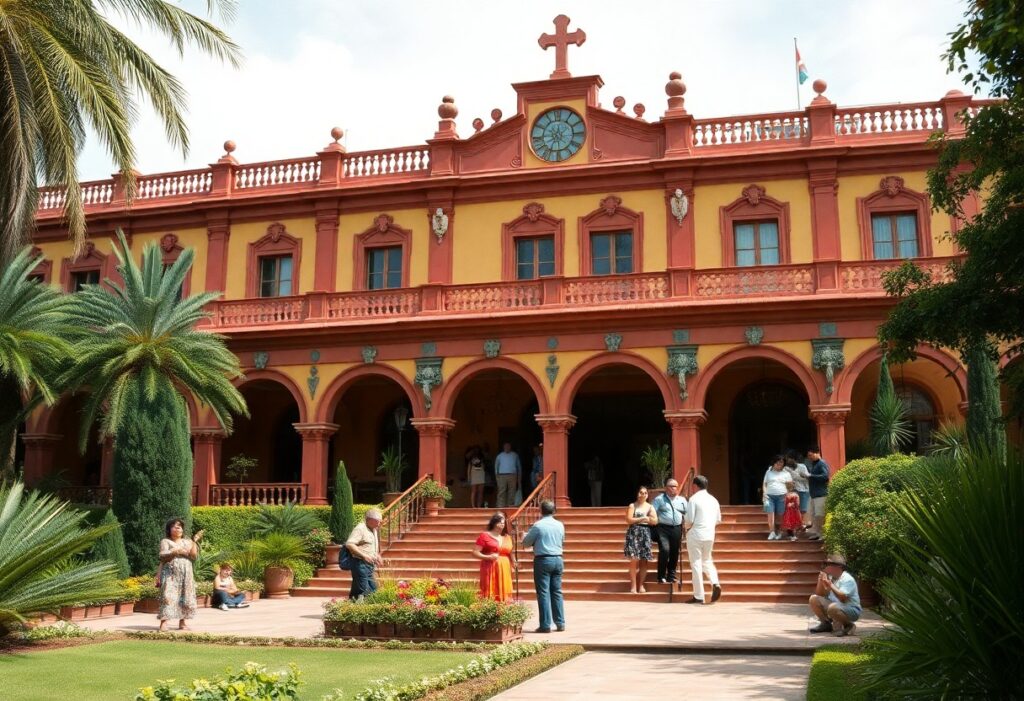
| Colonial (Spanish) | 16th–18th c. | Symmetrical facades, courtyards, thick masonry | Centro historic, private casas |
| Baroque / Churrigueresque | 17th–19th c. (ornamental) | Elaborate stone carving, scrolls, heavily decorated portals | Parroquia de San Miguel, many churches (see churches guide) |
| Neoclassical / 19th c. | Late 18th–19th c. | Balanced proportions, restrained ornament | Public buildings and some private residences |
| Contemporary / Adaptive | 20th–21st c. | Adaptive reuse, local materials with modern detailing | Boutique hotels, renovated tiendas and galleries |
Core Elements — What Gives The Town Its Visual Signature
Three consistent traits show up across eras and building types.
Color And Stucco
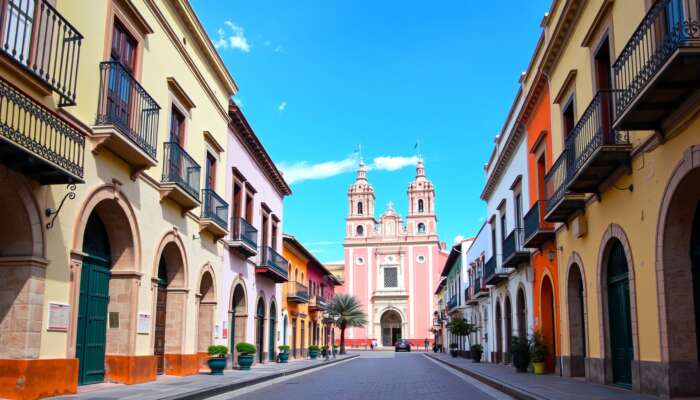
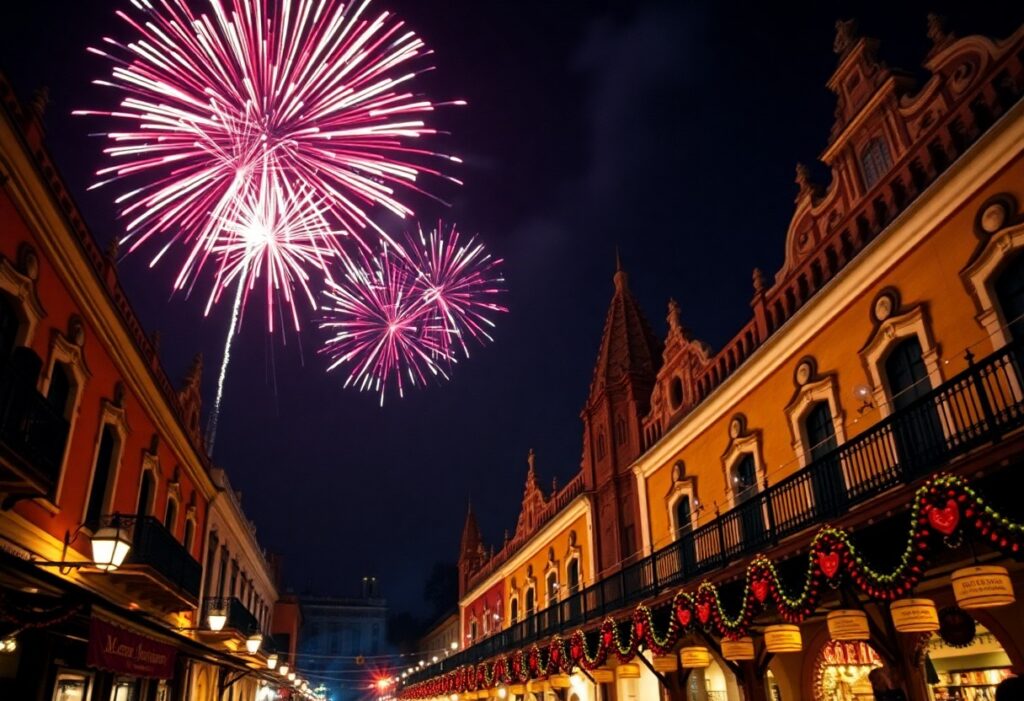
Most façades are plastered with lime-based stucco and painted in a palette that ranges from soft pastels to saturated roses, ochres and blues. The paint, applied over masonry or adobe, unifies otherwise varied construction techniques and is why the town reads so coherently from a distance.
Material Palette: Local Stone, Adobe And Iron
Builders historically used locally quarried stone (cantera and other volcanic rock), adobe bricks for infill and thick walls, hardwoods for beams and decorative doors, and wrought iron for balconies and window grilles. These choices balance durability with local craft traditions.
Courtyards And Human Scale
Private patios—central, shaded courtyards—are fundamental. They organize light and ventilation and create intimate social space that continues to influence new builds and renovations.
Signature Motifs And Ornament
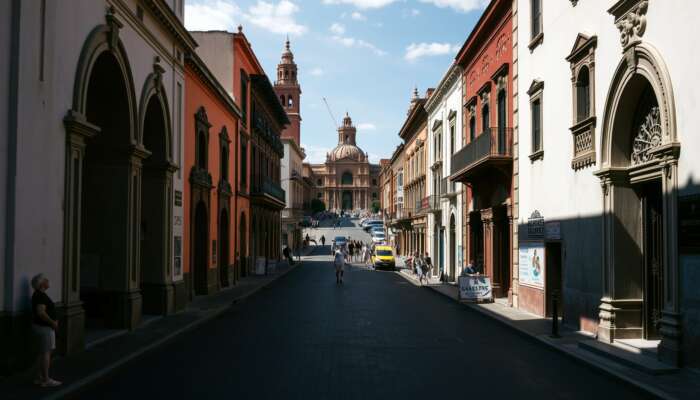
Decorative motifs are where San Miguel’s craft traditions become visible: carved stone surrounds, tile-inlaid floors, patterned wooden doors and elaborate church altarpieces. The Parroquia’s neo-Gothic spires are the town emblem, while many smaller chapels and private homes carry Baroque stonework and colorful tiles.
Common Decorative Elements
- Cantera Carving door and window surrounds with floral and scroll motifs.
- Talavera And Tile decorative stair risers, fountains and interior floors.
- Wrought-Iron Balconies both structural and ornamental.
- Wood Carving doors, beams and interior cabinetry.
How The Architecture Adapts: Techniques And Sustainability
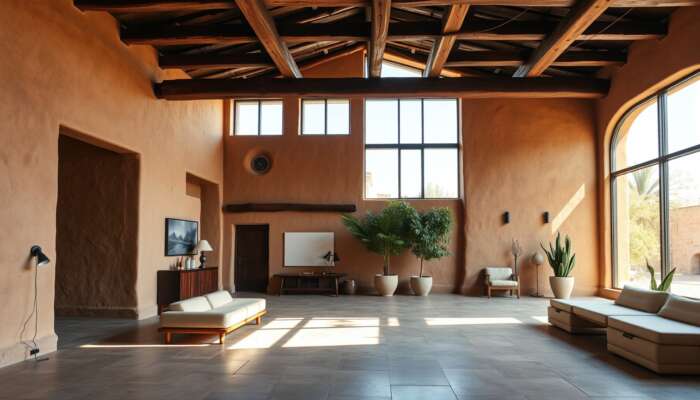
Adaptation is visible in two ways: respectful restoration of historic fabric and contemporary infill that reinterprets older patterns. Thick masonry and adobe provide passive thermal comfort; newer projects often add discreet insulation, modern plumbing and solar where regulations and budgets allow.
Where To See The Best Examples (Short Walking Focus)
A short walk through Centro will expose most of the town’s key building types.
- El Jardín And The Parroquia iconic neo-Gothic silhouette and surrounding colonial facades; for more on the churches, see our churches guide.
- Insituto Allende / Bellas Artes Area artisan workshops, tilework and adaptive reuse galleries.
- Hidden Alleys Off Aldama And Mesones small patios, carved stone portals and original tiles.
- Boutique Hotels And Restored Casas examples of modern interventions that keep traditional materials.
For Visitors: Practical Notes And Related Reading
Want Logistics Or Tours? For planning, routes and where to stay, see our Complete Travel Guide and for craft-focused activities check Activities & workshops.
If you’re researching relocation or long-term stays, our Retirement Guide explains neighborhood choices and practical considerations.
- Look for carved cantera around doors—sign of 18th–19th-century wealth.
- Find houses with inner patios—these indicate colonial domestic planning.
- Note ironwork details—wrought-iron balconies often date to 19th-century repairs.
- Compare tile patterns—older talavera uses hand-glazed irregular tiles.
Small CTA — Want A Deeper Look?
If you plan to live or invest here, read our detailed Retirement Guide to San Miguel de Allende for neighborhood comparisons, costs and long-term considerations.
Frequently Asked Questions
How Old Are Most Of The Buildings?
Many central buildings date from the 17th–19th centuries; subsequent generations added decorative stonework and 19th–20th-century facades. Renovations are common, so interiors or services may be modern even where exteriors read historic.
Are The Buildings Made Of Rose Quartz Or Similar Stone?
No—local stone like cantera and other volcanic rock are used, not rose quartz. The town’s warm pink tones come from painted stucco and certain volcanic stones, not from crystal materials.
What Materials Should I Look For On A Walking Tour?
Cantera carving, lime stucco, clay tile, adobe infill and wrought iron. Spot differences in tile finish and wood joinery to distinguish original work from later restorations.
How Can I See Inside Historic Homes Or Workshops?
Many private casas are now boutique hotels or galleries; book a workshop or guided architecture tour (see our Activities & workshops page). Church interiors are often open during daytime services—refer to the churches guide for schedules.
Is The Architecture Being Preserved?
Yes—UNESCO recognition and active local conservation have encouraged restoration, though pressures from tourism and development require careful planning. Community-led initiatives and adaptive reuse projects are common.

Sophie Valdez is a passionate author and cultural enthusiast based in San Miguel de Allende. With a keen eye for detail and a love for storytelling, she writes compelling pieces that explore the rich history, vibrant culture, and hidden gems of this enchanting city. Through her engaging narratives, Sophie invites readers to discover the unique charm of San Miguel de Allende, making her work a go-to resource for both visitors and locals alike.
The architectural landscape of San Miguel de Allende truly reflects the town’s rich cultural heritage. I appreciate how you highlighted the vibrant colors and intricate designs, which are so characteristic of Mexican colonial architecture. It’s fascinating to see how these elements not only create a visually stunning environment but also tell the stories of the people who built and inhabited these spaces over centuries.
The unique architecture of San Miguel de Allende truly does evoke a sense of wonder and historical appreciation. As I read about its vibrant colors and intricate designs, I couldn’t help but think about how architecture serves not just as a backdrop for our lives but as a reflection of culture and community values.
Your exploration of San Miguel de Allende’s architectural uniqueness really resonates with me. I had the chance to visit a few years ago, and I still find myself daydreaming about those vibrant facades and the character that seems imbued in every corner of the town. The bright, painted facades you mentioned are downright enchanting, and they create such an inviting atmosphere. I remember strolling through the streets, my senses overwhelmed by the interplay of colors against the backdrop of the blue sky. It’s like walking through a living painting!
What a vibrant tribute to the architectural charm of San Miguel de Allende! Every time I stroll through those colorful streets, I feel like I’ve been transported to a time when craftsmanship reigned supreme—not to mention the fact that I can totally blame those vibrant facades for my impulse to snap a million photos! Who knew pastel colors could be so addictive?
I really appreciate how you’ve highlighted the architectural richness of San Miguel de Allende! The vibrant colors and intricate Baroque details truly reflect the city’s historical tapestry. I’ve always been fascinated by how architecture can tell such powerful stories about a place’s culture and heritage.
I find the architectural landscape of San Miguel de Allende absolutely enchanting, and your post captures its essence beautifully. The vivid colors and intricate details really speak to the cultural tapestry that has developed over centuries. It’s fascinating to think about how these architectural styles evolved, influenced by indigenous practices and colonial Spanish design, creating something uniquely vibrant and rich.
I love the way you describe the rich architectural tapestry of San Miguel de Allende! The mix of bright, colorful facades and intricate Baroque details really does create an atmosphere that’s both vibrant and inviting. During my last visit, I was particularly captivated by the ornate cantera stonework—it’s amazing how local materials tell such a story of place and history.
I really enjoyed reading your insights about San Miguel de Allende’s architectural charm. The way you describe the vibrant façades and intricate details evokes a strong sense of the town’s unique identity. I’ve had the pleasure of visiting and was particularly struck by how the colors seem to reflect the warmth of the community.
I find your exploration of San Miguel de Allende’s architectural identity both insightful and thought-provoking. The vibrant colors and intricate details you describe are indeed what many visitors notice first, but the deeper cultural significance of these elements is often overlooked. For instance, the use of bright, painted facades is not just an aesthetic choice; it speaks to the region’s history and the blending of indigenous and colonial influences that defines much of Mexican culture.
I really appreciate how you’ve captured the essence of San Miguel de Allende’s architecture. The vibrant colors and intricate designs truly tell a story of its rich history and cultural significance. When I visited a few years ago, I found myself wandering for hours just taking in the facades and the artisanal details—it’s almost as if each corner reveals a new character.