
San Miguel de Allende is a realistic retirement option for many expats: expect modest budgets from about $1,200–$1,800/month for a single living simply, with comfortable two-person budgets typically between $2,800–$3,800/month (see our linked cost breakdown below for detail).
If you want a deeper cost breakdown used to build the tables below, see our cost breakdown (linked data and examples are drawn from that page).
| Cost range (monthly) | Best neighborhoods | Healthcare access |
|---|---|---|
| Modest single: $1,200–$1,600 — Couple modest: $1,800–$2,400 | Outlying barrios and family neighborhoods (lower rent; quieter) | Good private clinics in town; major private hospitals within 30–60 minutes; consider private insurance |
| Comfortable single: $1,800–$2,500 — Couple comfortable: $2,800–$3,800 | Centro, Guadalupe, and neighborhoods near cultural hubs (walkable, social life) | Easy access to English-speaking specialists; private plans shorten wait times |
| Premium: $4,000+ (private care, driver, premium housing) | Gated developments and renovated colonial homes (higher purchase prices) | Top-tier private hospitals and specialist care in Querétaro or León within a 1–1.5 hour drive |
Sample Monthly Budgets (Realistic Ranges)
These are practical examples used by many expats; numbers are rounded USD estimates based on local listings and our cost guide.
| Tier | Single (monthly) | Couple (monthly) | Notes |
|---|---|---|---|
| Modest | $1,200–$1,600 | $1,800–$2,400 | Share utilities, rent outside centro, local markets |
| Comfortable | $1,800–$2,500 | $2,800–$3,800 | Private healthcare visits, modest travel, restaurant meals |
| Premium | $3,000+ | $4,000+ | Private insurance, driver, international travel, high-end housing |
Housing, Rentals And Purchase Ranges
Housing costs vary by proximity to Centro and by finish/amenities. Typical ranges:
- 1‑bedroom apartment (Centro): $600–$1,200/month.
- 2‑bedroom central rental or small colonial: $1,000–$2,000/month depending on finish and location.
- Outside central barrios and family neighborhoods: $700–$1,300 for two bedrooms.
- Purchase: small homes/condos on edges $120k–$250k; restored central casas often $300k–$750k+ (specialist markets).
For neighborhood help and hotel-to-long-term choices, see our where to stay and neighborhood guide.
Residency, Visas And Local Benefits
Basic residency options important for retirees:
- Temporary Resident Visa (1–4 years): common starting point for retirees who plan to stay long-term but not permanently.
- Permanent Resident Visa: available after meeting income/asset thresholds or after years of temporary residency; provides more certainty.
- Inapam Card: available to Mexican nationals and some residents — offers senior discounts; check eligibility after residency is confirmed.
Start your paperwork before the move and consult the official consulate pages; our relocation checklist below points to local notaries and the essential steps. For a full step-by-step relocation checklist, see the essential relocation guide.

Healthcare: Options And What To Budget
San Miguel offers private clinics with English-speaking staff and nearby private hospitals; serious procedures are often handled in larger regional hospitals (Querétaro, León). Typical planning notes:
- Many retirees use private insurance for quicker specialist access — budget $80–$300/month depending on age and coverage.
- Routine care and medications are often much cheaper than in the U.S.; specialist visits are commonly $30–$120 per visit.
- Keep an emergency buffer and verify coverage for evacuation or major surgery; review plans that include international coverage if you travel frequently.
If healthcare is your top priority, consider neighborhoods with easy clinic access; for safety and clinic options see our in-depth safety resource: is it safe in San Miguel de Allende.

Lifestyle, Social Life And How Retirees Stay Engaged
San Miguel’s cultural calendar, art schools and volunteer opportunities are a big part of the appeal. Key choices retirees make:
- Centro and surrounding barrios for walkability, cultural events, cafés and language classes.
- Suburban barrios for quieter daily life and lower rent while still close to town.
- Joining clubs (art, hiking, cooking) and volunteering to avoid isolation — strong local expat networks make it easier to meet people quickly.
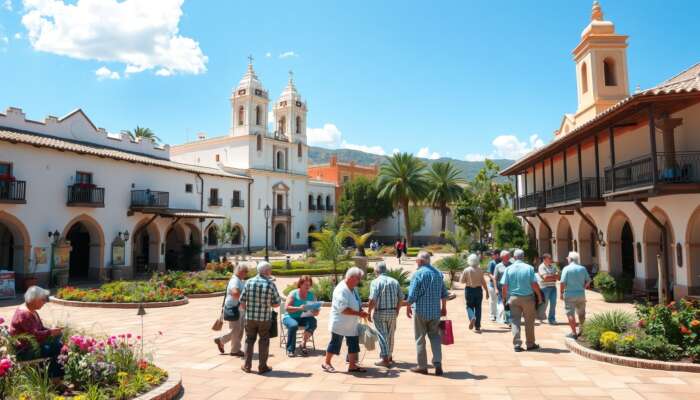
For practical expat stories and moving advice, read our expats: moving and living page which collects relocation experiences.
Practical Checklist To Decide And Move
A condensed, action-oriented checklist you can follow in 60–90 days of planning.
- Run Your Numbers: build a 12-month budget using the monthly tiers above; confirm income sources (pensions, withdrawals, investments). See our cost breakdown for line-item examples.
- Try Before You Commit: book a 2–4 week stay (Centro vs suburb) to test weather, noise, and healthcare access — short trips reveal what online research misses. If you want a short cultural trip with structured local activity, consider a workshop stay as a practical trial.
- Start Residency Paperwork: consult consulate guidance and hire a local notary when buying property; our relocation guide lists notary contacts and basic timelines.
- Arrange Healthcare: get quotes for private insurance and identify a primary care physician before switching long-term care.
- Choose Housing: shortlist neighborhoods (Centro, Guadalupe, Atascadero, or quieter suburbs), check rentals live, and meet realtors or rental agencies in person to verify listings.
- Plan Logistics: shipping vs selling, mail forwarding, banking setup, and preparing important documents (birth certificate, marriage license, medical records translated if needed).
Frequently Asked Questions
How Much Money Do I Need To Retire In San Miguel?
You can live modestly as a single for roughly $1,200–$1,600/month and comfortably as a couple for $2,800–$3,800/month; plan an emergency buffer and a healthcare premium depending on age. Use our cost guide to build a month-by-month plan.
Is San Miguel De Allende A Good Place To Retire?
For many retirees the answer is yes: excellent culture, strong expat networks, and accessible private healthcare make it attractive. Downsides include seasonal tourist crowds, variable housing costs, and the need to navigate Mexican bureaucracy — test a short stay first.
Where Do Most Expats Live?
Popular areas are Centro (walkable, social life), Guadalupe (residential close to Centro), Atascadero and other family neighborhoods (quieter), and gated developments on the outskirts for privacy. See our neighborhood guide for details.
What Are The Main Downsides And Regrets Retirees Report?
Common regrets: underestimating healthcare and emergency expenses, not testing neighborhoods with a multi-week stay, and overlooking paperwork timelines. Address these with a trial visit, clear budgeting, and early residency planning.

Cameron Hale is an insightful author and enthusiast of San Miguel de Allende, where he explores the rich culture, history, and vibrant community of this enchanting Mexican city. With a keen eye for detail and a passion for storytelling, he captures the essence of life in San Miguel, sharing unique perspectives on its art, cuisine, and local traditions. Through his engaging writing, Cameron invites readers to discover the charm and allure of this remarkable destination.
Your emphasis on the necessity of a solid financial plan for retirement resonates deeply. I recently went through this process myself, and it was enlightening to face the reality of my current assets versus what I’d need for a comfortable retirement. One crucial aspect I’ve found is considering not just the numbers but also my lifestyle choices—what activities and experiences I want to prioritize in my later years.
Your insights into the necessity of financial planning for retirement resonate deeply with me. It is a truth that many overlook until they find themselves at a crossroads. The aspect of assessing not just savings, but the entirety of one’s financial landscape—assets, liabilities, and projected income—is often a daunting task. However, as you pointed out, it is this very groundwork that can lead to a fulfilling retirement journey.
Your emphasis on the importance of financial planning is spot-on. In my experience, one of the most crucial aspects of retirement planning is not just accumulating wealth but also understanding how to manage it wisely. For many, the transition from earning a paycheck to drawing from savings can be daunting. It requires a shift in mindset, from growth-oriented strategies to preservation and generation of income.
This discussion on the importance of financial planning for retirement resonates deeply with me. I’ve seen firsthand how a well-thought-out financial strategy can make all the difference in the quality of life during retirement. For instance, when my parents retired, they spent a great deal of time mapping out their budget to ensure they could travel and explore new hobbies—like painting and gardening—without the stress of financial uncertainty.
You raise some critical points about financial planning for retirement, especially in a place like San Miguel de Allende, where lifestyle and cost of living can be remarkably different from many places. However, I think it’s also important to consider the non-financial aspects of retirement—like the social environment, cultural experiences, and access to healthcare. For instance, while you can crunch the numbers and ensure you have enough savings, the success of a retirement experience often hinges on community engagement and personal fulfillment.
Your insights on financial planning for retirement resonate deeply, especially when considering the specific context of transitioning to a new life in San Miguel de Allende. One key aspect that often gets overlooked is the importance of not just quantifying assets but also evaluating lifestyle priorities in retirement.
You raise some really important points about financial planning for retirement. I’ve been diving into this process myself, and it’s fascinating how much it impacts not just our financial security but also our overall peace of mind. For instance, I recently read about someone who moved to San Miguel de Allende without a solid plan. While the lifestyle is undeniably attractive—lush culture, incredible food, and a warm community—financial missteps can really overshadow the experience.
You’ve raised an important point about the necessity of financial planning for retirement, particularly in a place like San Miguel de Allende, which has become a popular destination for many looking to retire abroad. It’s intriguing how financial considerations intertwine with lifestyle choices in such vibrant locales.
You’ve hit on such an important point about financial planning for retirement! It reminds me of how different cultures view aging and retirement. In places like San Miguel de Allende, there’s a fascinating blend of community and lifestyle that can really enhance the quality of life during retirement.
I’ve found that financial planning for retirement, especially when considering a move to a new place like San Miguel de Allende, can’t be overstated. It’s easy to focus solely on the enjoyable aspects of a new life in a vibrant city filled with culture and community—who wouldn’t be excited by the prospect of enjoying art, food, and warm weather? However, as you rightly pointed out, grounding that excitement with thorough financial planning is crucial.
Your insights on the importance of financial planning for retirement resonate strongly with me. I’ve often contemplated the delicate balance between enjoying life now and planning for the future. I recently came across a study that highlighted how many retirees underestimate their expenses, especially when it comes to healthcare and lifestyle shifts. It’s a stark reminder that financial awareness is just as crucial as pursuing one’s passions in retirement.
Your breakdown of the costs associated with retiring in San Miguel de Allende is incredibly enlightening, especially as many expats seek an affordable yet vibrant lifestyle. However, while the financial aspects are crucial, I wonder how factors such as local culture and healthcare services play into the decision-making process for expats.
San Miguel de Allende really does seem like an appealing spot for retirement, especially with those budget ranges! I’ve been looking into various expat destinations, and the combination of affordability and vibrant culture here is hard to beat. The cost breakdown you provided is especially helpful for those of us trying to gauge living expenses.