Use this San Miguel de Allende map guide for city-level navigation: Centro, neighborhoods, walking, driving and offline orientation. For the broader question of where San Miguel is in Mexico, coordinates and regional context, use the separate location guide.
Quick Map Answer
For walking in Centro, orient around Jardín Allende and the Parroquia de San Miguel Arcángel. For driving or airport transfers, use live navigation because closures, one-way streets and traffic conditions can change. Save an offline map before arrival if you may lose data service.
Interactive San Miguel de Allende Map
Use the embedded map for live orientation. If you want a paper backup, print this page or save a screenshot of the area you need. Do not rely on an old static image for turn-by-turn driving.
Centro: The Easiest Way to Read the City
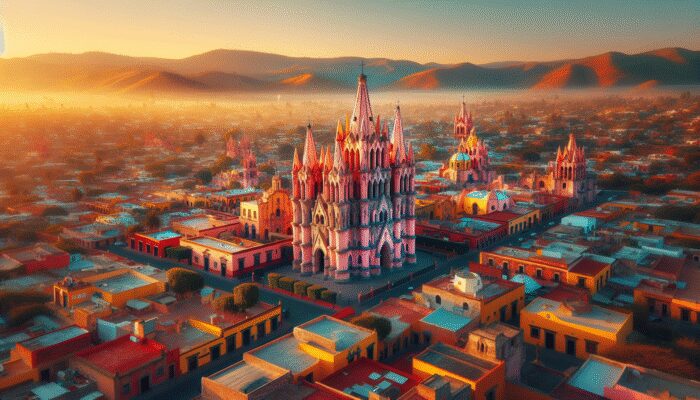
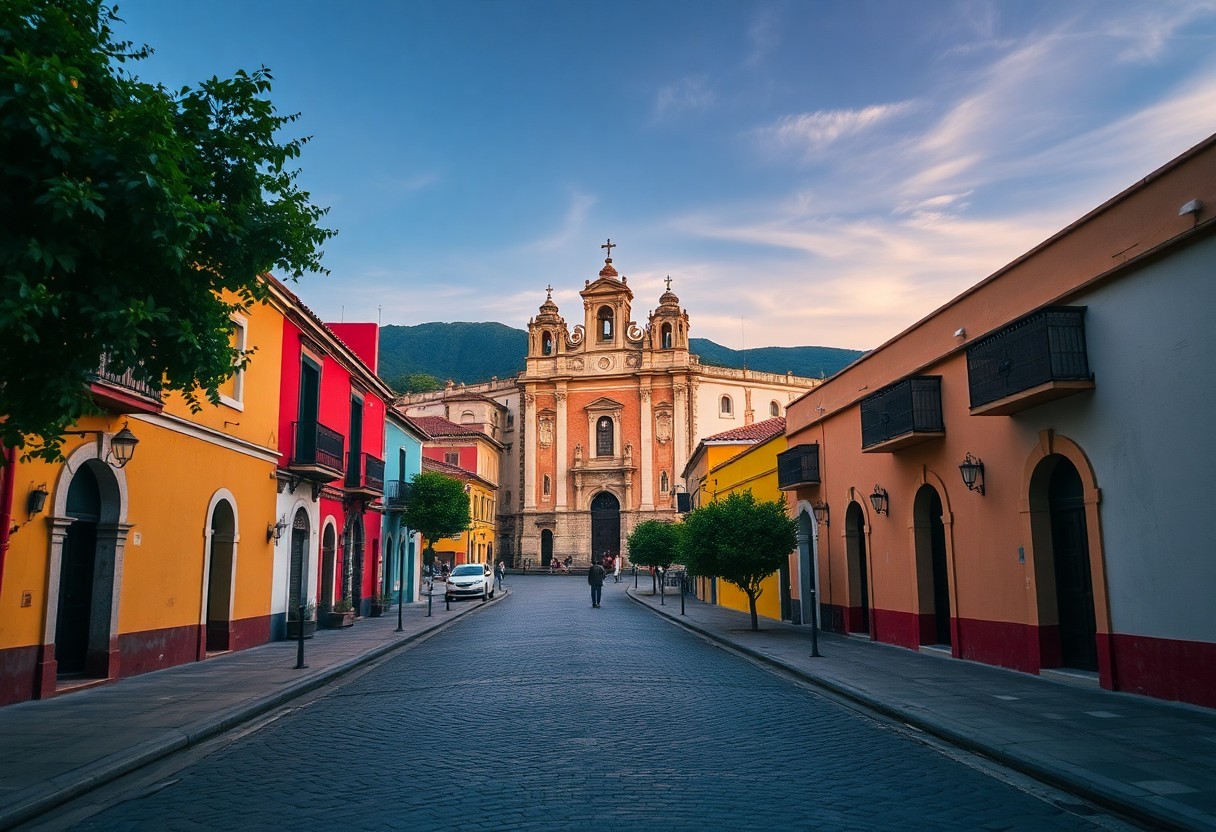
Jardín Allende and the Parroquia de San Miguel Arcángel are the best orientation anchors for first-time visitors. The historic center is compact, but cobblestones, slopes and narrow streets can make a short map distance take longer than expected.
For a simple walking plan, locate your hotel, Jardín Allende, the Parroquia and your evening destination before leaving. That tells you much more than a generic neighborhood label.
Neighborhood Map: What to Look For
| Area | Useful map question |
|---|---|
| Centro Histórico | How close am I to Jardín Allende, the Parroquia and my evening destinations? |
| Guadalupe | What is the actual walking route to Centro, not just the straight-line distance? |
| San Antonio | Will I normally walk, take a taxi or use a ride service for central trips? |
| Hillside / farther-out areas | How steep is the route, and is transport easy to arrange at night? |
Walking Routes and Offline Navigation
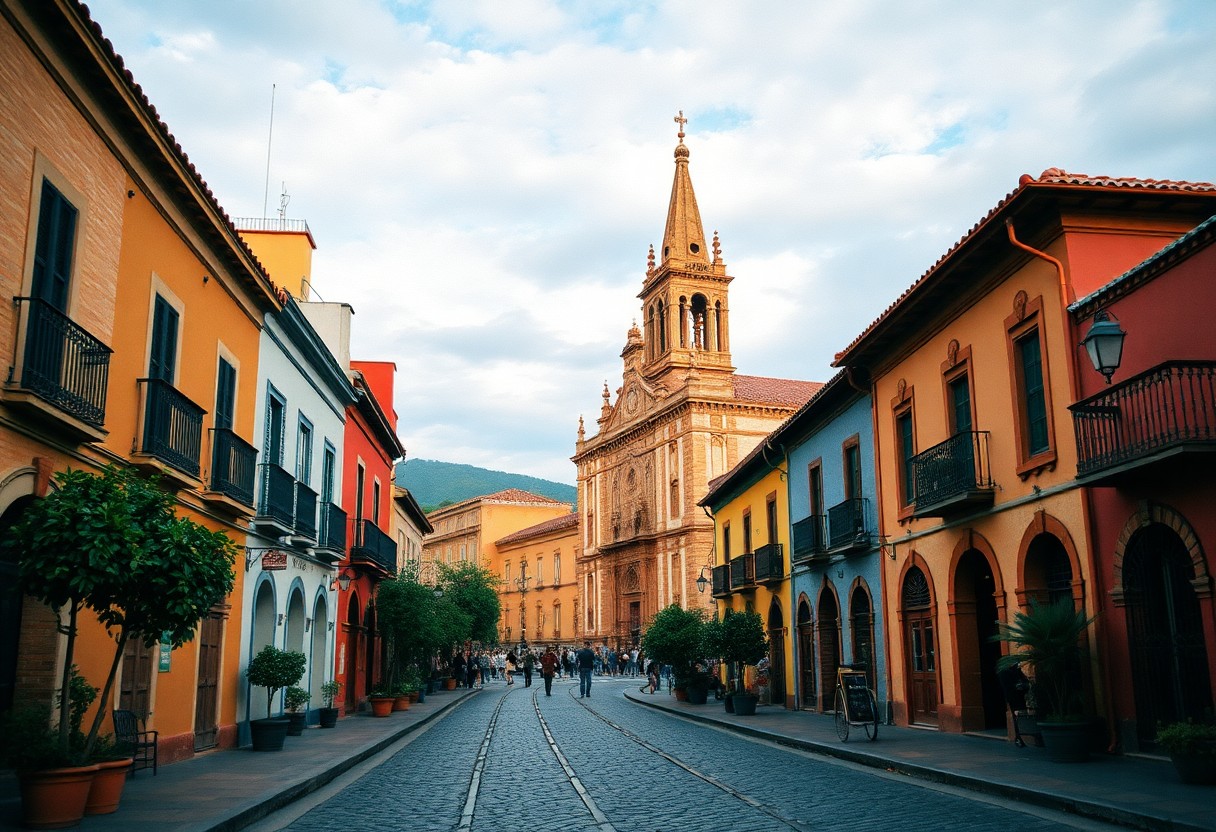
Centro is best explored on foot, but the surface matters: cobblestones, uneven sidewalks and hills can change the easiest route. Download an offline map area in your preferred navigation app before arrival and save your accommodation location.
For neighborhood trade-offs and hotel location decisions, see Where to Stay in San Miguel de Allende.
Driving, Parking and Arrival Routes
Do not use a static tourist map as a driving map. Centro has narrow streets and traffic rules or closures can change. Use live navigation for the final approach and confirm parking with your accommodation before entering the historic core.
For the trip into the city, use our getting-to-San-Miguel guide. For flights, compare QRO and BJX in the airport guide.
Map Safety: Route Planning After Dark
A map is useful for choosing a route, but it is not a live crime feed. For nighttime route planning and current safety context, use our separate San Miguel de Allende safety map and neighborhood planning guide.
Which Map Should You Use?
| Task | Best tool |
|---|---|
| Find the city in Mexico | Location guide |
| Walk around Centro | Interactive map + saved offline area |
| Choose a neighborhood | Where-to-stay guide |
| Drive into town | Live navigation + accommodation parking instructions |
| Plan safer night routes | Safety map guide |
Frequently Asked Questions
Is San Miguel de Allende walkable?
Centro is compact and highly walkable for many visitors, but cobblestones, uneven sidewalks and hills can make some routes harder than they appear on a map.
Can I print the San Miguel de Allende map?
You can print this page or save an offline/screenshot view of the area you need. For driving, always use current live navigation rather than an old static printout.
Where is Centro on the map?
Use Jardín Allende and the Parroquia de San Miguel Arcángel as the central orientation points for the historic core.
Should I use a map to choose a hotel?
Yes. Compare the exact property with your likely evening destinations, hills and transport needs instead of relying only on the neighborhood name.
Eliot Mercer is an insightful author and local enthusiast, specializing in the vibrant culture and scenic beauty of San Miguel de Allende. With a passion for storytelling, he explores the rich history, diverse arts, and unique lifestyle of this enchanting Mexican town, providing readers with a captivating lens through which to view the community. Through his engaging writing, Eliot invites others to discover the charm and allure of San Miguel de Allende, sharing his personal experiences and deep appreciation for the area’s traditions and modern dynamics.
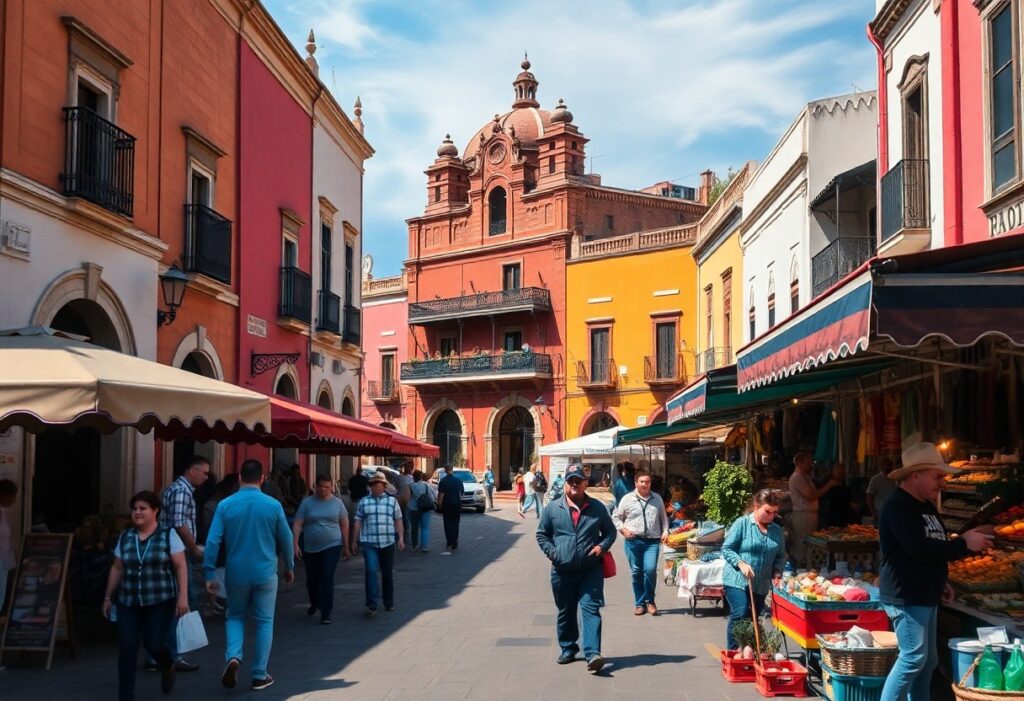
It’s interesting how maps serve not just as guides but as storytelling devices that capture the essence of a place. In San Miguel de Allende, for instance, navigating through its vibrant streets and historical buildings becomes more meaningful when you understand the context behind each landmark. I remember getting lost during my first visit, only to stumble upon a hidden art gallery that wasn’t marked on any tourist map. It sparked my appreciation for exploring without strict guidelines and trusting the serendipity of those moments.
Ah, maps—the unsung heroes of our travels. It’s like having a GPS but without the snarky tone when you miss a turn! Your guide is a fantastic reminder of how these colorful illustrations bring our wandering minds back to reality (and to the right café!).
The exploration of maps as a vital tool for navigating unfamiliar territories is so timely and necessary, especially in a world where travel is sometimes both an adventure and a challenge. Your discussion highlights a fundamental aspect of maps: they aren’t just geographical representations, but also narratives of our interactions with spaces.
Your exploration of the role of maps in enhancing our understanding of geographical layouts strikes a chord with me, especially in the context of a vibrant place like San Miguel de Allende. It’s fascinating how maps not only illustrate locations but also serve as a narrative tool, conveying the historical and cultural significance of areas.
You’ve brought up some fascinating points about the multifaceted role of maps in our understanding of geography. I believe that, beyond just navigation, maps also serve as cultural artifacts that reflect the values and priorities of the societies that create them. For instance, a map that emphasizes public parks or community centers can offer insights into a community’s commitment to public space and well-being.
You’ve highlighted such an interesting aspect of maps that often gets overlooked. They definitely can tell us a lot about cultural priorities. For instance, consider historical maps that show trade routes or military strategies; they reveal not just geography but also what societies valued at the time—whether it was commerce, conquest, or exploration.
You’ve highlighted such an interesting aspect of maps that often gets overlooked. It’s fascinating how something that seems so straightforward on the surface can hold so much depth about societal values and priorities. The way historical maps chart trade routes or military strategies indeed gives us a glimpse into what those societies considered essential.
You’ve touched on an important point about maps serving as cultural artifacts. It’s fascinating when you think about how the things we choose to highlight in a map tell stories about our values and concerns. For example, a map that prioritizes public parks likely reflects a community’s belief in the importance of green space for relaxation and social gathering, which can be vital for mental health and community cohesion.
As I navigated the winding streets of San Miguel de Allende last summer, I found myself pondering the universal truth that maps are, in a strange way, like the quirky friends we all have. You know, the ones who guide you through the maze of life’s adventures, occasionally leading you astray but ultimately sharing a treasure trove of experiences along the way. There I was, clutching a colorful map with the excitement of embarking on a treasure hunt, only to discover that the “shortest route” to the nearest taco stand often involved a 20-minute detour past some oddly charming art galleries and a very persuasive street performer who’s convinced he’s the reincarnation of Frida Kahlo.
I love the way you’ve captured the essence of exploring new places through the lens of maps. It’s true—maps can turn a simple stroll into an adventure. Your experience in San Miguel de Allende really resonates. Those winding streets, with their vibrant colors and surprises around every corner, can be like a beautifully crafted story where you’re both the main character and the reader.
Your reflection on maps and friendships really resonates with me. There’s something so poetic about how both guide us, offering unexpected detours that often become the highlights of our journeys. It reminds me of a recent experience when I visited a new city. I was determined to stick to my phone’s GPS, thinking it would save me time. But the few moments I chose to wander off that path—driven by the vibrant street art or the inviting sounds of a local band—led me to some of the best coffee shops and art galleries that weren’t on any tourist itinerary.
Your exploration of maps as essential tools for navigation and understanding resonates deeply, especially in the context of a culturally rich and diverse place like San Miguel de Allende. It’s fascinating to consider how maps not only represent physical landscapes but also shape our perceptions of them. While your post highlights the fundamentals of mapping, it invites a broader consideration of how the digital age has transformed our relationship with physical maps.
The intricate relationship between maps and our understanding of geography cannot be overstated, especially in a location as rich in culture and history as San Miguel de Allende. Your guide underscores how maps act not just as navigational tools but as storytelling devices that convey the essence of a place.
You bring up a crucial point about the role maps play beyond mere navigation. In places like San Miguel de Allende, a map can reveal layers of meaning—its vibrant markets, historic architecture, and winding streets all tell stories that connect to the culture and traditions of the area.
“Explore our detailed guide to maps in San Miguel de Allende and uncover the stories they tell!”
https://fallinginlovewithsanmiguel.com/transport
Your exploration of maps as essential navigational tools truly resonates with me. In our increasingly digital world, it’s easy to overlook the art and science behind traditional map-making. I often find that using a physical map not only sharpens my sense of direction but also deepens my connection to the places I visit. For example, I’ve unearthed hidden gems in cities simply by following a winding path on a map, discovering local cafés or parks that wouldn’t have shown up on a GPS app.
It’s refreshing to hear your thoughts on the value of traditional maps in today’s fast-paced digital landscape. There’s something almost poetic about unfurling a physical map, isn’t there? The way it encourages us to slow down and really observe our surroundings can lead to unexpected adventures.
I’m glad to hear that you appreciate the art of traditional map-making! If you’re interested in exploring more about the beauty of maps and perhaps discovering new routes, check out this link for some great resources and unique map collections.
https://fallinginlovewithsanmiguel.com/food-and-drink
Your exploration of the essential role maps play in navigating both geographical and cultural landscapes resonates deeply with me. Maps are more than just tools; they encapsulate stories and histories of the places we explore. For instance, when I visited San Miguel de Allende, I found that having a well-detailed map not only guided my steps through its winding streets but also enriched my understanding of local history and architecture, especially in neighborhoods that showcase distinct colonial features.
It’s great to hear how much your experience in San Miguel de Allende was enriched by a good map. That city is a real treasure, isn’t it? The way the streets twist and turn, with all that colonial architecture around you, really makes each corner feel like a new discovery.
I really appreciate how your post highlights the essential role of maps in our understanding of spatial relationships, particularly in a place as captivating as San Miguel de Allende. Maps are so much more than just tools for navigation; they encapsulate the stories of places, connecting us with their histories and cultures.
Ah, maps! The unsung heroes of navigation and interpersonal relationship rescue missions. I can hardly think of a better way to start a conversation than with the topic of maps, especially in a place as enchanting as San Miguel de Allende. It’s like a puzzle waiting to be solved, isn’t it?
I love how you break down the essentials of maps—it’s like giving a GPS a personality! You know, every time I pull out a map, it’s like I’ve summoned a treasure map to adventure, minus the pirate hats (unless, of course, you’re into that).