San Miguel de Allende’s architecture stands out because colonial Spanish forms, ornate Baroque facades and highly skilled local masonry fused with indigenous craftsmanship to produce a compact, visually coherent town of brightly colored streets and intimate courtyards.
For practical travel details and where to stay while you explore these buildings, see the site’s complete travel guide.
A century-spanning blend: Spanish colonial planning and materials, exuberant Baroque ornament made possible by local stonecutters, later neoclassical symmetry, and careful contemporary infill that respects scale and color. That mixture — plus unusually strong local preservation — creates the town’s signature look.
Which Sites To See, Depending On Your Time
| Visit length | Must-see structures | Why it matters |
|---|---|---|
| 2 hours (Centro walk) | Parroquia de San Miguel Arcángel, El Jardín, Aldama street | Instant sense of the town’s palette, scale and ornament. |
| Half day (4 hours) | Instituto Allende, Casa de la Cultura, narrow callejones | See restored interiors and artisans at work; great photography. |
| 1 day | Add El Santuario de Atotonilco (short drive) and several mansions | Context for religious and civic architecture across centuries. |
| 3 days+ | Workshops, galleries, architect-led tours, nearby pueblos | Deeper study of craft, restoration and contemporary interventions. |
Quick Planning Checklist
- Wear comfortable shoes; most centro streets are cobblestone.
- Carry water and sun protection; many façades are best photographed in morning or late afternoon light.
- Book a guided walking tour if you want insider architectural history and courtyards that are usually private (see local activity guide for tour options).
- Respect private homes and watch for restoration scaffolding; many historic houses are lived-in.
How History Made This Town Look The Way It Does
The short version: the town’s layout and materials come from early Spanish colonial planning — compact blocks, central plaza, and buildings oriented around interior patios. Wealth from nearby mines and the skill of local stonemasons produced richly carved stonework and Baroque facades in the 17th–18th centuries. In the 19th century, neoclassical ideas introduced symmetrical civic buildings and refined proportions. During the 20th and 21st centuries, a wave of artists, foreign residents and conservation-minded planning encouraged sensitive restoration rather than wholesale replacement.
Key Contributing Factors
- Local Craft Tradition centuries of stonecutting and tile-making gave artisans the vocabulary to elaborate facades and courtyards.
- Colonial Planning narrow streets and interior patios that respond to climate.
- Material Palette regional stone, stucco, hand-glazed tiles and painted timber.
- Preservation Culture strict center protections and active restoration that maintain visual coherence.
Styles At A Glance (What To Look For)
San Miguel’s visual identity is easiest to read when you know a few signature traits.
Spanish Colonial
Look for thick whitewashed walls, inward-facing courtyards, heavy wooden doors and simple, robust massing. The plan prioritizes shade and privacy, so many of the most striking architectural moments are found off the main street.
Baroque (Local Spanish Baroque)
Highly ornate stone facades, dramatic sculptural doorways, columns and carved reliefs. The Parroquia’s neo-Gothic spire is a later, idiosyncratic addition — but Baroque ornament is visible across many churches and civic buildings.
Neoclassical
Symmetry, restrained ornament and classical proportions appear on municipal buildings and grand houses built or remodeled in the 19th century.
Contemporary And Hybrid
Newer work in San Miguel tends to respect scale and color while introducing modern materials or sustainability features; look for minimalist additions tucked behind historic façades or contemporary courtyards that reuse traditional tiles.
Iconic Buildings And Where To See Them
These are the quickest ways to read the town’s architectural story.
Parroquia De San Miguel Arcángel
The pink neo-Gothic spires that dominate El Jardín were designed by local stonemason Zeferino Gutiérrez in the 19th century; the result is one of Mexico’s most photographed church silhouettes. Study the spires from the plaza, then walk around to note the masonry detail and the nearby colonial terraces.
Instituto Allende
An art school housed in a colonial building where restored interiors open into courtyards and galleries — a good example of adaptive reuse that keeps historical structure active.
Casa De La Cultura And Restored Mansions
These spaces reveal interior tilework, wooden beams and wrought iron balconies. If you’re focused on ecclesiastical architecture, consult the site’s cathedrals guide for a deeper tour of religious buildings.
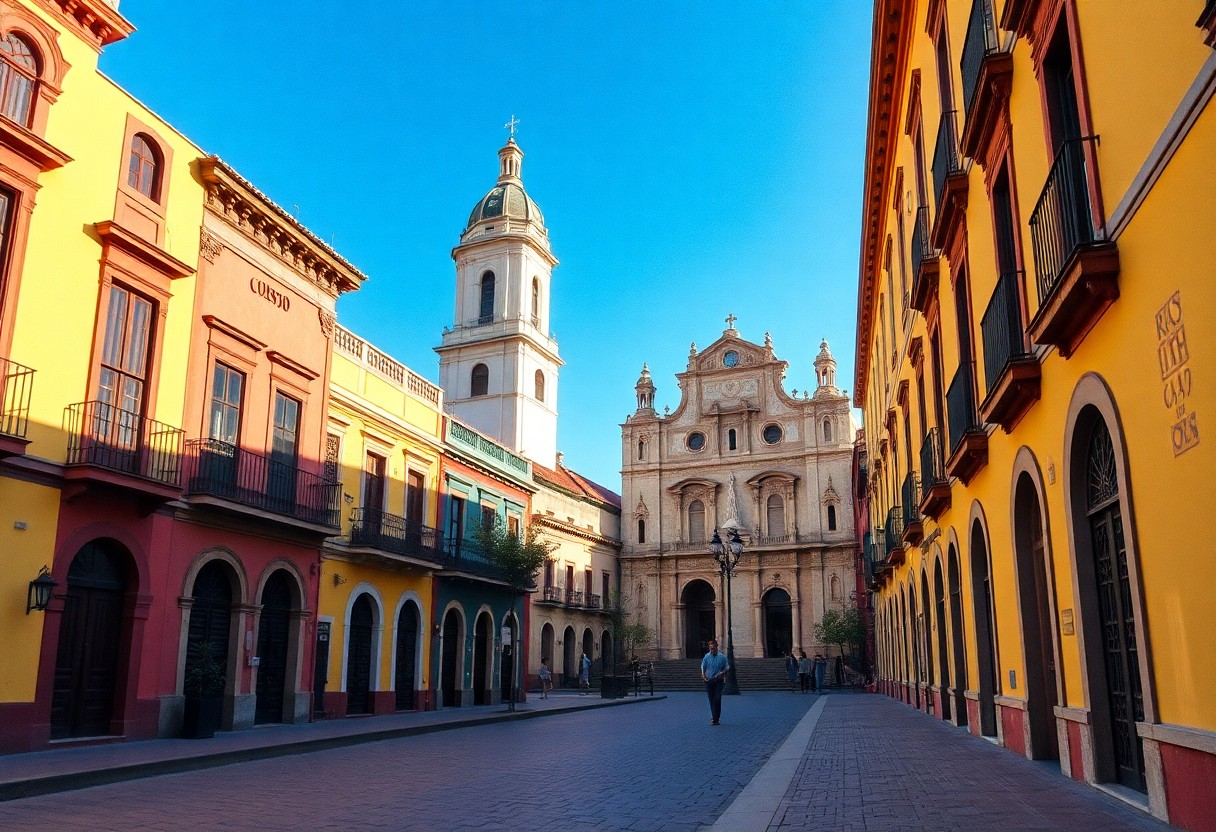
Tip: arrive early to El Jardín for clean light and fewer tourists around the Parroquia.
Short Architecture-Focused Walking Routes
These compact routes are designed to illustrate styles and provide actionable paths you can follow without a guide.
2-Hour Centro Highlights (Best For First-Time Visitors)
- Start at El Jardín — photograph the Parroquia.
- Walk north along Aldama to see painted private homes and balconies.
- Cut through a callejón to a courtyard café for a close view of tilework.
- Finish at Instituto Allende to see adaptive reuse of colonial space.
4-Hour Courtyards & Mansions (Deeper Interior Focus)
- Begin with a guided visit to Casa de la Cultura (check open hours).
- Walk past restored mansions to note ironwork and carved doors.
- End with a gallery or institute visit to see how contemporary artists use historic spaces.
1-Day Loop Including El Santuario De Atotonilco
- Morning: Centro — Parroquia, Jardín and nearby mansions.
- Afternoon: short drive to El Santuario de Atotonilco (a Baroque religious complex listed for its painted interiors).
- Evening: return for rooftop photos of the town at sunset.
3-Day Study (Craft & Restoration)
Spend a day on guided tours of stonework shops and tile ateliers, a day on walking routes above, and a day visiting contemporary studios and galleries to complete the narrative arc from craft to contemporary practice. The site’s activities guide lists workshops and photography courses that can be booked in advance.
Key Architectural Features To Study Up Close
- Façade Ornament carved stone portals and decorative pilasters are often signatures of local workshops.
- Courtyards tilework, fountains and arcades that create microclimates.
- Balconies And Ironwork notice the variety of forged patterns and how they complement door surrounds.
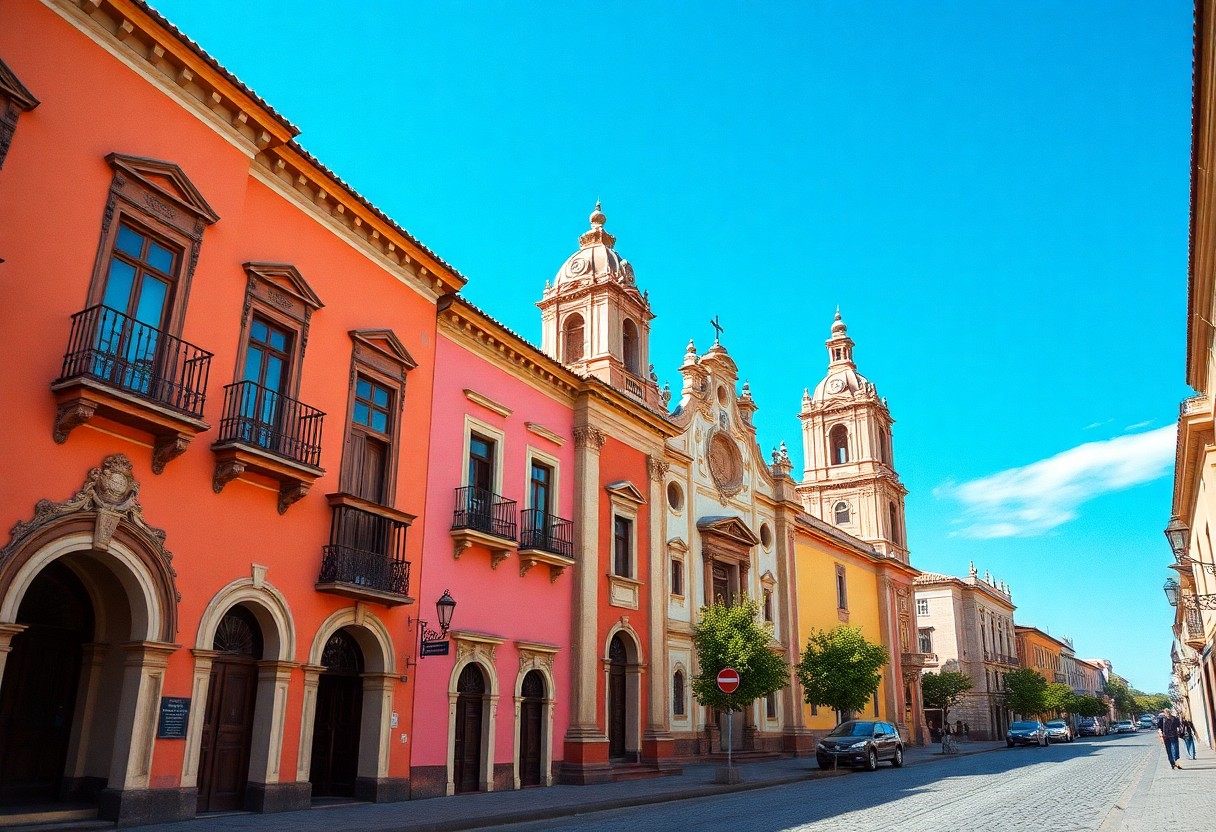
- Color Palette ochres, terracottas, and bright blues that create the town’s vivid street-level experience.
Preservation Vs. Development — A Concise View
San Miguel has chosen preservation as an economic and cultural strategy: keeping the historic center intact sustains tourism and artisan economies but requires public investment and careful rules for new construction. Responsible development in peripheral areas allows the town to modernize services without undermining visual coherence downtown.
Benefits Of Preservation
|
Development Challenges
|
Practical Photography Tips
- Shoot during golden hours for the best warm tones on painted facades.
- Use a wide-angle lens for full façades and a 50–85mm for detailed ornament.
- Look for shadow patterns inside courtyards in late morning for texture studies.
- Respect private property—ask before photographing interiors or people at work.
Where To Read More And What To Book Next
If you’re planning a trip focused on architecture, pair this guide with the site’s broader travel resources: the complete travel guide for logistics and the activities guide for workshops and tours.
Check the site’s up-to-date safety and traveler advice before you go to plan your days with confidence.
Frequently Asked Questions
What Types Of Architecture Can You Find In San Miguel De Allende?
Primarily Spanish Colonial and Spanish Baroque, with 19th‑century neoclassical civic buildings and tasteful contemporary infill; the local variant of Baroque and abundant artisan stonework are especially notable.
What Is The Architectural Style Of The Parroquia De San Miguel Arcángel?
The Parroquia’s façade is best described as an eclectic neo‑Gothic reinterpretation built over earlier colonial structures; its dramatic pink spires are a 19th‑century, locally driven reimagining that became the town’s visual emblem.
What Makes San Miguel De Allende So Special Architecturally?
The combination of a compact colonial plan, consistently applied color and material palettes, high-quality artisan stonework and a strong local preservation culture produces a coherent urban scene where every street reads as part of a single, layered narrative.
Did Frida Kahlo Live In San Miguel De Allende?
No — Frida Kahlo was primarily associated with Mexico City. San Miguel has its own artistic history and attracted many artists and expatriates, but Kahlo did not live here.
Who Were The Big Architects Or Workshops To Know?
Rather than a single canonical ‘big five’, San Miguel’s architectural identity rests on numerous local stonemasons, church builders and later conservation-minded architects; Zeferino Gutiérrez (the stonemason credited with the Parroquia’s 19th‑century rework) is the best-known individual linked to the town’s look.
If you want a mapped walking route or a photography workshop recommendation, the site’s photography workshop page lists local options; for safety and timing check the travel safety page linked above before booking.
Final Note
San Miguel’s architecture is best experienced slowly: allow time for courtyard visits, rooftop views and conversations with local artisans; that layered, human scale is the single quality that makes its buildings feel both ancient and warmly alive.

Cameron Hale is an insightful author and enthusiast of San Miguel de Allende, where he explores the rich culture, history, and vibrant community of this enchanting Mexican city. With a keen eye for detail and a passion for storytelling, he captures the essence of life in San Miguel, sharing unique perspectives on its art, cuisine, and local traditions. Through his engaging writing, Cameron invites readers to discover the charm and allure of this remarkable destination.
I find San Miguel de Allende truly enchanting! The blend of indigenous and European architectural styles creates a unique character that’s hard to find elsewhere. I was particularly struck by how the vibrant colors of the buildings reflect the local culture and spirit. Each corner really does tell a story—it’s like walking through a living museum.
San Miguel de Allende does have this remarkable quality of drawing you in, doesn’t it? The blend of indigenous and European architecture creates a canvas that feels alive, reflecting its complex history and diverse influences. You mention the vibrant colors, and that’s such an important aspect. It’s not just about aesthetics; those hues often carry meanings related to local traditions and celebrations.
San Miguel de Allende really does have a way of capturing your imagination, doesn’t it? The way the architecture tells a story about its history—merging indigenous elements with European touches—is fascinating. Have you wandered around the cobblestone streets at different times of the day? The changing light makes the colors pop even more, revealing different nuances in the facades.
I really appreciate your insights into San Miguel de Allende’s unique architectural landscape. It’s fascinating how the city embodies a blend of indigenous craftsmanship and European influences, which not only tells a story of its past but also shapes its vibrant present. I remember visiting a small gallery there that featured local artists who draw inspiration from the very architecture you mentioned. The way they intertwined traditional techniques with contemporary art really highlighted the ongoing dialogue between the past and the present.
Reading about San Miguel de Allende and the architectural marvel it encapsulates truly resonates with me. The fusion of Spanish colonial and indigenous influences is not just a feast for the eyes; it tells an intricate story of resilience and adaptation that is reflective of Mexico’s broader narrative.
Your insights on San Miguel de Allende highlight an essential aspect of its charm. The way its architecture weaves Spanish colonial and indigenous elements isn’t just visually stunning; it also serves as a reminder of the complex history that shaped the region. This blend isn’t merely an aesthetic choice; it reflects how communities have adapted and thrived over centuries, preserving their identity while embracing change.
You’ve captured the essence of San Miguel de Allende beautifully. The architecture really does tell a story that goes beyond just the visual appeal. I’d often find myself wandering the cobblestone streets, admiring how each building reflects a blend of cultures and histories.
You hit the nail on the head with the architecture! Each corner of San Miguel feels like it’s whispering secrets from centuries past. And those cobblestone streets—perfect for wandering and tripping over your own feet while trying to take in the sights. I swear, every twist and turn has its own story, like a talkative neighbor who just won’t quit.
“Thank you for your thoughtful comment! If you’re looking to explore more about the rich history and unique architecture of San Miguel de Allende, check out this guide that dives deeper into its captivating stories.”
https://fallinginlovewithsanmiguel.com/book-flight
Reading about San Miguel de Allende brings back fond memories of my own visit to this enchanting city. Its architecture is not just a feast for the eyes; it feels alive with stories from both the indigenous and colonial eras. Walking through the cobbled streets, I found myself captivated by how the vibrant colors of the facades reflect the local culture and traditions, making every corner feel like a piece of art.
It sounds like your visit to San Miguel de Allende was truly memorable. I can relate to that feeling of walking through a place where history seems to breathe alongside you. The way the architecture tells stories of the past—it’s almost as if the buildings themselves are guardians of the memories from both the indigenous and colonial eras.
If you’re planning a trip to San Miguel de Allende, I found a helpful packing guide that captures the essentials for experiencing the city’s vibrant culture and stunning architecture just right.
‘Packing List for San Miguel de Allende: Travel Essentials’
https://fallinginlovewithsanmiguel.com/packing-list-for-san-miguel-de-allende-travel-essentials/.
I’ve always been fascinated by how architecture tells a story about a place’s history and culture. San Miguel de Allende really seems to embody this principle beautifully. The blend of indigenous craftsmanship with European influences is something you rarely see harmoniously intertwined like that. It makes me think about how cities around the world express their historical layers through their buildings, from the gothic spires of Europe to the adobe structures in the American Southwest.
San Miguel de Allende truly encapsulates the essence of Mexico’s multifaceted history through its architectural landscape. The way you described the vibrant facades and intricate details resonates with my own experiences in the city. Walking through its cobblestone streets feels like stepping into a living museum, where each building tells a story reflecting centuries of cultural exchange.
You’ve captured that feeling so beautifully; it’s such a joy to hear how deeply you connect with the essence of San Miguel de Allende. Walking those cobblestone streets really does take you back, doesn’t it? It’s fascinating how the architecture there acts like a time capsule, allowing us to experience the blend of cultures and histories that have shaped the city.
You’ve touched on something essential about San Miguel de Allende. The cobblestone streets do have that almost hypnotic quality, don’t they? It feels like every turn introduces you to a new fragment of history. But I wonder if that charm sometimes overshadows some of the contemporary challenges the town faces. The blend of cultures is rich, but it also raises questions about gentrification and the impact on the local community. It’s a balancing act—preserving the magic while ensuring the voices of those who’ve lived there for generations are heard. The architecture indeed tells a story, but we also need to engage with what’s happening on the ground today. How do you think we can maintain that connection to history without losing sight of the present?
I appreciate your kind words! Walking those cobblestone streets really does feel like stepping into a different era. Each turn reveals layers of history, where you can almost hear the whispers of the past. The architecture is a true reflection of the vibrant mix of influences that have touched San Miguel. It’s interesting how the colonial structures blend so seamlessly with the local artisan flair.
“Thank you for your lovely words! If you’re inspired to explore more about the magic of San Miguel de Allende, check out this link for a deeper dive into its enchanting history and charm.”
https://fallinginlovewithsanmiguel.com/seasonal-and-events
San Miguel de Allende truly evokes a sense of timelessness with its architectural beauty. Each building seems to tell a story, melding the influences of colonialism and indigenous artistry. I remember my first visit to the Parroquia de San Miguel Arcángel; the pink towers reaching for the sky seemed to embody the spirit of the city itself. The way the light plays off the colorful facades throughout the day creates a living canvas that shifts with the hours—this interplay of nature and architecture is a reminder of the harmony that can exist in design.
You’ve captured the essence of San Miguel de Allende beautifully. The architectural fusion you mention creates an atmosphere that’s both inviting and inspiring. Each stroll through the streets seems to unveil layers of history, doesn’t it?