
San Miguel de Allende’s colors and architecture come alive at golden hour; this short photo walk collects five high‑impact spots, the best times to shoot them, and compact composition and gear tips so you get great frames fast.
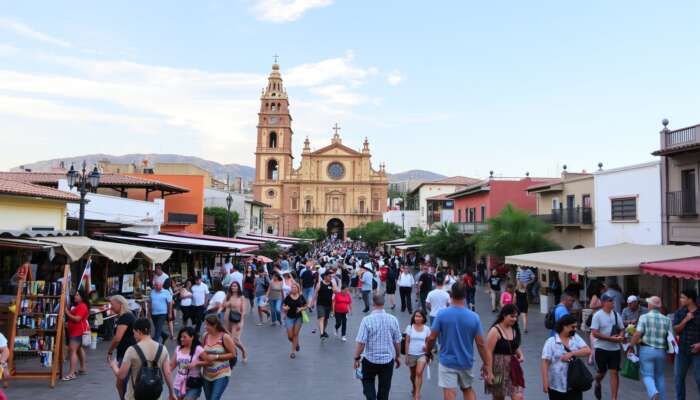
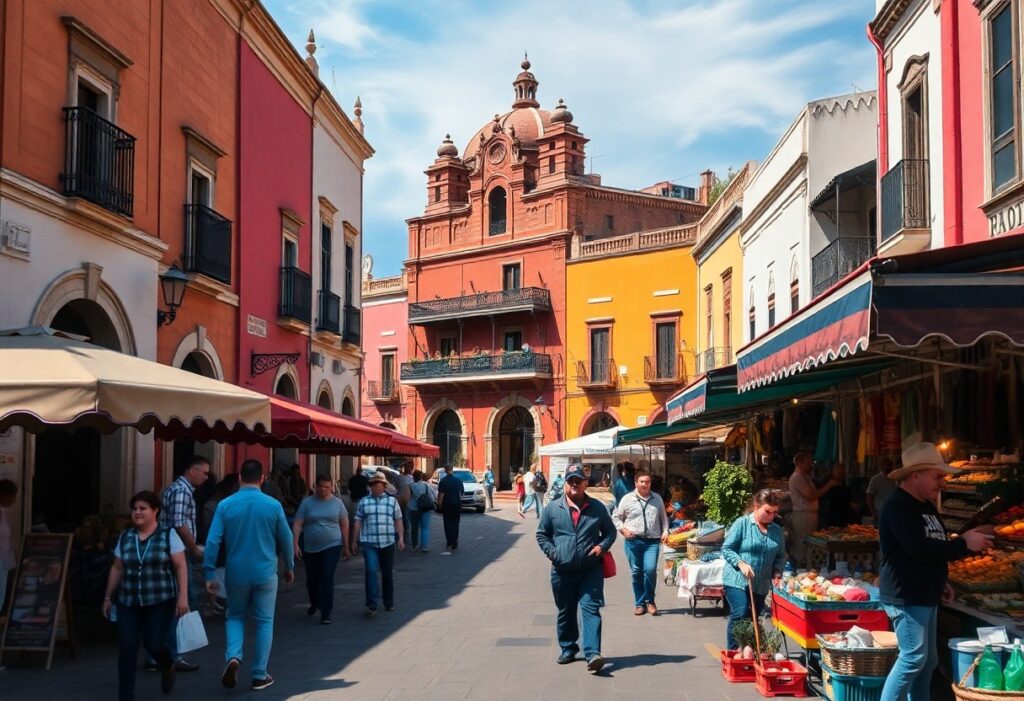
- El Jardín (Main Square) — Parroquia framed by street life; easy access.
- Parroquia Viewpoints — Rooftops and miradores for long lenses and tilt shots.
- Instituto Allende — Courtyards and color for portraits in soft light.
- Cobblestone Alleys Off Aldama — Leading lines and textured foregrounds.
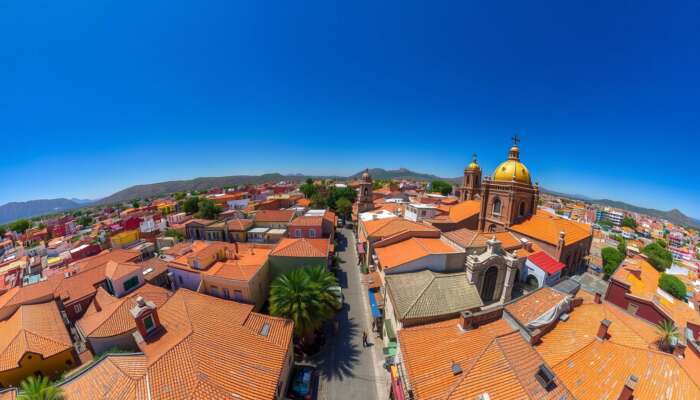
- Scenic Rooftop Near Centro — Wide views of colorful roofs at sunset (see sunrise/sunset spots).
Want the full hub of mapped spots and longer itineraries? See the site’s main photography guide here.
How To Use This Walk
This page is written as a supporting, action‑oriented photo walk focused on golden hour (the hour after sunrise and the hour before sunset). Keep the walk to a compact loop: start at El Jardín, move toward Instituto Allende, take the alleyways around Aldama, and finish on a rooftop for sunset. Below you’ll find quick composition tips, a compact table ranking the five spots by time‑of‑day and accessibility, and a short checklist for gear and timing.
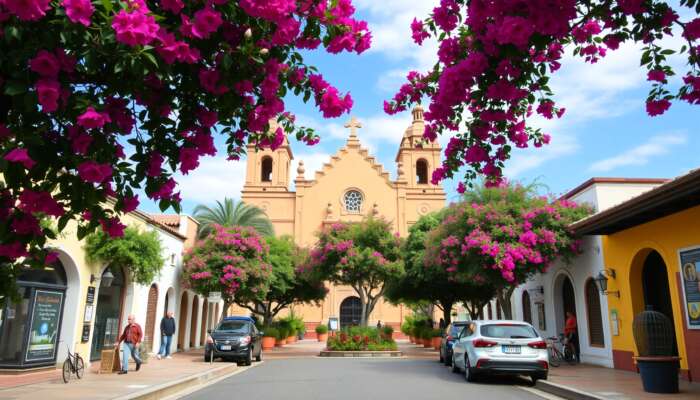
Top Spots, Ranked For Golden Hour
| Spot | Best time | Why go | Accessibility |
|---|---|---|---|
| El Jardín (Main Square) | Late afternoon to sunset | Iconic Parroquia + candid street life | Very easy; wheelchair paths near edges |
| Parroquia viewpoints/rooftops | Sunset | Panoramic silhouettes and backlight | Moderate — may require rooftop access |
| Instituto Allende courtyards | Golden hour and early evening | Portraits and textured color | Easy; small steps inside courtyards |
| Cobblestone alleys (Aldama area) | Early morning or late afternoon | Leading lines, textures, quiet moments | Moderate — narrow lanes, uneven ground |
| Scenic rooftop near Centro | Sunset / Blue hour | Wide cityscapes and dramatic skies | Moderate — ask at cafes or hotels for access |
Composition And Lighting Cheats For The Walk
Keep these short, practical rules in your pocket as you move between spots.
- Rule Of Thirds First, Then Break It place the Parroquia or a person on an intersection point, but try centered symmetry for architectural drama.
- Use Foregrounds flowered balconies, patterned cobbles, or a vendor’s stall add depth and scale—crouch low to exaggerate leading lines.
- Golden Hour = Warm Side Light shoot with the sun at 30–60° to the subject to bring out textures on stone and plaster.
- Backlight The Parroquia expose for the foreground people and let the church silhouette glow; add fill with a reflector or subtle flash for portraits.
- Try Frames Within Frames archways, windows, and doorways at Instituto Allende create instant compositional structure.
Timing, Seasonality, And When To Plan
Timing affects light, crowds, and available colors. For a golden‑hour walk focus on timing and a simple booking window for rooftops and workshops:
Dry season (late fall to spring) gives the clearest skies and warm sunsets; spring also shows seasonal blooms for extra color.
Start 40 minutes before sunset if you want both golden hour and blue hour frames; for sunrise plan to be in alleys early to avoid crowds.
Rooftop access or guided workshops often require 24–72 hours notice; check local workshops and reserve early for weekend shoots.
Gear Checklist (Compact)
- Wide (24–35mm) and short tele (50–135mm) cover street, portrait and view shots.
- Lightweight tripod for rooftop and blue hour exposures.
- Extra batteries and two memory cards; golden hour sessions can be longer than planned.
- Circular polarizer for reducing glare on bright walls and enhancing sky color.
- Small reflector or on‑camera fill (recommended for portraits in backlight).
Practical On‑the‑ground Tips
Two short notes from local practice:
- Crowds El Jardín fills early evening; if you want unobstructed Parroquia frames, arrive 45–60 minutes before sunset or use a telephoto from a distance.
- Rooftop Access Ask politely at cafés and small hotels — many allow short visits for a small fee or with a coffee purchase. Also check the site’s rooftop and sunrise guide for specific vantage points here.
Where To Stay To Make This Walk Easy
Base yourself in Centro or nearby neighborhoods to minimize transit time between spots. If you want direct recommendations and lodging neighborhoods, see the guide on where to stay here. Choosing Centro lets you walk the entire loop and return quickly to review shots on a laptop.
- Charge batteries and clear memory cards.
- Scout one rooftop contact and confirm access 24–48 hrs ahead.
- Plan your route around golden hour times for that date (apps like Sunrise/Sunset assist).
Short FAQ
Do I Need Permits To Shoot In Public Spaces?
For handheld, non‑commercial photography in public squares and streets you usually don’t need a permit; commercial shoots or tripods in busy squares may require prior permission — check with local authorities or your rooftop host.
Is It Safe To Carry Gear While Walking These Streets?
San Miguel de Allende is generally safe for photographers, but use common sense: keep gear close, avoid leaving bags unattended, and consider a discreet sling bag for the walk; more safety tips are available in the site’s safety guide.
Can I Join A Guided Photo Walk?
Yes — local workshops and guided walks are available; if you want professional guidance, check the photography workshop overview here and book in advance.
This golden‑hour walk is a compact supporting route; for the full list of mapped locations, downloadable itineraries, and longer photo essays, visit the site’s main photography hub.
If you want this short walk adapted for families, children, or sunrise-only shoots, the main guide links above include longer supporting routes and workshop listings.
Cameron Hale is an insightful author and enthusiast of San Miguel de Allende, where he explores the rich culture, history, and vibrant community of this enchanting Mexican city. With a keen eye for detail and a passion for storytelling, he captures the essence of life in San Miguel, sharing unique perspectives on its art, cuisine, and local traditions. Through his engaging writing, Cameron invites readers to discover the charm and allure of this remarkable destination.
Your insights on the significance of composition in photography really resonate with me, especially in the context of a visually rich place like San Miguel de Allende. I can’t help but think about my own experiences wandering through those vibrant streets, where every corner seems to offer a new opportunity to capture something extraordinary.
You make such an interesting point about the importance of composition in photography! I’ve always felt that it’s really like telling a story through a single frame, and the rules—like the rule of thirds and leading lines—are essential tools in that storytelling toolkit.
I completely agree with your take on composition being the backbone of photography! The rule of thirds truly is a game-changer, especially in a visually rich place like San Miguel de Allende. I recently attempted to capture the sunset over the Parroquia de San Miguel Arcángel, and by applying this principle, I noticed how the composition brought out the warm colors of the sky while framing the church beautifully.
Your insights on composition are spot-on, particularly in the context of a visually rich location like San Miguel de Allende. I resonate with the idea that the rule of thirds can elevate a photograph from mundane to mesmerizing. However, it also makes me wonder about the evolving role of technology in composition. With the advent of digital photography and editing software, how do you feel these tools impact our understanding and application of traditional composition techniques?
You’ve touched on a fascinating aspect of contemporary photography. The role of technology in how we understand composition is indeed evolving. With digital photography, the immediacy we have in capturing images and editing them alters our traditional approach. Tools like Lightroom and Photoshop have not only given us more creative freedom but also shifted how we perceive the boundaries of composition.
I really appreciate how you highlighted the importance of composition in photography, especially in a visually rich place like San Miguel de Allende. The rule of thirds is one of those classic techniques that really can elevate an image from being just a snapshot to something that tells a story. I’ve found that sometimes, it’s the subtle adjustments we make in our framing that can really shift the narrative of a photo.
Your exploration of composition in photography, particularly in a visually rich locale like San Miguel de Allende, resonates deeply with my own appreciation for how thoughtful framing can elevate an image beyond mere documentation. The emphasis on the rule of thirds and leading lines certainly highlights fundamental techniques, but I wonder if there is a deeper layer to the experiences we capture through our lenses?
I completely resonate with your insights on composition being the backbone of photography. When I was in San Miguel de Allende, I found myself drawn to the vivid colors and textures of the local markets. I remember capturing a scene where the vibrant fabrics of a vendor’s stall contrasted beautifully against the rustic buildings, using leading lines from the market pathways to draw the viewer’s eye. It really made me appreciate how much composition can elevate even the simplest moments.
Your exploration of composition in photography truly resonates, especially in the context of San Miguel de Allende. The interplay between vibrant colors and historic architecture offers a unique canvas for photographers to express their creativity. I appreciate how you highlighted the rule of thirds as an essential tool for framing compelling images. It reminds me of how often we overlook the beauty in our surroundings when not approached with a mindful eye.
Your exploration of composition and its pivotal role in photography truly resonates with anyone who appreciates the art form. Composition indeed has the power to elevate a photograph from a simple snapshot into a narrative that deeply connects with its viewers. The rule of thirds is so foundational, yet I find that its effectiveness often relies on the photographer’s ability to see beyond mere lines and grids, translating visceral emotion into visual storytelling.
I appreciate your focus on composition as the backbone of photography; it truly is the magic that transforms a snapshot into an evocative story. The rule of thirds is indeed a powerful guideline, but I often find that breaking it can lead to surprising results, especially in a vibrant and eclectic place like San Miguel de Allende.
I totally agree with you about the importance of composition in photography, especially in a place as vibrant and rich in culture as San Miguel de Allende. It’s fascinating how the application of techniques like the rule of thirds and leading lines can elevate our images from simple snapshots to storytelling pieces.
The vivid colors and distinct architectural styles of San Miguel de Allende truly seem to reach their peak during golden hour, and I appreciate how your post neatly encapsulates the essential spots for capturing this beauty. As someone who has spent a fair amount of time photographing various cities during these magical hours, I find that the neighborhoods and the character of a place can greatly influence the storytelling aspect of a photograph.