La Catrina is the ornate skeletal figure that transformed from satire into a national symbol; in San Miguel de Allende she appears on altars, in parades, and across public art as a living reminder to celebrate and remember. For practical visitor planning, see the site’s complete Day of the Dead guide.
- Clear history of La Catrina and her cultural meaning.
- Exactly where and when to find her in San Miguel.
- Practical timing and booking guidance linked to the main festival guide.
Origins And Artistic Transformation
La Catrina began as a biting social commentary: José Guadalupe Posada’s early 20th-century La Calavera Garbancera mocked elites who forsook indigenous roots for European affectations. Posada’s skeletal woman, often shown with an ornate hat, emphasized that death equalizes social rank.
From Satire To National Icon
Diego Rivera gave La Catrina renewed cultural weight when he placed her in the 1947 mural “Dream of a Sunday Afternoon in Alameda Park,” turning a satirical woodcut into a symbol of Mexican identity. In San Miguel de Allende her image now bridges art, ritual, and daily life during Day of the Dead celebrations.
What La Catrina Represents In San Miguel
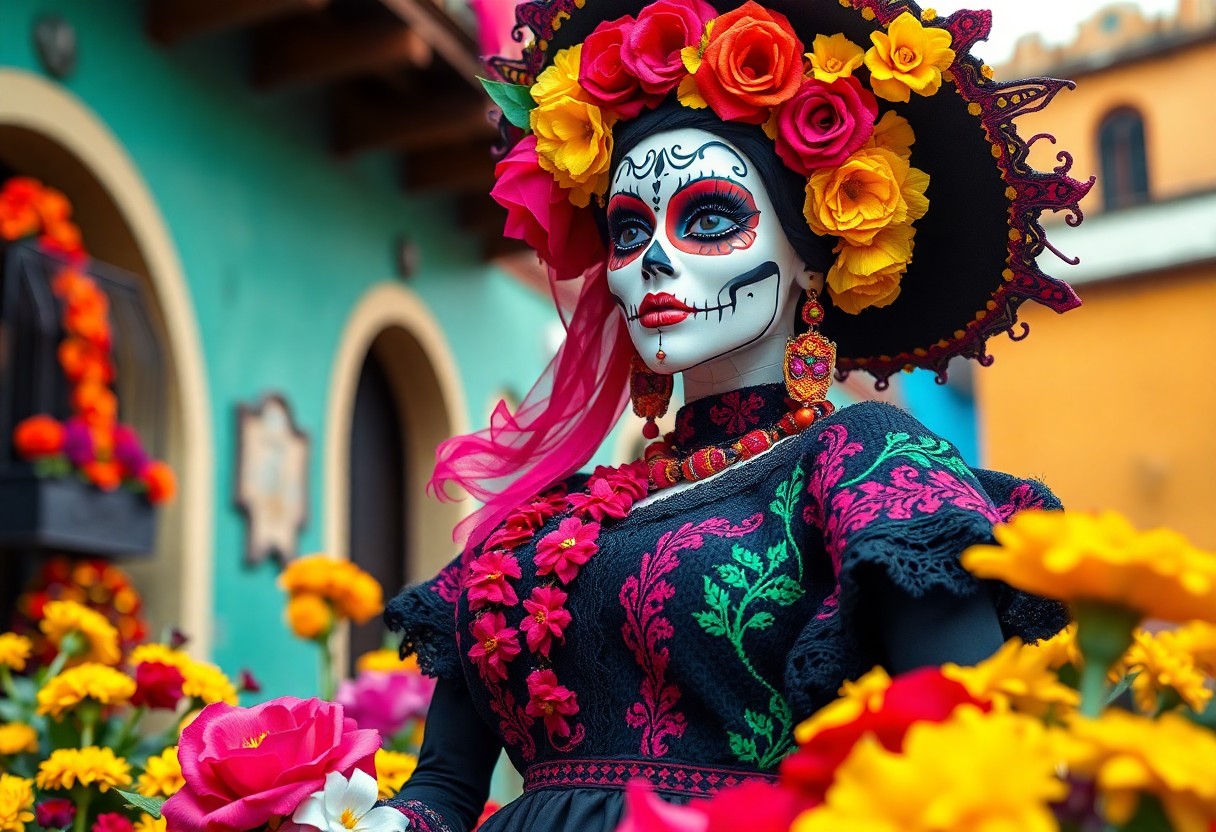
La Catrina embodies a Mexican attitude toward mortality: death as a transition, not a final erasure. She fuses indigenous and Catholic practices—seen in ofrendas lined with cempasúchil (marigolds), candles, and pan de muerto—reminding communities that memory and humor are part of mourning.
For a broader cultural context of how these traditions play out across the city year‑round, see our San Miguel cultural guide.
Where To See La Catrina In San Miguel De Allende
Expect to find La Catrina in three main settings:
- Public Parades And Street Processions — large, painted Catrina costumes and face-paint tableaux (route changes annually; check local listings).
- Altars And Ofrendas — both public installations and private altars in galleries and markets.
- Murals And Gallery Art — contemporary local artists reinterpret her form across town; museum and mural tours often include these works.
When looking for specific events or the parade route, consult the town’s schedule in the complete Day of the Dead guide mentioned above; it is the canonical hub for dates, maps, and local notices.
Timing And Booking — Quick Reference
| When | What happens | Booking advice |
|---|---|---|
| Late Oct | City decorations begin; some early community altars. | Reserve usual November travel now if you want festival access. |
| Oct 31–Nov 2 (peak) | Parades, major public ofrendas, late-night street events. | Book lodging and tours 6–8 weeks earlier; expect crowded streets after sundown. |
| Early Nov (after Nov 2) | Local commemorations continue; quieter viewing of displays. | If you prefer smaller crowds, arrive just after the peak dates. |
Practical Visitor Tips
- Bring comfortable shoes and a small flashlight for evening walks; main events run after dark.
- Street photography is abundant—be respectful when photographing private altars or people in costume; ask permission.
- If you want a guided perspective on iconography and routes, consider a cultural tour; see local listings in the main festival Day of the Dead guide.
- Combine a visit with nearby cultural sites like El Nigromante or broader city highlights in the cultural guide.
La Catrina And Contemporary Art
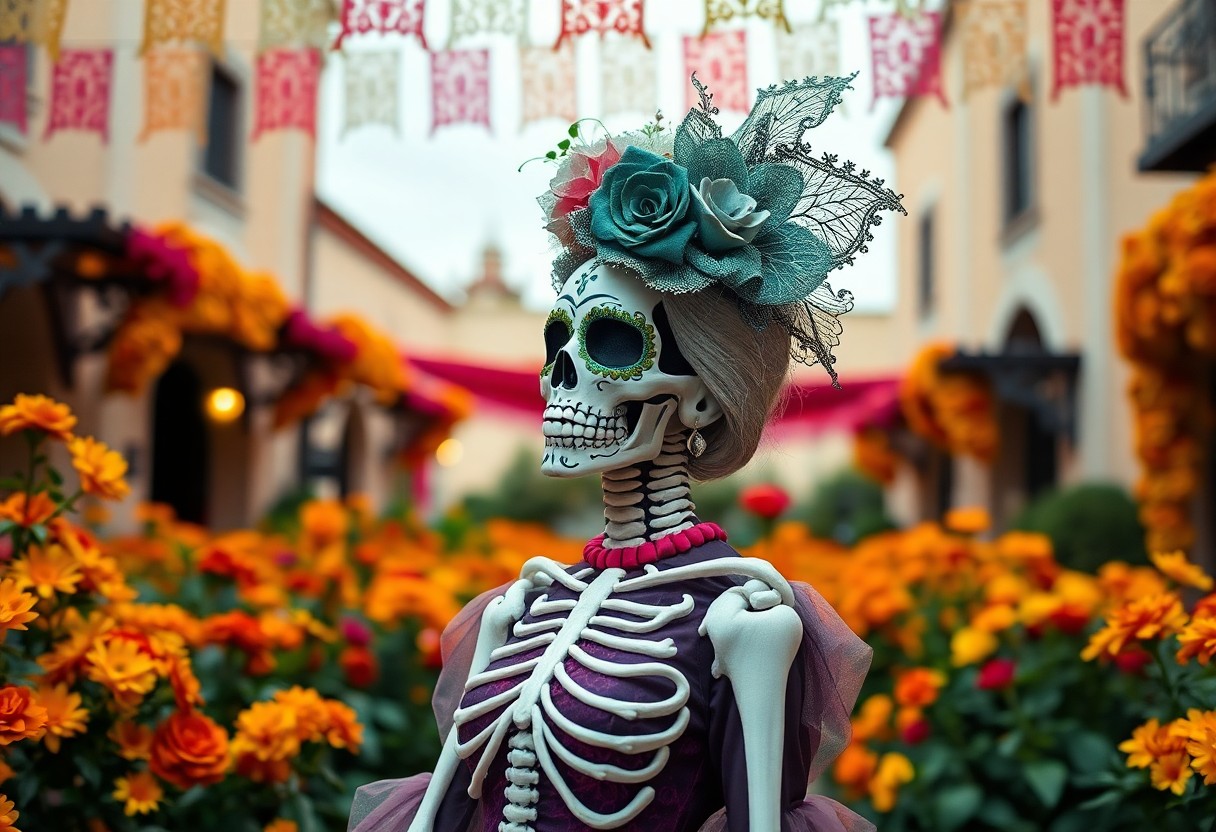
Local artists and artisans rework La Catrina into murals, sculptures, and wearable art. The symbol’s adaptability—satire, remembrance, fashion—keeps her culturally relevant and visible beyond the festival, while also creating opportunities to discuss appropriation and respect for traditions as her image spreads globally.
Further Reading And Next Steps
Want Event Dates, Parade Routes And Practical Maps? Visit the complete Day of the Dead guide for schedules, safety notes, and recommended tours.
Frequently Asked Questions
When is the Catrinas parade in San Miguel de Allende?
Where is the original La Catrina?
What is the legend of La Catrina?
Where is the largest La Catrina?
What is the true history of La Catrina?
Further reading: Embracing Death: Day of the Dead in San Miguel and our ofrenda feature.

Jasper Lennox is an insightful author and dedicated chronicler of the vibrant culture and history of San Miguel de Allende. With a passion for exploring its rich tapestry of art, architecture, and community, he crafts engaging narratives that showcase the charm and allure of this enchanting Mexican town. Through his writing, Jasper invites readers to discover the unique stories and experiences that make San Miguel a beloved destination for travelers and locals alike.
La Catrina’s evolution from a satirical critique to a potent symbol of cultural identity is a fascinating reflection of Mexico’s complex relationship with death. This transformation resonates with the broader theme of how societies reconcile mortality with celebration. It’s intriguing to consider how similar motifs appear globally, like the Día de los Muertos festivities in Oaxaca or the Obon festival in Japan, where honoring ancestors becomes a joyous occasion rather than a somber one.
La Catrina’s journey is truly a captivating lens through which to view Mexico’s intricate cultural tapestry. It’s interesting how she began as a critique of the upper class, only to become a beloved figure that represents the acceptance of death as part of life. This shift perfectly aligns with how many cultures embrace the idea of mortality not as something to fear, but as a celebration of those who came before us.
La Catrina really does embody such a fascinating evolution in how we view death and culture. I appreciate how you mentioned her origins as a critique of the upper class—it really highlights the irony in how something initially meant to mock has transformed into a symbol of celebration. It’s as if she’s become a bridge between life and death, a reminder that they are intertwined rather than opposed.
If La Catrina’s transformation resonates with you, you might find this exploration of traditions and what to expect during Dia de los Muertos in San Miguel de Allende particularly enlightening, as it beautifully captures that celebration of life and death.
‘Day Of The Dead In San Miguel De Allende — Traditions, What To Expect & Visitor Tips’
https://fallinginlovewithsanmiguel.com/embracing-death-day-of-the-dead-in-san-miguel/.
La Catrina’s journey certainly mirrors a broader human experience, connecting us through our shared grappling with death. It’s compelling how cultures worldwide navigate this delicate balance between mourning and joy.
You’ve touched on something that resonates deeply with so many of us. La Catrina does serve as a bridge between cultures as we all navigate the complexities of life and death. It’s fascinating how different societies celebrate and mourn in ways that help them make sense of loss.
You’ve articulated a beautiful point about how La Catrina embodies that intersection of cultures. It’s interesting to consider how such figures often emerge during times of significant transition or turmoil in society, almost as a way for people to process change. In Mexico, the Día de los Muertos celebrations reflect a deep understanding of death as part of life, turning mourning into a vibrant festival of memory and connection.
You’ve touched on a profound aspect of La Catrina that often gets overlooked—the way cultural icons arise as mirrors of societal shifts. It’s fascinating how La Catrina, originally a critique of the upper class, transforms through the years into a universal symbol of both life and death. In the context of Día de los Muertos, it really highlights a unique relationship with death that celebrates rather than shies away from loss.
You’ve brought up such a fascinating point about La Catrina as a cultural symbol. It’s remarkable how she has managed to transcend just being a figure of death, morphing into a representation of resilience and adaptability in the face of change. I often think about how different cultures create tangible representations in response to collective experiences, whether those are joy or sorrow.
You’re touching on a really key aspect of cultural icons like La Catrina. She does seem to rise from the complexities of life and death, acting as a mirror for the societal shifts around her. The way Día de los Muertos transforms grief into celebration is fascinating. It’s a reminder that memory isn’t just about loss—it’s also about honoring those we’ve loved and carrying their stories forward.
“Absolutely, the cultural richness in these celebrations is fascinating! If you’re interested in exploring more about Día de los Muertos and its significance, check out this insightful resource that delves deeper into these traditions.”
https://fallinginlovewithsanmiguel.com/book-flight
You’ve highlighted a crucial aspect of La Catrina’s significance. It’s interesting how she embodies a connection not just between cultures but also between our everyday lives and the deeper, sometimes uncomfortable conversations about mortality. In many ways, she invites us to reflect on our own traditions and how they shape our understanding of loss.
“Absolutely, the cultural significance of La Catrina is truly profound. If you’re interested in exploring more about how various cultures honor life and death, check out this insightful resource!”
https://fallinginlovewithsanmiguel.com/book-hotel
You’ve touched on something really significant. La Catrina’s journey highlights how culture can adapt and thrive, especially around topics as daunting as death. It’s fascinating, like you say, that celebrations tied to mortality—like Día de los Muertos or Japan’s Obon—transform grief into a meaningful, joyous experience.
La Catrina’s journey really highlights how cultures can transform symbols over time, don’t you think? In Mexico, what began as a witty depiction of the elite has morphed into something much deeper—an emblem of resilience and a celebration of life and death intertwined. It’s interesting to see how this mirrors the way different cultures approach mortality.
You’ve touched on an important aspect of La Catrina that resonates deeply within the broader context of cultural symbolism. What started as a satirical figure has transformed into a powerful representation of how Mexicans navigate the complex relationship with death.
You bring up a fascinating point about La Catrina and her evolution in our cultural landscape. It’s interesting to think about how a satirical take on social class has morphed into a figure that embodies a more profound relationship with mortality. In many ways, she has become a bridge connecting us to our past while also offering insights into how we view life and death in contemporary society.
“¡Exactamente! La Catrina es un símbolo fascinante. Si quieres explorar más sobre su significado y su evolución en la cultura mexicana, te invito a descubrir este artículo que profundiza en su legado.”
https://fallinginlovewithsanmiguel.com/book-attractions
La Catrina’s journey is indeed a captivating lens through which to view Mexico’s unique relationship with death. I find it interesting how these cultural expressions can serve as a means of not just confronting mortality but also embracing it, weaving it into the fabric of daily life. The connection you draw to the Día de los Muertos celebrations in Oaxaca is essential; it beautifully encapsulates how death is not something to be feared but rather acknowledged and celebrated.
You’ve touched on a vital aspect of how we, as a society, relate to death and how our cultural expressions around it shift over time. La Catrina is a brilliant lens through which to explore this. Originally fashioned as a satirical jab at the upper class, she’s morphed into a vibrant icon of celebration and remembrance. It showcases how art can evolve to embrace deeper significance, transforming from critique to an emblem of pride and identity.
La Catrina’s journey is really a testament to how art can capture and convey the changing cultural landscape. What you mentioned about the interplay of mortality and celebration is particularly striking. In Mexico, La Catrina has evolved from a satirical figure to an icon of cultural pride, embodying the belief that death is a part of life to be honored rather than feared.
La Catrina really is such a fascinating figure that beautifully encapsulates the complexity of Mexican culture. I love how her origins as a critique of social class evolve into a celebration of life and death during the Day of the Dead. It’s interesting to see how the blending of indigenous and Catholic traditions not only reflects Mexico’s rich history but also invites all of us to contemplate our own relationship with mortality.
You’ve really hit on something special with La Catrina. It’s true that her roots as a satirical take on the upper class have transformed into this rich symbol of both life and death during the Day of the Dead festivities. She’s become this elegant reminder that death is not just an end; it’s part of the cycle of life that we honor and celebrate together.
You’ve articulated something really profound about La Catrina. The way she embodies both life and death speaks volumes about cultural attitudes toward mortality. It’s fascinating how her origins rooted in satire have evolved into an iconic figure of celebration rather than just a morbid reminder of our mortality.
La Catrina truly serves as a rich symbol, one that has transformed significantly over time, reflecting the intricate tapestry of Mexican identity. Her roots in the early 20th century as a satirical portrayal of the upper class highlight how humor and critique can intertwine with deeper truths about society. It’s fascinating how something that started as a comment on social disparities has evolved into an emblem of a cultural festival where the themes of life and death are celebrated with joy.
You’re spot on about La Catrina, and it’s refreshing to see how you appreciate her role as a symbol that shifts from a critique of social class to a figure central to Día de los Muertos. This transformation really mirrors the way Mexican culture tends to embrace life’s contradictions. When we look deeper, it’s not just about the blending of indigenous and Catholic traditions; it’s as if every element in the celebration asks us to confront the realities of life and death head-on, but with a sense of humor and warmth that’s so uniquely Mexican.
You’ve hit on something crucial about La Catrina and her evolution. This character doesn’t just embody the clash of life and death; she invites us to laugh amidst the chaos of it all. The duality in Mexican culture makes these festivities rich with meaning.
La Catrina really does offer such a profound lens into Mexican culture, doesn’t she? The way her image has transformed from a critique of the wealthy to a symbol of embracing life and death resonates deeply. It makes me think about how art often reflects societal changes and values.
La Catrina serves as such a compelling reminder of the intricate tapestry of life and death in Mexican culture. It’s fascinating how she started as a form of social commentary, highlighting the absurdities of class distinctions, and has metamorphosed into a cherished emblem of a celebration that embraces mortality rather than shying away from it.
It’s intriguing to think about how La Catrina has evolved. She really speaks to the heart of both celebration and reflection in Mexican culture. This character, who initially mocked the elite, has transcended her origins to become a symbol of acceptance—embracing life’s fragility and the inevitability of death.
You’ve touched on an essential aspect of La Catrina’s evolution that often goes unnoticed. Originally conceived by José Guadalupe Posada in the early 20th century, her satirical portrayal of the upper classes reflected deep social critiques of the time. It’s intriguing how a figure born from satire has transformed into a symbol that encapsulates the broader Mexican ethos towards life and death.
“Explora más sobre la rica historia de La Catrina y su impacto en la celebración de la vida y la muerte en nuestra última publicación.”
https://fallinginlovewithsanmiguel.com/book-hotel
Your exploration of La Catrina and her role in the Day of the Dead celebrations beautifully captures the blend of satire, elegance, and cultural significance that has made her an enduring symbol in Mexican heritage. I am particularly drawn to how La Catrina reflects a deep-rooted philosophy of life and death, which resonates beyond the borders of Mexico.
It’s heartening to see how La Catrina resonates with you, as her symbolism extends far beyond her elegant attire and skeletal form. She embodies a unique confluence of humor and respect concerning mortality—a theme that, while grounded in Mexican culture, speaks universally. The Day of the Dead isn’t just a time for remembrance; it reflects a philosophical stance that embraces death as an integral part of life, rather than a period to shy away from.
You’ve touched on something really important! La Catrina is not just a figure dressed in elegant attire; she embodies how many cultures approach the themes of life and death with a blend of humor and respect. It’s fascinating how she encourages us to embrace our mortality instead of shying away from it. This perspective can be a liberating experience, helping people connect over shared human experiences, regardless of their background. Plus, it’s interesting to see how her image has evolved over the years, crossing borders and influencing art and celebrations in various cultures. It makes me wonder how other traditions around the world reflect similar sentiments. Have you come across any other symbols that resonate in a similar way?
You’ve pointed out a fascinating aspect of La Catrina’s character that often gets overlooked in discussions about her symbolism. The way she embodies a mix of satire and elegance speaks volumes about the complex relationship the Mexican culture has with both life and death. It’s interesting to think about how her creation by José Guadalupe Posada isn’t just a commentary on social class but also a reflection of the broader existential questions we all face.
Thank you for your thoughtful words! If you’re interested in delving deeper into the fascinating world of La Catrina and exploring more about the Day of the Dead celebrations, check out this insightful resource.
https://fallinginlovewithsanmiguel.com/food-and-drink
The celebration of the Day of the Dead and the iconic figure of La Catrina offer such a rich tapestry of meaning and culture that it’s hard not to feel drawn in. I find it fascinating how La Catrina has transcended her original intention as a satire to become a symbol of life and identity for many Mexicans. The way she reconciles the themes of mortality and heritage is truly profound.
You’ve hit on something really significant with La Catrina. It’s interesting how she started as a critique of the upper classes, but now, she embodies so much more. The way people embrace her during the Day of the Dead reflects a kind of defiance—a celebration of life intertwined with the reality of mortality.
I love how you captured La Catrina’s significance in San Miguel de Allende during Día de los Muertos! It’s fascinating how her origin story embodies both satire and cultural critique—especially when you think about the way social hierarchies have shifted since Posada’s time. I remember visiting San Miguel during the celebrations and being struck by the powerful blend of joy and reverence. The ofrendas truly bring a sense of connection to ancestors, and seeing everyone come together with painted faces and vibrant costumes highlights the communal spirit of the holiday.
La Catrina’s transformation into a beloved symbol during the Day of the Dead is such a poignant reminder of how cultures find ways to celebrate the cycle of life and death. It’s fascinating to see how her origins as a critique of social status have evolved into a figure that unites people in remembrance and joy. This complex relationship with death resonates deeply in many cultures, not just in Mexico.
I’m totally fascinated by La Catrina, especially how her symbolism has transformed from a critique of elitism to a beloved icon representing a much deeper philosophy of life and death. It’s interesting to think about how cultural icons can evolve over time and take on new meanings. For me, La Catrina really resonates with the idea of celebrating life while acknowledging death, which is such an integral part of the human experience.
You’ve hit on something pretty profound with La Catrina. It’s like she’s evolved from the original “Hey, check out those wealthy folks!” into this figure we all want to tuck into our family photos. There’s something magical about how she balances that celebration and recognition of mortality—it’s like she’s giving us a wink while holding a marigold.
“I’m glad you share that fascination! If you’re interested in exploring more about La Catrina’s rich history and significance, check out this insightful article.”
https://fallinginlovewithsanmiguel.com/transport
La Catrina does have this layer of complexity, doesn’t she? Initially a satirical take on the wealthy, she now embodies a broader cultural acceptance of mortality. The shift from critique to celebration offers a fascinating lens on how societies adapt to their existential fears.
I’m glad you share that fascination! If you’d like to explore more about La Catrina’s rich history and her evolving symbolism, check out this insightful piece we put together.
https://fallinginlovewithsanmiguel.com/transport
What an eye-opening exploration of La Catrina and her role in the Day of the Dead celebrations! I love how you captured the blend of satire and reverence that she embodies. It’s fascinating to think about how an art piece from over a century ago has transcended its original intention to become such a colorful cultural icon.
The blend of satire and reverence in La Catrina’s character is something that often gets overlooked in more surface-level discussions about her role. It’s interesting to think about how she started as an engraving, a mild critique of the upper classes, yet she has evolved into a symbol that resonates with a wider audience today. The irony in her origins provides a rich layer to her significance during the Day of the Dead celebrations.
It’s great to hear your thoughts on La Catrina! Her evolution from a satirical piece into a powerful cultural symbol is a testament to how art can resonate over time and adapt to different contexts. What’s particularly interesting is how she embodies a unique blend of life and death, humor and seriousness, which mirrors the Day of the Dead itself—a celebration that invites us to reflect on mortality while honoring our loved ones joyfully.
It’s great to hear your thoughts on La Catrina and the unique blend of satire and reverence she represents. Her journey from political commentary to a beloved cultural symbol is a testament to how art can evolve and maintain relevance over time.
Thank you for the kind words! If you’re interested in exploring more about the rich traditions of the Day of the Dead and La Catrina, check out this insightful resource.
https://fallinginlovewithsanmiguel.com/food-and-drink
La Catrina truly represents the beautiful intersection of life and death in Mexican culture, serving as a poignant reminder of how we can find joy in the face of mortality. Growing up, my own family celebrated Día de los Muertos with ofrendas that told our stories, each offering a blend of laughter and tears. It’s fascinating to consider how La Catrina—initially a satire—evolved into a symbol of acceptance and unity within the community.
You capture the essence of La Catrina beautifully. It’s such a unique symbol, isn’t it? The way she blends humor and melancholy really reflects how many of us navigate the complexities of life and death. The ofrendas you mentioned—what a fantastic tradition to weave memories into something so personal. It’s interesting how these offerings can evoke laughter just as much as they bring tears, highlighting stories that might otherwise fade away.
La Catrina’s symbolism resonates deeply not just as a figure of elegance and satire, but also as a reflection of the ongoing dialogue between cultural heritage and modern identity in Mexico. Her journey from a critique of social class to an emblem of celebration during the Day of the Dead invites us to consider how we navigate our own connections to tradition amidst contemporary influences.
You raise some excellent points about La Catrina and her multifaceted role in Mexican culture. It’s fascinating how she began as a critique of social class, a reflection of the significant socio-political issues of her time, and has now become such a cherished symbol during Día de los Muertos. This transformation really illustrates how cultural icons can shift meanings and poignancy with the passage of time.
La Catrina really does weave a fascinating tapestry of tradition and modern influence, doesn’t she? What I find particularly compelling is how she embodies a kind of playful defiance—challenging the social structures that once dictated so much about identity and worth. By transforming from a critique of class to a figure of celebration, she invites people to reclaim and reinterpret their heritage in ways that feel relevant today.
You’ve captured the essence of La Catrina beautifully. It’s fascinating how her evolution reflects broader societal changes, don’t you think? The playful defiance she embodies really resonates with many of us today as we navigate our own identities.