A short drive from San Miguel de Allende, the Santuario de Atotonilco pairs intense folk-baroque frescoes with a living pilgrimage tradition—this guide tells you what to see and how to plan a visit.
| Interest | Recommendation |
|---|---|
| Art & history | Must-see—exceptional 18th-century frescoes and baroque symbolism. |
| Pilgrimage & faith | Highly recommended, especially during Holy Week and local feast days. |
| Family travelers | Good for older children; some imagery may be intense for very young kids. |
Planning & Timing — When To Go And When To Book
The Santuario is visitable year-round, but timing shapes the experience: art viewing is best when the church is quiet, pilgrimage intensity peaks during Holy Week and major feast days.
How To Get There And Practical Logistics
The sanctuary sits about a 10-minute drive from downtown San Miguel; a taxi is the simplest option, local colectivos run less frequently, and many visitors prefer an organized day trip. For more day-trip options and sample itineraries, see our day-trip options from San Miguel.
Parking near the complex is limited on major event days; if you rely on taxis, ask your driver to wait or arrange a pick-up time. Guided tours often include round-trip transport and a short talk on the frescoes and pilgrimage practices—if you want historical context, look for a cultural or church-focused tour. See our coverage of church tours in San Miguel de Allende for organized options.
What You'll See — Art, Symbolism, And Why It Matters
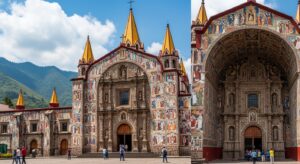
Inside, the Santuario de Atotonilco is defined by an intense folk-baroque cycle of frescoes—many attributed to Miguel Antonio Martínez de Pocasangre—that focus on the Passion of Christ, martyrdom, and penitential imagery. The visual program intentionally emphasizes suffering and redemption; elements like crowns of thorns, bleeding figures, and vivid color contrasts were designed to move viewers toward penance.
Look for layered symbolic motifs: natural elements signaling resurrection, angels and saints rendered with local stylistic touches, and sculptural baroque details that blend indigenous and European influences. The result is both devotional theatre and a remarkable record of 18th-century religious art outside urban cathedral centers.
Pilgrimage Today — Rituals And Community
Atotonilco remains a working pilgrimage site. Devotional practices range from quiet prayer to penitential acts—walking on knees, torchlit processions, and community services—especially during Holy Week. The site historically included lodging and communal kitchens to host pilgrims; large events can draw tens of thousands, creating a powerful and communal atmosphere.
Restoration And Preservation
Designated a UNESCO World Heritage Site (as part of the Camino Real de Tierra Adentro listings), Atotonilco has benefited from focused conservation efforts after decades of environmental wear. International and local funding supported careful cleaning and structural stabilization to preserve the fresco program and baroque elements—conservation that keeps the sanctuary both readable to scholars and accessible to visitors.
- Aim for an early weekday morning to avoid crowds and services.
- Dress respectfully for a working sanctuary and bring water for the short walk.
- Ask at the gate about photography rules—conservation often limits flash.
- If attending a major ceremony, allow extra time for processions and closures.
Ready to include Atotonilco on a trip?
If you prefer an organized option that includes transport and commentary, explore our recommended church tours and day trips linked above, or book a morning taxi from San Miguel.
Frequently Asked Questions
What Is Inside The Santuario De Atotonilco?
A comprehensive cycle of 18th-century frescoes depicting the Passion of Christ, baroque sculptures, and devotional spaces used by pilgrims and local communities.
Why Is It Called The 'Sistine Chapel Of The Americas'?
The nickname refers to the sanctuary’s unusually extensive and vivid fresco program—an intact, immersive mural ensemble outside a major cathedral that rivals in ambition the Sistine Chapel’s visual storytelling.
How Do I Get There From San Miguel De Allende? / ¿Cómo Llegar Desde San Miguel De Allende?
About a 10-minute taxi ride or short drive via Carretera a Dolores Hidalgo; some colectivos stop nearby and organized day trips include transport. / A aproximadamente 10 minutos en taxi por la Carretera a Dolores Hidalgo; también hay excursiones organizadas.
Are There Entrance Fees Or Hours?
Entry policy can change for conservation or events—there is often a small donation or fee and hours vary; check locally or join a guided tour to ensure access on busy days.
For related practical planning—transport, sample day trips, and combined church routes—see our day-trip guide and church tours overview.

Ellie Thomson is an accomplished author and passionate advocate for the vibrant culture of San Miguel de Allende. Through her engaging writing, she explores a diverse range of topics that reflect the richness of life in this enchanting Mexican city. With a keen eye for detail and a deep appreciation for its history and community, Ellie shares stories that resonate with locals and travelers alike, inviting readers to discover the unique charm of San Miguel de Allende.
El Santuario de Atotonilco resonates deeply with the intertwining of art and spirituality. The way the frescoes by Miguel Antonio Martinez de Pocasangre capture such profound emotions reminds us of the power of art to convey the human experience, transcending time and cultural boundaries. It’s fascinating how this sacred space not only serves as a pilgrimage site but also as a vibrant canvas that invites reflection and connection.
You’re spot on about the resonance of El Santuario de Atotonilco. It’s a unique blend of spirituality and artistry that truly captivates anyone who visits. When you walk through the sanctuary and gaze upon the frescoes by Miguel Antonio Martinez de Pocasangre, there’s a moment where you feel like you’re tapping into something universal. The colors, the figures, and the stories they tell evoke an emotional response that feels deeply shared, transcending the specifics of time and culture.
I completely agree with you about the significance of El Santuario de Atotonilco. The way the frescoes capture intricate human emotions really demonstrates how art can function as a bridge between the spiritual and the everyday experience. It’s interesting to think about how different cultures have used art in similar ways throughout history, often to express their beliefs or convey stories that resonate on a deeper level.
You’ve really captured the essence of El Santuario de Atotonilco. The way art can communicate such deep spiritual truths is truly remarkable. I find it interesting how the frescoes not only tell a story of faith but also reflect the cultural heritage of their time. It’s like each brushstroke is a dialogue between the artist and the viewer, transcending language and even the centuries that separate them.
Your description of El Santuario de Atotonilco really highlights the profound intersection of art, spirituality, and community that this site embodies. I find it fascinating how places like this can serve as both stunning artistic showcases and pivotal spiritual havens for so many. The frescoes by Miguel Antonio Martinez de Pocasangre are particularly compelling; they not only communicate deep themes of suffering and redemption but also reflect the rich cultural tapestry of Mexico.
You bring up an important point about the dual nature of El Santuario de Atotonilco as both a remarkable artistic venue and a significant spiritual center. The frescoes by Miguel Antonio Martinez de Pocasangre are more than just beautiful images; they tell stories that resonate with a wide range of human experiences, from despair to hope, which is particularly relevant in today’s world.
You’re spot on about the frescoes at El Santuario de Atotonilco. They carry immense weight, both artistically and spiritually, which makes discussing their impact all the more compelling. It’s fascinating to think that these works were created during a time steeped in religious and social upheaval, yet they continue to resonate today.
“Para descubrir más sobre la profunda belleza y significado de El Santuario de Atotonilco, te invito a explorar este enlace que revela sus maravillas.”
https://fallinginlovewithsanmiguel.com/transport
I’m glad you found the intersection of art, spirituality, and community at El Santuario de Atotonilco so compelling. The frescoes by Miguel Antonio Martinez de Pocasangre are indeed a highlight, don’t you think? They tell stories that resonate on multiple levels, capturing not just individual struggles but the collective experience of Mexican culture.
El Santuario de Atotonilco is such a profound testament to how art and spirituality can intertwine. The intricate frescoes really pull you into the emotional depth of the scenes they depict. I’ve often found that places like this, with rich artistic heritage, have a unique way of inspiring personal reflection and connection.
As I read your post about El Santuario de Atotonilco, I was reminded of the profound connection that so often exists between art, architecture, and spiritual experience. In our fast-paced world, places like this sanctuary offer a refuge, where time seems to stand still, allowing visitors to reflect and connect with something greater than themselves. The emotional weight of the frescoes by Miguel Antonio Martinez de Pocasangre, depicting not only the trials of Christ but also the human experience of suffering and redemption, truly resonates on a personal level.
El Santuario de Atotonilco truly captures the essence of both spirituality and artistry, and your description does such justice to its significance! I had the pleasure of visiting this remarkable church a couple of years ago, and I still vividly remember the awe I felt when I stepped inside. The vibrance of the frescoes, especially those by Miguel Antonio Martinez de Pocasangre, is something that can’t be fully appreciated until you see them up close. The way the colors and intricate designs breathe life into the stories of Christ’s suffering resonates on so many levels, making the experience deeply moving.