San Miguel de Allende began as a mid-16th‑century colonial town and developed into one of Mexico’s best‑preserved centers of architecture, art, and independence history. Below is a concise answer-first summary, a scannable timeline, and the essentials visitors and history readers ask for.

For visitors who want to explore the town’s religious architecture first, start with the Parroquia and other cathedrals—they show the layers of colonial and neoclassical styles described below.
| Year / Period | Event | Why it matters |
|---|---|---|
| 1542 | Foundation as San Miguel el Grande | Marks the start of Spanish colonial settlement and the town’s position on regional trade routes. |
| 17th–18th c. | Church-Building & Civic Growth — major churches, civil buildings, and artisan guilds | Colonial architecture and the parish church shaped urban identity still visible in the historic center. |
| 1810–1821 | Independence Era — locals and leaders like Ignacio Allende join the movement | The town’s political role raised its national profile and left monuments and annual commemorations. |
| Mid‑20th c. | Artistic Revival — schools and expatriate artists (Instituto Allende) | Rebirth as an international arts hub; led to conservation efforts and new cultural institutions. |
| 2008 | Unesco World Heritage designation | International recognition for the town’s preserved colonial-era center and its living cultural traditions. |
Founding, Indigenous Roots, And Colonial Growth
Before the Spanish arrival the area was occupied by Chichimeca groups whose agriculture, trade and rituals shaped early settlement patterns. The town that became San Miguel de Allende grew after 1542 around a parish church and the crossroads of regional routes. Over the 17th and 18th centuries wealthy patrons and religious orders funded churches and civic buildings that define the historic center today.

Architecture You Can See
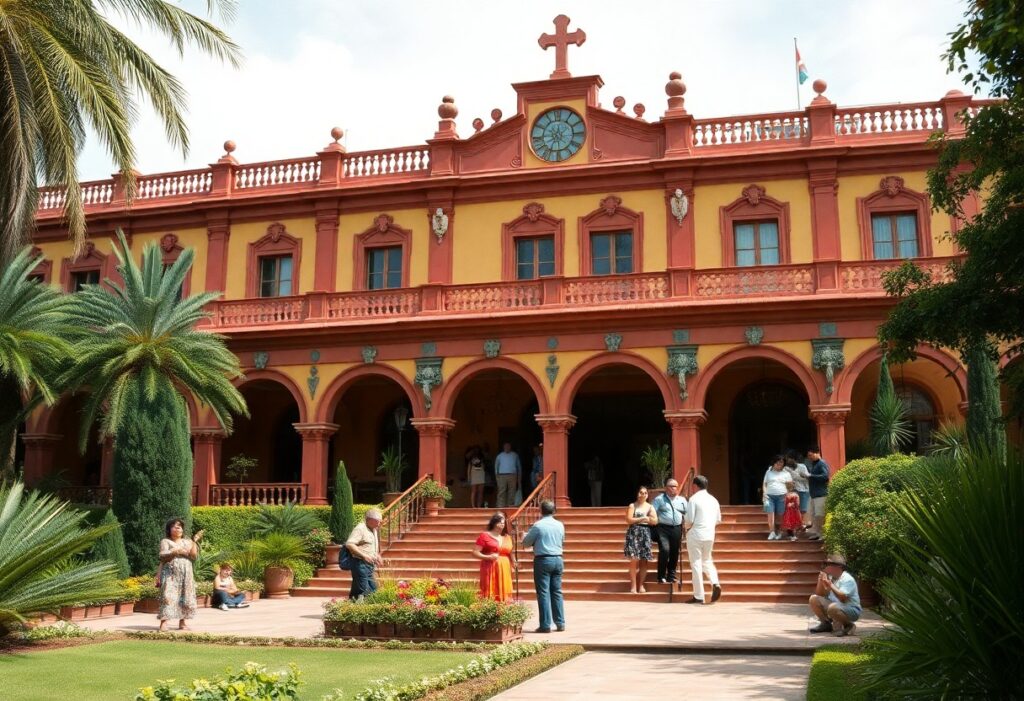
The Parroquia de San Miguel Arcángel is the most photographed landmark; for a visitor guide to the many important churches see the site’s detailed cathedral guide, which explains styles, construction dates and what to look for on a short walking route.
Role In Independence And Influential Figures
San Miguel’s place in the independence movement—most famously tied to Ignacio Allende—made it a recruiting and organizing center at key moments in 1810–1811. Town squares, civic buildings and local ceremonies preserve that civic memory; a helpful local profile of Allende appears on this site’s page Honoring Ignacio Allende (see links at the end of the article for related reading).
20Th‑21st Century: Art, Revival And Unesco
After mid‑century artistic initiatives (notably the Instituto Allende) the town attracted international students and artists, sparking restoration projects and a growing cultural economy. Learn about the local art schools on the site’s Instituto Allende page.
In 2008 UNESCO recognized San Miguel for its exceptional preservation of colonial urban fabric and the living traditions that animate the center; for deeper context read the site’s explainer on why San Miguel is UNESCO.
How History Shapes Festivals, Art, And Daily Life
Historical layers are visible in festivals (Independence Day, Día de los Muertos), muralism and the town’s artisan markets. The continuing presence of international artists has broadened the cultural program while local traditions and workshops keep craft skills alive.
Preservation Efforts And Current Challenges
Preserving narrow streets, ornate facades and community rituals requires constant work: local NGOs, municipal planning and citizen groups coordinate restoration and conservation. Pressing concerns include managing tourism impact, controlling inappropriate new construction, and protecting intangible traditions.
Visiting Today: A Short Decision Box
- 1 Day — Walk El Jardín, visit the Parroquia, and stop for a local meal.
- 2 — 3 Days — Add the Plaza and neighborhood exploration, a church tour and a short art workshop.
- 5+ Days — Take day trips to Atotonilco and nearby Guanajuato, join a class at Instituto Allende, and time a festival visit.
Check the latest safety & traveler guide
Sources And Further Reading
This summary draws on local scholarship and archives (Instituto Allende), national histories of the independence era, and international references (Britannica, municipal records). For deeper local reading see the site’s pages on Instituto Allende and the explainer on UNESCO status.
Frequently Asked Questions
Why Is San Miguel De Allende So Popular?
Its combination of well‑preserved colonial architecture, active arts scene, cultural festivals and an international community created a distinctive cultural tourism appeal.
What Does “De Allende” Mean?
The suffix honors Ignacio Allende, a native son and independence leader; the modern name recognizes his role and the town’s historical importance.
Why Do So Many Expats Live Here?
Attractive climate, cultural amenities (schools, galleries), lower cost of living compared with many U.S. and Canadian cities, and a vibrant expatriate community make it a draw for long‑term residents.
What Are The Must‑see Historic Sites?
Parroquia de San Miguel Arcángel, the municipal plaza (El Jardín), Instituto Allende, and nearby El Santuario de Atotonilco are top picks; the site’s cathedrals guide and plaza page list practical visiting details.
Related reading on this site: Why San Miguel is UNESCO, Instituto Allende, and our Plaza & neighborhood guide.

Cameron Hale is an insightful author and enthusiast of San Miguel de Allende, where he explores the rich culture, history, and vibrant community of this enchanting Mexican city. With a keen eye for detail and a passion for storytelling, he captures the essence of life in San Miguel, sharing unique perspectives on its art, cuisine, and local traditions. Through his engaging writing, Cameron invites readers to discover the charm and allure of this remarkable destination.
It’s intriguing to see how the historical tapestry of San Miguel de Allende is intricately woven with both indigenous and colonial narratives. The mention of the Chichimecas highlights the often overlooked contributions of indigenous groups to the cultural fabric of the region, which is particularly important in today’s discussions surrounding cultural identity and heritage preservation.
I really appreciate your exploration of San Miguel de Allende’s early history! It’s fascinating how the roots of the town are intertwined with both indigenous cultures and Spanish colonialism. The Chichimecas, in particular, are often overlooked in broader discussions about Mexican history. Their influence on the region’s cultural fabric must not be forgotten, especially as we see their legacy reflected in local traditions and celebrations today.
It’s great to hear your thoughts on the Chichimecas and their significance in San Miguel de Allende’s history. Their story is so nuanced, reflecting a blend of resilience and adaptation, which really shapes the cultural complexities of the region today.
You’ve touched on a really important point about the Chichimecas. Many forget that their resilience and adaptability played a key role in shaping the identity of San Miguel de Allende. The blending of their traditions with those brought by the Spanish creates a unique cultural mosaic that’s still very much alive today.
Gracias por tu comentario tan reflexivo. Si te interesa profundizar en la historia y la cultura de San Miguel de Allende, te invito a explorar más sobre este fascinante tema aquí.
https://fallinginlovewithsanmiguel.com/book-hotel
I completely agree with you about the significance of the Chichimecas in the narrative of San Miguel de Allende. It’s intriguing how their resilience and adaptability shaped not just the local culture, but also the broader tapestry of Mexican identity. The blending of indigenous traditions with Spanish influences creates such a unique cultural landscape, especially in how it’s celebrated during local fiestas.
What a captivating exploration of San Miguel de Allende’s early history! I find it especially interesting how the convergence of indigenous cultures and Spanish influences has shaped the identity of this vibrant city. It’s remarkable to think about the Chichimecas and how their traditions and ways of life contributed to the cultural tapestry that San Miguel de Allende represents today.
Reading about the early history of San Miguel de Allende brings to mind just how layered and intricate the narratives of our towns can be, often reflecting broader themes of cultural merging and adaptation. The acknowledgment of the Chichimecas prior to European settlement is particularly significant, as their rich traditions and societal structures undoubtedly set a foundation that influenced the later development of the town. It makes me ponder how often indigenous histories are overshadowed in discussions about colonial sites.
I love how you highlighted the rich history of San Miguel de Allende! It’s fascinating to see how the cultural heritage of the Chichimecas laid a foundation for what the town has become today. Recently, I stumbled upon some local art that beautifully incorporates indigenous motifs, which made me think about the ongoing influence of those early traditions. It’s interesting how the blend of colonial and indigenous cultures continues to shape San Miguel’s identity, especially in its vibrant festivals. Has anyone attended the Día de los Muertos celebrations there? I’d love to hear more about how those historical roots play out in contemporary events!
I love how you highlight the early Indigenous influence in San Miguel de Allende! It’s fascinating to think about how the Chichimecas shaped the cultural landscape long before the Spanish arrived. I recently read about the mix of traditions that developed over time, especially in the arts and festivals. The vibrant Fiestas de San Miguel, for instance, seem like they reflect a beautiful blend of both cultures. Have you explored any specific traditions that showcase this fusion? It would be interesting to dive deeper into how these early roots are still felt today, especially in the growing art scene. Would love to hear your thoughts!
It’s intriguing to see how the history of San Miguel de Allende weaves together the narratives of both its indigenous roots and Spanish colonial influences. The mention of the Chichimecas is particularly striking, as their traditions seem to fade into the background in many historical accounts. I’m curious about how contemporary San Miguel de Allende engages with its indigenous past—does the community actively preserve these cultural elements, or are they overshadowed by more prevalent narratives?
It’s great to hear your thoughts on the blending of indigenous and colonial histories in San Miguel de Allende. The Chichimecas often get sidelined in the bigger narratives, and it’s a shame because their influence is still felt today.
“Exploring this rich tapestry further can be fascinating; check out this resource to learn how San Miguel de Allende honors its indigenous heritage today.”
https://fallinginlovewithsanmiguel.com/book-attractions
It’s so interesting to read about the early roots of San Miguel de Allende! I’ve always been fascinated by how the indigenous cultures shaped the areas they lived in long before European contact. The Chichimecas had such a unique perspective on the land that must have influenced everything from agriculture to local traditions.
What a rich tapestry San Miguel de Allende weaves! It’s wild to think about how a place originally named after an archangel now hosts art galleries and cafes where you can sip on the finest coffee while pondering existential questions. I sometimes wonder if Saint Michael would have preferred a latte or a shot of mezcal!
What a captivating dive into the roots of San Miguel de Allende! I can just picture the Chichimecas rolling their eyes at the Spanish explorers bustling about, thinking, “And who invited you to the fiesta?” The blend of indigenous heritage and European flair is what makes this town such a cultural melting pot—sort of like a taco with both barbacoa and mole!
Your exploration of San Miguel de Allende’s roots beautifully captures the interplay between indigenous heritage and colonial influence. It’s fascinating to think about how much the cultural fabric of a place can be woven from its historical narratives. The Chichimecas, with their rich oral traditions and societal structures, undoubtedly laid a groundwork that shaped the identity of San Miguel long before European settlers arrived.
It’s interesting to consider how the Chichimecas’ rich oral traditions serve not just as a historical record but as a living part of the cultural consciousness in San Miguel de Allende today. Their storytelling methods and social structures really illustrate how integral indigenous perspectives are to the community’s identity, which seems to be reflected in the art, festivals, and even the everyday life of the city.
I found your exploration of San Miguel de Allende’s rich history truly captivating, particularly the emphasis on its indigenous roots. It’s intriguing to consider how the Chichimecas and other indigenous cultures influenced the character of the town long before European settlement. This dialogue between cultures highlights not only the struggles and adaptations of indigenous peoples but also the ways in which places like San Miguel de Allende serve as living testaments to cultural resilience.
It’s wonderful to see such a deep exploration of San Miguel de Allende’s rich history captured in your post. The intertwining of indigenous cultures, particularly the Chichimecas, with the colonial history offers such a complex tapestry of influence that is often overlooked. I’ve always found it intriguing how the historical roots of a place can shape its present, especially in regions like San Miguel that are celebrated for their vibrant arts and community spirit.