Bellas Artes is San Miguel de Allende’s former 18th‑century convent turned art school — a compact cultural oasis two blocks from the Jardín that’s worth a short visit for its cloister, teaching studios and an unfinished Siqueiros mural.
Quick Facts — At A Glance
| Address | Near Jardín (center of San Miguel de Allende) — two blocks from the main plaza |
| What It Is | An art school & cultural center housed in an 18th‑century convent (exhibitions, classes, cloister garden). |
| Highlights | Siqueiros’ unfinished mural, landscaped cloister, studio classes, Café Las Musas. |
| Admission | Often free to wander the cloister; special exhibits or guided tours may request a donation or small fee (check onsite). |
| How To Join Classes | Sign up in person or inquire through the school during open hours; for photography-focused workshops see our notes below and related photography workshops. |
If you want to place Bellas Artes in the wider local context, see our overview of San Miguel’s art scene for recommended walking routes and mural tours: San Miguel as an art hub.
For more detail, see our Instituto Allende — What To See, When To Visit & Quick Visitor Facts.
Visitor Essentials And Timing
Plan a 30–60 minute stop to explore the cloister, see the mural, and grab a coffee at Café Las Musas; longer if you attend a class or exhibition opening.
| Best Time To Visit | Morning or late afternoon for softer light in the cloister and cooler temperatures. |
| When To Book Classes | Weekly classes often accept walk‑ins; intensive or seasonal workshops (e.g., summer, festival weeks) should be reserved 4–6 weeks ahead. |
| Timing Notes | During festival periods (Cervantino, Jazz) expect special events and higher demand for workshops; call ahead if you need a guided visit. |
A Short Visitor Guide
The entrance and cloister are compact and wheelchair access varies by room; follow signage and ask staff about scheduled guided tours or classroom visits. Security and staff are used to visitors — polite inquiries at reception will quickly point you to the mural, current exhibits, or the café.
Visiting for under an hour? Head to the cloister and Siqueiros mural and then walk back to the Jardín; interested in deeper exploration or classes? Browse the city’s art offerings in our global art hub guide and consider nearby lodging options in this accommodation guide.
History In Brief — From Convent To Creative Centre
Built between 1755 and 1765 as the cloister of the Convent of the Immaculate Conception, the complex served religious, educational and civic roles over two centuries. After the 19th‑century secular reforms and several reuses, the building was repurposed as an art institute in the 1930s and 1940s — a transformation led in part by figures such as Stirling Dickinson and later instructors like David Alfaro Siqueiros.
Architectural Highlights And The Garden
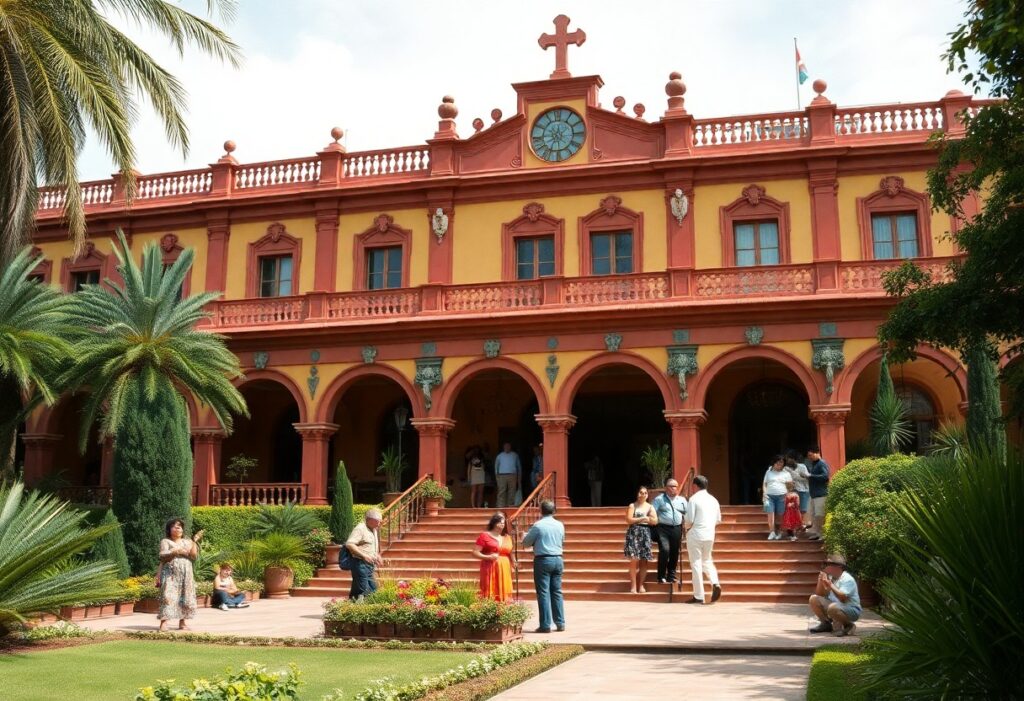
The preserved colonial arches, stonework and a landscaped cloister (bamboo, poinsettias, orange trees) create a restful courtyard that doubles as an outdoor studio. Sunlight and seasonal plantings frame the architectural forms and make the cloister a favorite spot for sketching and photography.
Siqueiros’ Unfinished Mural — What To Look For
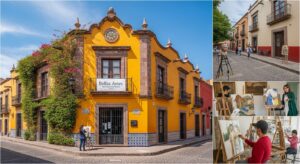
David Alfaro Siqueiros taught briefly at Bellas Artes in 1949 and left an unfinished mural on the north wall of the cloister. Even incomplete, it reads as a compressed lesson in Mexican muralism: bold color planes, political energy and experimental technique. The mural is accessible from the cloister — ask staff for the current viewing route and any conservation updates.
Classes, Events And Community Programs
The school runs a wide range of classes (drawing, painting, ceramics, printmaking, photography, music, dance) — from weekly sessions to short intensives. Many classes welcome international students and visiting instructors; for photography‑specific opportunities see our photography workshops guide.
Bellas Artes also hosts exhibitions, student shows and festival programming that dovetails with San Miguel’s larger calendar (Cervantino, jazz weeks). If your visit coincides with festival dates, plan extra time — openings and performances often extend into the evening.
Practical Logistics
- Accessibility: Cloister paths are mostly level but some interior rooms have steps — check on arrival for accessible routes.
- Parking: Central location — best to arrive on foot or by taxi from nearby hotels; public parking near the Jardín is limited.
- Café and galleries: Café Las Musas sits under the arcades; small exhibitions rotate in gallery spaces.
For mural walks and street art beyond Bellas Artes, see our tour of San Miguel street art, and if you need a place to stay near the Jardín browse our where to stay guide.
Frequently Asked Questions
What Are Bellas Artes' Opening Hours?
Hours vary by program and season; the cloister is often open during daytime hours while specific galleries or classes follow their own schedules — check in person or call ahead when planning a timed visit.
Can Visitors See The Siqueiros Mural?
Yes — the mural is located in the cloister area and generally visible to visitors. Conservation work or events may restrict access temporarily, so verify availability at reception.
How Do I Sign Up For Classes?
Most classes accept in-person registration; for multi-day intensives or festival workshops, reserve at least 4–6 weeks ahead. If you’re focused on photography, check our related workshops page for schedules and instructors.
Is There An Admission Fee?
General entry to the cloister is usually free; certain exhibitions, guided tours or special events may request a small fee or donation.
Are Guided Tours Available?
Guided tours sometimes run in conjunction with festivals or special exhibits. Ask at reception about booking a guided visit or joining a scheduled tour.
If Bellas Artes piqued your interest, our San Miguel art hub page outlines walking routes, mural tours and festival timing to help you plan a longer art‑focused visit.

Cameron Hale is an insightful author and enthusiast of San Miguel de Allende, where he explores the rich culture, history, and vibrant community of this enchanting Mexican city. With a keen eye for detail and a passion for storytelling, he captures the essence of life in San Miguel, sharing unique perspectives on its art, cuisine, and local traditions. Through his engaging writing, Cameron invites readers to discover the charm and allure of this remarkable destination.
I love how you described Bellas Artes as a “living canvas”—what a perfect metaphor! I still chuckle at my own attempts in an art class there; if artistic expression were a sport, I might have earned a medal for “Most Likely to Confuse Finger Painting with Modern Sculpture.” But that’s the magic of places like Bellas Artes! They embrace every level of talent, from the da Vinci wannabes to those of us who just can’t quite figure out the difference between watercolor and wall paint.
Your journey through art at Bellas Artes sounds wonderfully relatable. I think that’s a quality unique to spaces dedicated to creativity; they welcome everyone regardless of skill level, often fostering genuine personal expression. Your description of the distinction between finger painting and modern sculpture paints a vivid picture of that learning process. It’s remarkable how art can feel so liberating, yet so bewildering at times.
“Whether you’re a seasoned artist or just looking to have some fun, Bellas Artes has something for everyone! Check it out here!”
https://fallinginlovewithsanmiguel.com/book-flight
It’s great to hear you resonate with the experience at Bellas Artes. There’s something really unique about creative spaces where everyone feels at home, isn’t there? That sense of freedom you mention can really open up new ways of seeing both art and ourselves.
The rich narrative you’ve woven around Bellas Artes beautifully encapsulates the essence of what makes this place so captivating. Your description of the school as a living canvas of artistic expression resonates deeply, especially considering how art schools like Bellas Artes play a vital role in fostering creativity and community among artists. The historical context of its location in a transformed 18th-century convent adds an intriguing layer to the experience, highlighting the importance of space in nurturing artistic pursuits.
You’ve really captured what makes Bellas Artes special. The way so many artists interact with that space is fascinating. It’s like every corner of the school tells a different story. You walk through those halls and feel the history, right? The old convent architecture gives it an almost sacred vibe, which seems to encourage creativity in a way that’s hard to put into words.
“Discover more about the enchanting history and vibrant artistic community of Bellas Artes here!”
https://fallinginlovewithsanmiguel.com/transport
I appreciate your insights on Bellas Artes. It really does feel like a living canvas, doesn’t it? The way the space itself has transformed—from an 18th-century convent into a vibrant hub for artists—adds so much character to the experience. It’s fascinating how the architecture resonates with the history of creativity that has unfolded there over the centuries.
Bellas Artes serves as a remarkable testament to the intersection of history and innovation in the arts. This blend not only nurtures individual creativity but also fosters a sense of community among artists from diverse backgrounds. The emphasis on various disciplines—from visual arts to music and dance—certainly reflects a holistic approach to creative education.