Day of the Dead in San Miguel de Allende combines family remembrance, public ofrendas, cemetery traditions, Catrina imagery and street celebrations. For visitors, the key is to understand what is ceremonial, what is public, and how to plan around the busiest days without treating a remembrance tradition like a costume party.
What to expect
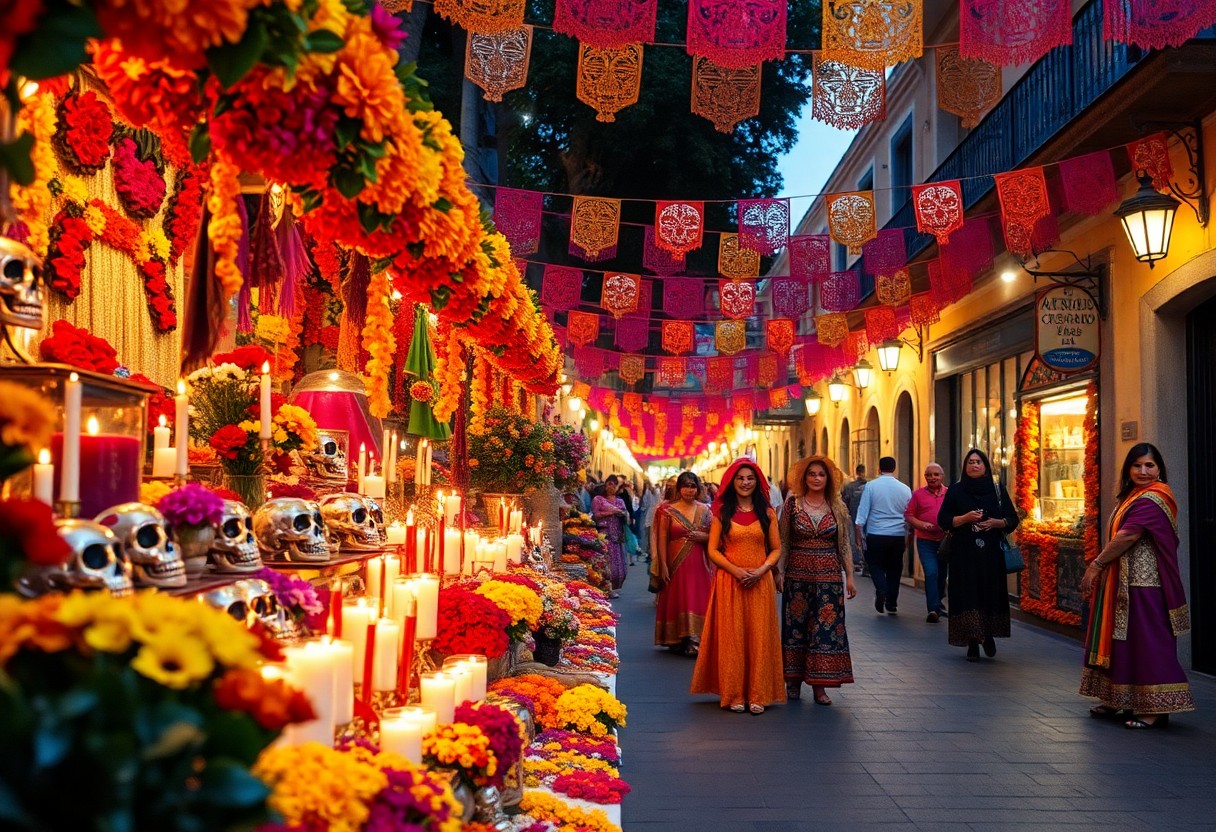
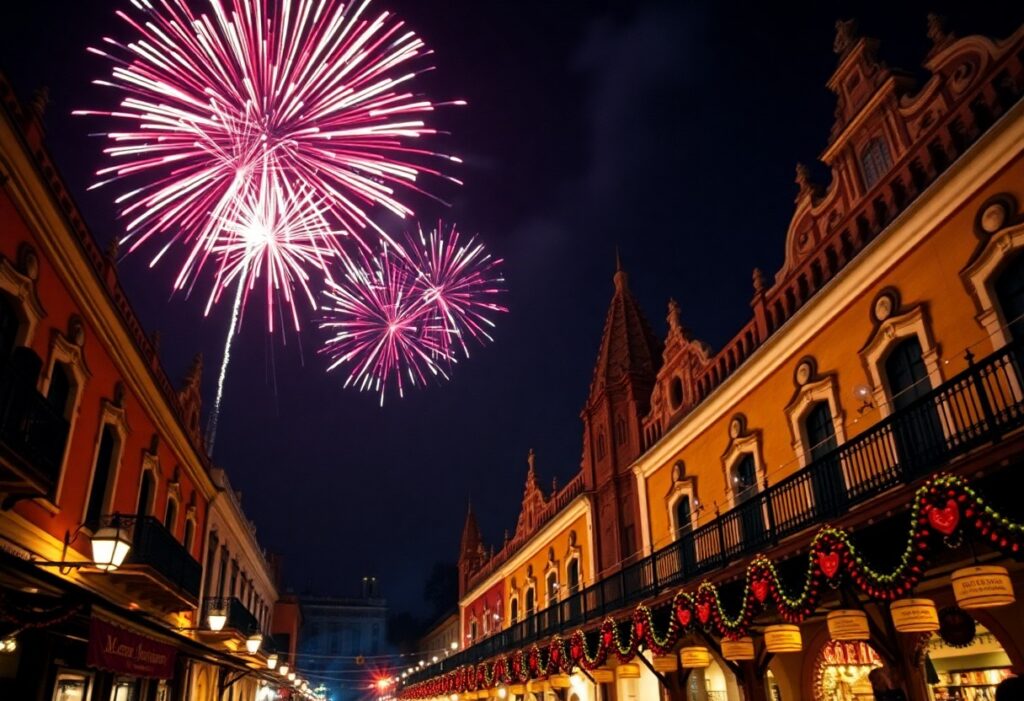
Visitors can encounter public altars, marigolds, decorated streets, Catrina figures, music, processions and community gatherings. Some experiences are designed for the public; others are personal acts of remembrance. That distinction matters most in cemeteries and around family ofrendas.
If you want the symbolism behind the displays, read our guide to ofrendas and the background to La Catrina.
When to go
Late October is useful for seeing the city prepare, while November 1–2 carries the strongest Day of the Dead focus. If you want a quieter visit, arrive before the peak dates and stay through part of the observance rather than compressing everything into one evening.
Where to experience the atmosphere
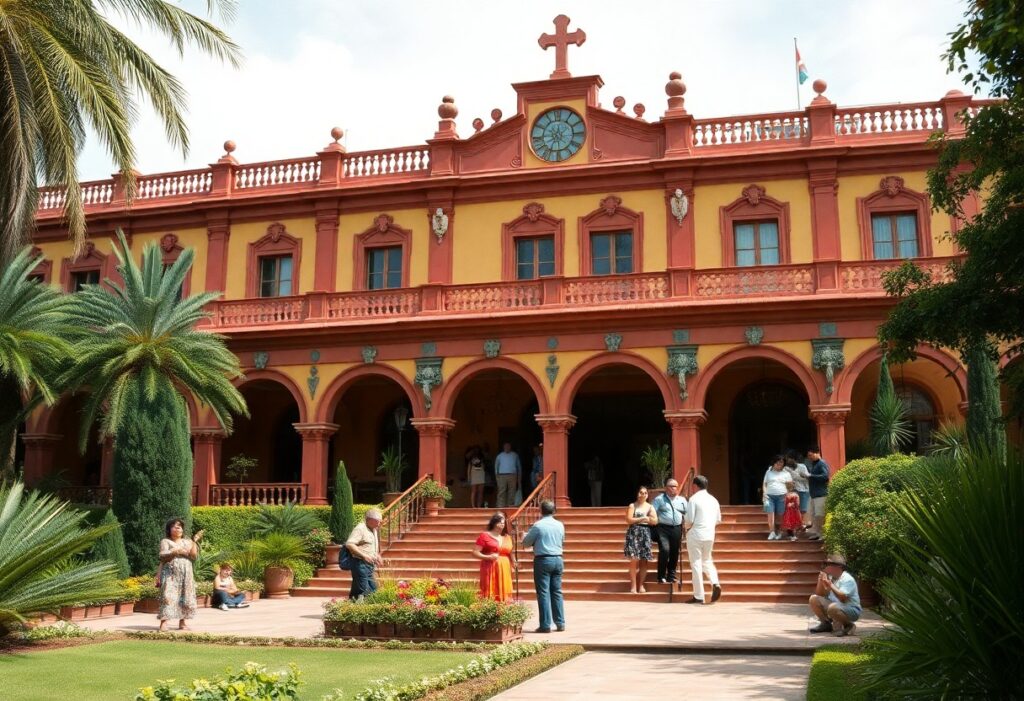
Centro is the easiest base for public decorations and central activity, while cemeteries and neighborhood observances can feel more intimate. Public plazas are generally the simplest places for first-time visitors because they make it easier to watch without intruding on private rituals.
Etiquette for visitors
- Ask before photographing people, especially families at cemeteries or private altars.
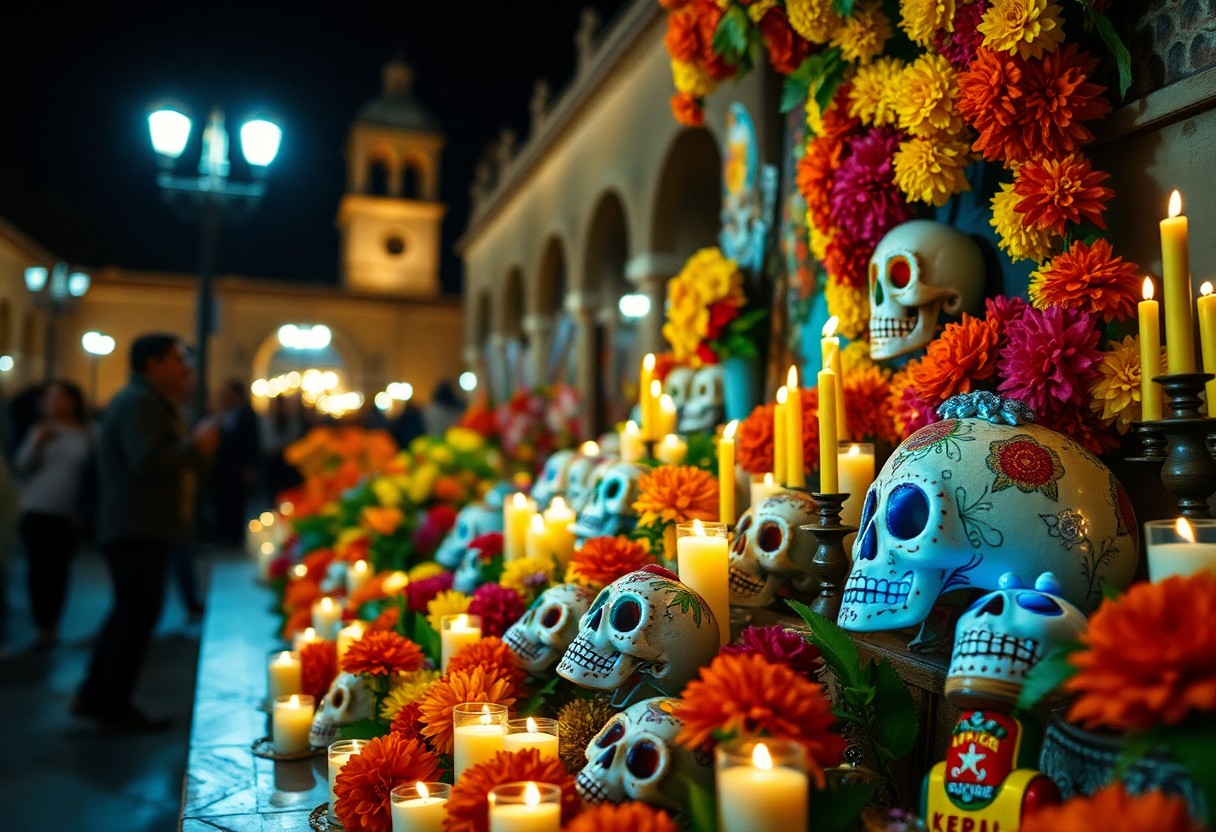
- Do not touch or rearrange ofrenda items. Food, candles, flowers and photographs can have personal meaning.
- Keep pathways clear. Crowded viewing areas are still working streets, religious spaces and community gathering places.
- Observe before participating. Public face painting and Catrina-themed events are different from private remembrance rituals.
Food and seasonal traditions
Pan de muerto is closely associated with the season and is widely sold around the observance. If you want the food tradition rather than only the event logistics, see our pan de muerto guide and recipe.
Crowds, transport and safety
Expect slower movement in central streets during major public activity. Walking is often the simplest option inside Centro, but build extra time into transfers and avoid relying on a tight point-to-point schedule. Our local transportation guide covers getting around, while the San Miguel safety guide covers broader visitor precautions.
How this fits the annual events calendar
Day of the Dead is one major part of San Miguel’s cultural calendar, not a substitute for the full year. For other months and specialist event guides, use the San Miguel de Allende events and festivals hub.
Frequently asked questions
What are the main Day of the Dead dates?
The observance centers on November 1 and 2, with preparations and public programming often beginning in late October. Event-specific schedules vary by year.
Is Day of the Dead family-friendly?
Many public displays and daytime activities can work well for families, but parents should explain the remembrance context and use extra care around crowded nighttime events and cemetery visits.
Can visitors wear Catrina makeup?
Catrina imagery is common in public artistic celebrations. The respectful approach is to distinguish public festival expression from private mourning spaces and avoid treating sacred or family rituals as a photo prop.

Cameron Hale is an insightful author and enthusiast of San Miguel de Allende, where he explores the rich culture, history, and vibrant community of this enchanting Mexican city. With a keen eye for detail and a passion for storytelling, he captures the essence of life in San Miguel, sharing unique perspectives on its art, cuisine, and local traditions. Through his engaging writing, Cameron invites readers to discover the charm and allure of this remarkable destination.
This exploration of death in San Miguel de Allende really resonates with me, particularly the perspective that sees it as a vibrant celebration rather than a somber event. In many cultures, including my own, there tends to be an almost taboo-like nature surrounding the topic of death, which often leads to fear and avoidance rather than acceptance and understanding. The contrast you describe in San Miguel de Allende is not only striking but also reveals a valuable approach to a universal experience—death.
It’s interesting how deeply culture shapes our perceptions of life milestones, including death. In San Miguel de Allende, the way the community embraces death as a part of life truly stands out. While it might seem counterintuitive at first, viewing death through a lens of celebration fosters connection, honor, and even joy.
It’s interesting how cultural differences shape our views on such a universal experience. In San Miguel de Allende, death really does take on this vibrant, colorful life of its own. I think part of it has to do with how deeply interconnected the community feels to the idea of death. Celebrating life and acknowledging death can create a more holistic understanding of both, which I see as crucial.
You’ve touched on something really profound about how communities like San Miguel de Allende celebrate death. It’s clear that their cultural practices surrounding mortality foster a unique atmosphere of acceptance and connection. This vibrant relationship with death—where it’s not seen just as an end but as a continuation of life’s cycle—shifts the whole tone of how we live and learn from that inevitability.
You raise such a good point about how cultural differences influence our understanding of death. In many Western societies, death is often shrouded in sadness and fear, which can lead to a disconnect from the natural cycle of life. In contrast, places like San Miguel de Allende seem to embrace death, turning it into a celebration that acknowledges both life and loss.
I get what you’re saying about the taboo surrounding death. It’s something that can weigh heavily on people. In San Miguel de Allende, the approach is like a big, warm hug—people really embrace it. They turn it into a community event, using traditions to honor loved ones. The vibrant colors, music, and food create this atmosphere where remembering someone feels like a celebration of their life rather than just mourning their absence.
Your reflection on the Day of the Dead in San Miguel de Allende highlights a fascinating cultural richness that many often overlook. The contrast between the vibrant celebrations there and the somber attitudes toward death in other cultures is striking. It’s a powerful reminder of how different societies interpret and integrate the concept of death into their lived experiences.
Your exploration of the Day of the Dead in San Miguel de Allende truly captures the spirit of a celebration that many people outside of Mexico might not fully understand. It’s a fascinating perspective to view death not as a somber occasion, but as a joyful celebration of life and ancestry. The vibrant atmosphere you described—filled with marigold petals, evocative altars, and the loving memories of lost loved ones—truly reflects the richness of Mexican culture.
You hit the nail on the head with your observations about the Day of the Dead, especially in a place like San Miguel de Allende. It’s one of those celebrations that feels like it defies convention and gives a wink and a nudge to the usual way we think about death and grief. Instead of the stiff collars and somber suits, you’ve got colorful skulls called “calacas” smiling at you like they just heard the funniest joke at the bar.
It’s interesting how the Day of the Dead has a way of flipping the script on our usual discussions about death. You’d think it’d be all gloomy faces and quiet reflection, but in San Miguel de Allende, it’s more like a colorful block party with a side of nostalgia. Conversations over shots of mezcal or glasses of pulque are just as likely to pop up beside the altars as the marigold petals.
“Para descubrir más sobre las tradiciones y el corazón de México, te invito a explorar este enlace que profundiza en la belleza del Día de los Muertos.”
https://fallinginlovewithsanmiguel.com/book-attractions
Your exploration of the Day of the Dead celebration in San Miguel de Allende brilliantly captures the heart of a tradition that holds profound significance for many, transcending mere cultural practice to touch upon the universal themes of life and memory. The vivid imagery of marigolds and altars filled with offerings paints an inviting picture that not only highlights the beauty of the celebration but also reflects its deep-rooted history and cultural context.
It’s always fascinating to see how traditions like the Day of the Dead resonate on so many levels. The way marigolds are woven into the fabric of this celebration is particularly meaningful, isn’t it? They not only symbolize the fragility of life but also guide spirits back to their loved ones. I think what really strikes me is how, through these altars and offerings, communities gather to share stories and remember those who have passed—it’s a powerful reminder of the connections we maintain, even beyond life.
Thank you for your kind words! If you’re interested in diving deeper into this vibrant tradition, check out our detailed guide on the Day of the Dead celebrations in San Miguel de Allende [here].
https://fallinginlovewithsanmiguel.com/seasonal-and-events
I find it fascinating how the Day of the Dead manages to flip our typical view of death on its head. Here in the U.S., we often treat death like an awkward Thanksgiving dinner—it’s something we don’t talk about, and when it does come up, everyone feels compelled to change the subject or seek the nearest exit. But in San Miguel de Allende, it sounds like they’ve thrown that notion out the window and decorated it with marigolds instead!
You’ve captured a key aspect of the Day of the Dead beautifully. It really is a remarkable transformation of how we engage with the concept of death. In many cultures, especially in the U.S., there’s a sense of discomfort surrounding the topic. Death can feel isolating, and the social conventions around it often mean we sidestep deeper conversations.
“I’m glad you found it intriguing! If you’re curious to dive deeper into the vibrant traditions of the Day of the Dead and how they celebrate life, check out this great resource.”
https://fallinginlovewithsanmiguel.com/book-hotel
You hit the nail on the head with that Thanksgiving dinner analogy. It’s so true that in many places, especially in the U.S., death tends to be this uncomfortable conversation no one wants to touch. Instead, we end up tiptoeing around the subject, trying to keep it at arm’s length, as if that somehow makes it less real.
“Absolutely! If you’re curious to explore more about how this vibrant celebration transforms our perception of death, check out this insightful piece I’ve put together.”
https://fallinginlovewithsanmiguel.com/book-hotel
You hit the nail on the head with that comparison! In many places, death comes with a heavy, unspoken weight. But in San Miguel de Allende, it’s almost like a celebration of life, where the memories of loved ones live on in vivid color. The marigolds aren’t just pretty flowers; they’re thought to guide spirits back to their altars.
You’ve captured the essence of what makes the Day of the Dead celebrations in San Miguel de Allende so special. The approach to death and remembrance there really does shift the atmosphere from one of sadness to one full of color and vibrancy. It’s fascinating how the marigolds transform into symbols of life rather than just markers of loss. They create pathways for spirits, bridging the gap between the living and those who have passed—a reminder that memories can be cherished and celebrated.
You’ve tapped into an important observation about how different cultures interact with death. In the U.S., it often feels like we’ve reached a point where discussing death has become synonymous with discomfort and avoidance. The typical approach seems to be steering conversations away from any topic that might hint at mortality. Yet, when you consider how the Day of the Dead celebrates life and death in tandem, it challenges our cultural norms and offers a refreshing perspective.
“Absolutely! If you’re curious to explore more about this vibrant celebration and its rich traditions, check out this link for an inside look at the Day of the Dead festivities in San Miguel de Allende!”
https://fallinginlovewithsanmiguel.com/transport
You bring up such an interesting point about how we handle death in different cultures. It’s true, in the U.S., it often feels like a taboo that people tiptoe around. In San Miguel de Allende, the Day of the Dead really embraces the idea of remembering and celebrating those who have passed. It’s not just a day for grief; it’s a vibrant reminder that love and memory keep our connections alive.