Instituto Allende is a historic art school and public cultural center in the heart of San Miguel de Allende, prized for its murals, short courses and atmospheric courtyards; plan 1–2 hours to browse galleries or a half day for a workshop or event.
- What It Is A working art school, gallery and cultural venue founded in 1950, set in a restored colonial complex.
- Typical Visit 1–2 hours to see murals and galleries; half a day for workshops or events.
- Cost Many exhibitions and courtyards are free to enter; workshops and certificate programs have fees—check availability on arrival or via course listings.
- Best Time To Visit Mornings or weekdays to avoid crowds; festival periods (see timing below) are busiest.
- Accessibility Historic buildings mean some areas have steps; courtyards are mostly open—contact the venue for specific access needs.
- Nearby In the central historic district—easy to combine with a walking visit to El Jardín and nearby churches.
If you want to see how the Instituto fits into a central walking route, see our piece on how Instituto Allende links with El Jardín and nearby attractions.
Why Visit Instituto Allende?
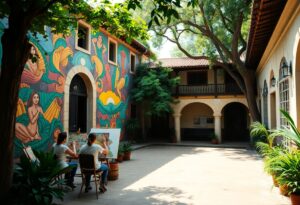
The Instituto is both a working art school and a living museum: its classrooms, galleries and murals trace San Miguel’s post‑war rebirth as an international art center. You’ll get a close-up view of the town’s artistic life—students painting, rotating exhibitions and large-scale murals that reflect Mexican and international influences. For an efficient cultural loop, combine this visit with a stroll to the nearby plazas and churches described in our complete travel guide.
A Concise History And Artistic Legacy
Founded in 1950 by artists and patrons who converted a former convent into classrooms and galleries, the Instituto Allende helped revive San Miguel after decades of decline. Artists such as James Pinto shaped its teaching philosophy, while muralists including John DeMelim and contemporary voices like David Leonardo Chávez added public artworks that visitors still see today. That mix—formal instruction plus public-facing art—made the Instituto a magnet for international students and helped establish the town as a global arts hub.
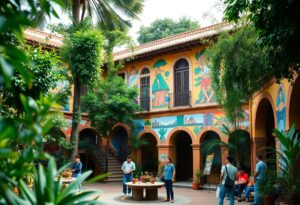 Many murals here bridge traditional Mexican themes and modern abstraction—an accessible way to see local and international styles in conversation.
Programs, Classes And Practical Planning
The Instituto runs short workshops, semester-style courses and a Lifelong Learning Program (LLP) of talks and mini‑classes. Workshops in painting, sculpture, photography and traditional crafts are common; some classes accept drop-in students while certificate programs have application processes. If you’re interested in studying, book workshops or popular weekend classes ahead—especially during festival weeks when demand spikes.
When To Book And Timing Guidance
If you’re combining attractions, the Instituto makes an easy stop on a cultural loop that includes El Jardín and the town’s landmark churches—see our suggestions for activities and walking routes.
Layout, Galleries And Event Spaces
Spread across historic buildings and courtyards, the Instituto houses classrooms, rotating galleries and event courtyards that are frequently used for exhibitions and private events. The cafés and garden areas are a draw for students and visitors. For weddings and large events, venue managers recommend early inquiries because the most photogenic courtyards book up quickly during peak months.
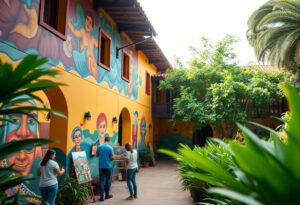
For a first-time visitor, Instituto Allende is best enjoyed as part of a walking tour that includes El Jardín and nearby churches; the guide to El Jardín explains the easiest route and timing to make both stops in a single morning.
Practical Tips For Visitors
- Bring modest footwear—cobblestones and some steps are common.
- Morning visits are cooler and better for light when photographing murals.
- If you plan a workshop, ask about materials—some courses include supplies while others list a materials fee.
- Combine the visit with nearby bakeries or rooftop cafés for a full cultural half‑day.
Frequently Asked Questions
Can I Visit The Galleries Without Taking A Class?
Yes—galleries and many murals are open to visitors; workshops and certificate programs require separate registration or fees.
Do I Need To Book A Workshop In Advance?
Popular weekend workshops and sessions during festivals often fill up—book early if you have set dates, otherwise check availability on arrival.
Is The Venue Suitable For Events And Weddings?
Yes. The Instituto’s courtyards are a sought-after setting for weddings and cultural events; contact venue managers well ahead of high season.
Want more planning resources and walking routes? See our complete travel guide or browse activity ideas in our activities guide.
Jasper Lennox is an insightful author and dedicated chronicler of the vibrant culture and history of San Miguel de Allende. With a passion for exploring its rich tapestry of art, architecture, and community, he crafts engaging narratives that showcase the charm and allure of this enchanting Mexican town. Through his writing, Jasper invites readers to discover the unique stories and experiences that make San Miguel a beloved destination for travelers and locals alike.
It’s fascinating how the Instituto Allende embodies the intertwining of history and creativity in San Miguel de Allende. As a traveler who spent time there, I found that the vibrant workshops really bridge the gap between generations of artists, offering both locals and visitors a chance to engage with traditional techniques and contemporary styles. The collaborative spirit among artists is inspiring. Additionally, the role of art education in revitalizing such a historic town speaks volumes about the transformative power of creativity. Have any other visitors experienced a particular workshop or exhibition that left a lasting impact? It would be intriguing to hear about how these experiences have influenced artistic journeys or personal growth.
You’re spot on about the Instituto Allende and its role in blending history with creativity. There’s something special about the energy in those workshops; you really feel a mix of respect for the past and excitement for innovation. I’ve heard people rave about the figure drawing classes — many found them transformative not just for their skills, but for building connections with others who share a passion for art.
The Instituto Allende truly embodies the spirit of San Miguel de Allende, demonstrating how art can breathe new life into a community rich with history. I was particularly struck by how the institute not only nurtures individual creativity but also strengthens communal ties, drawing diverse visitors who share their perspectives and cultures through artistic collaboration.
You’ve captured something really special about the Instituto Allende. It feels like a crossroads where various cultures meet and mingle, creating a vibrant tapestry of artistic expressions. The way artists from different backgrounds can connect through their work adds layers to both the community and the individual experience. I’ve noticed how these interactions can spark unexpected dialogues and collaborations, often leading to art that tells a story unique to San Miguel itself. What’s striking is how this exchange not only enriches the artists but also invites the community to participate, fostering a sense of belonging and shared purpose. It’s a reminder that art isn’t just about the final piece; it’s also about the moments of connection and creativity that happen along the way. How have you experienced this sense of community?
You’ve captured a vital aspect of the Instituto Allende beautifully. It really does act as a catalyst for creativity in San Miguel de Allende. The way it fosters collaboration among artists from different backgrounds is fascinating. Each interaction often leads to unexpected projects that reflect a fusion of cultures, enhancing not just personal expression but also the community’s identity.
It’s interesting how the Instituto Allende really does serve as a microcosm of creativity, isn’t it? I love how artists from all walks of life come together there, and the resulting collaborations can be so powerful. There’s something transformative about the blend of different cultural backgrounds; it opens up new avenues of understanding and expression that many of us might not encounter otherwise.
The Instituto Allende truly encapsulates the spirit of creativity that San Miguel de Allende has fostered over the decades. My own experience attending a workshop there was transformative; not only did I connect with talented artists from around the world, but I also gained a deeper appreciation for the rich tapestry of Mexican culture and history. The colonial architecture alone is inspiring, but it’s the vibrant energy of the community that makes it truly special.
It sounds like your time at the Instituto Allende was a truly enriching experience. The blend of artistic collaboration and cultural immersion really sets it apart from other creative hubs. Being surrounded by artists from so many different backgrounds must have opened up a whole new perspective on your own work.
Your experience at the Instituto Allende really captures what so many artists and creatives find so enchanting about San Miguel de Allende. It’s remarkable how much that place feels alive with creativity, isn’t it? Every corner of the campus seems to tell a story, and it sounds like you were able to tap into that energy in a truly meaningful way.
“Si deseas vivir una experiencia similar y sumergirte en la creatividad de San Miguel de Allende, te invito a explorar las opciones de talleres que ofrece el Instituto Allende.”
https://fallinginlovewithsanmiguel.com/book-hotel
Es cierto lo que dices, la energía creativa de San Miguel de Allende es realmente inspiradora. Cada rincón del Instituto Allende tiene una historia que contar, y es fascinante cómo la arquitectura y el paisaje se entrelazan con el arte y la cultura de la ciudad. Mi experiencia ahí no solo fue sobre el arte en sí, sino también sobre la conexión con otros artistas y las conversaciones profundas que surgen en un ambiente tan vibrante.
Your experience at Instituto Allende sounds like it was a real feast for the senses. It’s one thing to appreciate the beauty of colonial architecture on a postcard, but when you’re actually surrounded by all that charm, it’s like being in a living art piece—one that you can’t help but want to jump into. It’s hard to believe those colorful buildings aren’t just part of a movie set. You must have walked around thinking, “Do I need to wear a beret now? Is that how creativity works?”
It’s fascinating to learn how the Instituto Allende has become such an integral part of San Miguel de Allende’s identity. The transformation of this colonial town into a renowned center for art and education is a testament to the resilience of creative communities. However, I do wonder about the balance between preserving the historical essence of the area and accommodating the influx of tourists and artists.
You raise an important point about the balance between preserving San Miguel de Allende’s historical essence and accommodating the growing influx of tourists and artists. This is a delicate situation. The charm of this colonial town lies in its cobblestone streets, historical architecture, and local culture, which can easily be overshadowed by commercialization.
You raise a really important point about the balance between preserving the historical essence of San Miguel de Allende and accommodating the influx of tourists and artists. It’s a nuanced situation, for sure. On one hand, the Instituto Allende has revitalized the town, attracting those passionate about art and culture, which can be incredibly enriching. It fosters a community that thrives on creative exchange, and that energy often feels infectious.
You’ve captured an essential tension that many communities face in the modern age. The Instituto Allende’s role in fostering art and culture in San Miguel de Allende is a fascinating case study in how a place can evolve while holding onto its roots. The vibrancy that artists bring can indeed revitalize a town, injecting it with new ideas and diverse perspectives.
You’ve captured a delicate dance that many communities face, and San Miguel de Allende is a fascinating case study in that regard. The Instituto Allende has undeniably breathed new life into the town, but it’s fascinating to think about what this revitalization means in both the short and long term.
I appreciate your perspective on San Miguel de Allende; the balance between revitalization and maintaining the community’s identity is such a nuanced topic. The Instituto Allende certainly plays a pivotal role in this dynamic. It’s interesting to consider how such institutions not only bring in tourism and economic benefits but also change the social fabric of the community.
You touch on a crucial issue that many communities face when they attract tourism and artistic influx—finding a harmonious balance can be challenging. San Miguel de Allende’s charm lies in its historical streets and vibrant culture, which have been lovingly maintained over the years. Yet, as you pointed out, the growing presence of tourists and artists can sometimes overshadow the town’s authentic essence.
It’s fascinating to see how the Instituto Allende fits into San Miguel de Allende’s artistic tapestry. I had the chance to participate in a workshop there last summer, and the energy was palpable. The blend of local traditions with contemporary techniques really opened my eyes to the evolution of Mexican art. It feels like a living museum, where each class and exhibit offers insight into both local culture and the broader art world.
It’s great to hear about your experience at Instituto Allende. The way it merges local traditions with contemporary techniques really highlights the vibrant artistic dialogue happening in San Miguel de Allende. I’ve always felt that places like this serve not just as learning environments but as hubs of cultural exchange. It’s interesting how the energy you felt can significantly influence creativity; many artists thrive in settings where they’re surrounded by diverse perspectives and talents.
It’s great to hear about your experience at the Instituto Allende! That energy you felt really embodies what makes San Miguel special. The way local traditions merge with modern techniques creates a vibrant dialogue in art that’s hard to find elsewhere.
The Instituto Allende indeed holds a significant place not only in the artistic landscape of San Miguel de Allende but also in the broader narrative of cultural revival following periods of decline. Your mention of its vibrant role in nurturing creativity since 1950 perfectly encapsulates how vital such institutions are for preserving and fostering local traditions while simultaneously engaging with global artistic movements.
The Instituto Allende indeed stands as a monumental testament to the enduring spirit of creativity and cultural exchange in San Miguel de Allende. It’s fascinating to consider how this institution not only provides a sanctuary for artists and art lovers but also serves as a bridge connecting various generations and backgrounds through the medium of art.
You’ve touched on a really important aspect of the Instituto Allende. It’s incredible how places like this can create such a dynamic hub for creativity. When you walk through its halls, you not only see the work of talented artists, but you can also feel a sense of history—generations of creative minds have flowed through those spaces, each leaving their own mark.
I completely agree with you about the Instituto Allende. There’s something almost palpable in the air, isn’t there? It reminds me of how places steeped in creativity can influence not just the artists who work there but also the community around them. When I visited, I was struck by how each corridor seemed to hold the stories of everyone who had poured their passion into their craft over the years.
You’ve captured something essential about the Instituto Allende. There’s a unique energy there, a blend of history and aspiration that resonates through its walls. But I wonder—does this creative ambiance always serve the artists, or can it at times feel overwhelming? The pressure to maintain or live up to such a legacy might create a different kind of tension. It’s fascinating how these spaces can simultaneously nurture and challenge the very people they aim to inspire. What’s your take on the balance between inspiration and pressure?
You’ve captured the essence of the Instituto Allende beautifully. It really does feel like a living archive of creativity. Walking through those halls, you can almost hear the echoes of discussions and the brush strokes of past artists shaping the atmosphere. The sense of history is palpable, but what strikes me even more is how that creative energy continues to evolve. Each generation brings its own perspective, impacting the artistic dialogue in ways that resonate well beyond the walls.
“Para aquellos que deseen explorar más sobre este fascinante lugar y su legado artístico, no duden en visitar el siguiente enlace.”
https://fallinginlovewithsanmiguel.com/book-hotel
I completely resonate with what you’re saying about the Instituto Allende—it really is a profound testament to how spaces can embody creative energy. When I visited, I felt it too; the walls seem to echo with the aspirations and struggles of those who came before. It’s almost like walking through a living gallery of stories where you can almost visualize the artists at work.
The Instituto Allende truly stands as a testament to the city’s profound evolution into a cultural cornerstone over the decades. I appreciate how you highlight its significance not only as an educational institution but as a vibrant community space that celebrates creativity in all its forms. The fact that it has been nurturing artistic expression since 1950 is remarkable, particularly in the context of San Miguel de Allende’s broader historical narrative.
You’ve captured an essential aspect of the Instituto Allende and its role in San Miguel de Allende beautifully. It really is intriguing to see how this space has transcended its initial educational purpose to become a focal point for creativity and community engagement. The evolution of the Instituto since 1950 has mirrored the city’s own transformation, reflecting broader social and cultural shifts.
It’s fascinating to consider how the Instituto Allende has evolved alongside San Miguel de Allende itself. When we think about its origins, it was primarily a place for art education, fostering talent and creativity in a community that was rich in history and cultural influences. Over the years, its role has expanded significantly; today, it serves as a gathering point for people from all walks of life who share a passion for the arts and community engagement.
What a beautiful reflection on the Instituto Allende and its significant role in San Miguel de Allende! The blend of artistry and history truly creates an inspiring atmosphere for creativity. I’ve found that immersing oneself in new artistic environments can profoundly shift our perspectives, not just as artists, but as individuals.
You raise such an important point about the transformative power of artistic environments. Instituto Allende is not just a place to learn; it really embodies a sense of community that fosters creativity and personal growth. The rich history of San Miguel de Allende adds layers to that experience, with its vibrant culture and the echoes of artists and thinkers who have walked those streets.
“Absolutely, the transformative power of art environments is remarkable! If you’re interested in exploring more about the rich artistic offerings at Instituto Allende, check out this link for insights and opportunities.”
https://fallinginlovewithsanmiguel.com/book-flight
The Instituto Allende truly stands as a testament to the rich cultural fabric of San Miguel de Allende. It’s fascinating to see how this institution not only showcases but also cultivates artistic talent against the backdrop of such a storied colonial setting. I remember my first visit, being instantly captivated by the vibrant murals that seem to tell their own stories—each one a unique reflection of the community’s soul.
The Instituto Allende certainly stands out as a beacon of creativity in San Miguel de Allende, but it’s interesting to consider how its establishment reflects broader cultural dynamics in Mexico. While the 1920s saw a resurgence of interest in the town, stemming from artistic types, this was also a period of significant political and social change. The Mexican Revolution in the early 20th century, for instance, reshaped national identity and emphasized folklore, indigenous heritage, and social issues in art.
The Instituto Allende truly embodies the spirit of San Miguel de Allende, serving as a beacon for creativity and a hub of cultural exchange. I’ve visited the Instituto a few times, and each experience has been both enriching and transformative. The atmosphere is charged with inspiration, whether you’re participating in a workshop or simply wandering through the galleries adorned with student and teacher artworks.
Your observations on the Instituto Allende resonate on so many levels. It’s fascinating how a space can encapsulate a spirit, shaping not just the artists who walk its halls but also those who come to absorb its vibrant atmosphere.
It sounds like you’ve really connected with the vibe at the Instituto Allende. There’s something special about being in a space where creativity flows freely, isn’t there? I’ve always found that art has a unique way of fostering connection and sparking dialogue, not just among artists but within the broader community as well.